Ineos Hope for AI Inspiration with Netcompany Deal
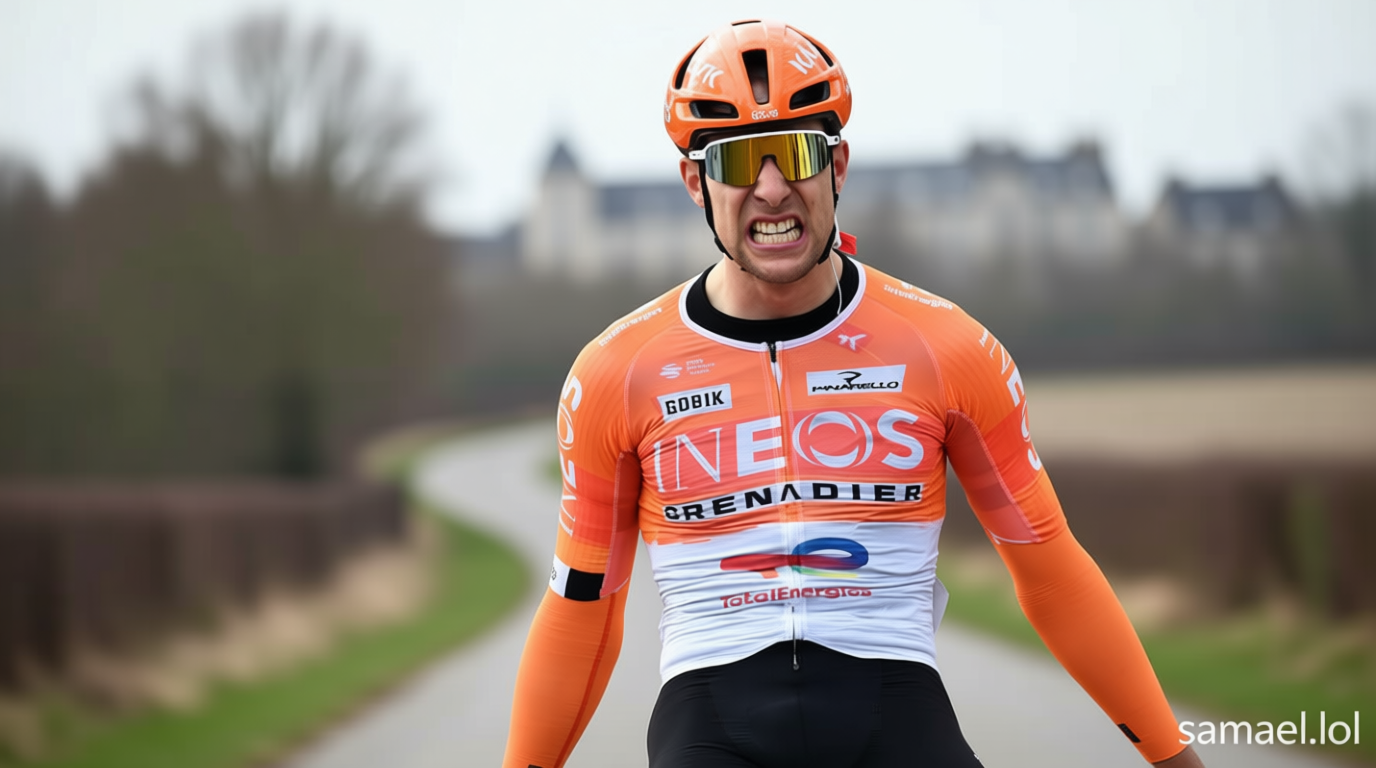
Samael.lol – British cycling team Ineos Grenadiers has announced a groundbreaking partnership with Danish IT firm Netcompany, aiming to leverage artificial intelligence to regain its position as a dominant force in the sport. This collaboration, which begins with the upcoming Giro d’Italia, will rebrand the team as Netcompany-Ineos Cycling Team. The five-year agreement is expected to significantly boost the team’s annual budget, aligning it with elite “super teams” like UAE-Team Emirates-XRG, which fields the four-time Tour de France champion Tadej Pogacar.
Historical Triumphs and Current Challenges
As Team Sky, Ineos Grenadiers enjoyed a decade of unprecedented success, claiming seven Tour de France titles between 2012 and 2019. Their dominance extended to other Grand Tours, including victories in the Giro d’Italia in 2018 and 2021, and the Vuelta a España in 2011 and 2017. However, in recent years, the team has seen its competitive edge wane, falling behind rivals in financial backing, overall race wins, and UCI points. This decline coincides with the rise of other high-budget teams, such as the Netherlands’ Visma-Lease a Bike, home to two-time Tour winner Jonas Vingegaard, and Germany’s Red Bull-Bora-Hansgrohe, which boasts Belgian star Remco Evenepoel.
Amid this shift, Slovenian phenom Tadej Pogacar has emerged as a pivotal figure, securing 112 professional races over seven years. His achievements include the 2020 Tour de France victory, a feat that marked the end of Ineos’ last win with Colombia’s Egan Bernal. Pogacar’s ability to outpace and outlast competitors in almost any race has solidified his status as a modern cycling icon, prompting Ineos to seek new strategies for reasserting its supremacy.
AI Integration and Strategic Shifts
Central to Ineos’ revival plan is Netcompany’s AI-driven data platform, Pulse. According to the Danish firm, which manages digital systems for HMRC and Heathrow Airport, Pulse is designed to streamline real-time decision-making through advanced data analysis. CEO Andre Rogaczewski emphasizes the platform’s role in advancing Europe’s digital sovereignty, a goal Ineos hopes to achieve by integrating cutting-edge technology into its operations.
“I think we’ll get back to the top of the sport again—this is really exciting,” said Geraint Thomas, the team’s director of racing and 2018 Tour de France champion. “The team has evolved a lot over the years. This is definitely, 3.0.” Thomas, reflecting on the partnership, noted the transition from analog tools to a data-centric approach. “For me, I struggle to turn my Apple TV on,” he added with a touch of humor. “So I’m not going to say I’m tech-savvy, but having information accessible quickly or enabling a sporting director, trainer, or nutritionist to make split-second decisions for an athlete—this is where the benefit lies.”
Thomas highlighted the contrast between past and present cycling methodologies. “I started my career when I just had a heart-rate strap,” he recalled. “Now it’s all data—numbers everywhere. It’s like a blizzard of data, and anything that helps narrow it down or give more insight into what’s happening is a good thing.” This evolution underscores the team’s shift from the “marginal gains” era, which relied on incremental improvements in aerodynamics, nutrition, and race tactics, to a more data-focused model.
Financial and Operational Overhaul
With a reported annual budget of approximately £60 million, Ineos aims to close the gap with top-tier teams like UAE-Team Emirates-XRG. This financial boost is attributed to contributions from Netcompany, French energy giant TotalEnergies, and Ineos itself. Sir Dave Brailsford, the team’s principal and director of sport for the Ineos Sport umbrella, hailed the partnership as a milestone. “This is one of the most significant alliances in cycling,” he stated. “It’s a real vote of confidence not only in our team but in the sport itself. It marks the start of a new chapter for us.”
Brailsford, a key architect of Ineos’ past triumphs, has returned as team principal after a hiatus. His vision for the future includes harnessing AI to enhance performance metrics, from race strategy to athlete monitoring. The partnership with Netcompany is seen as a strategic move to modernize operations, ensuring that data-driven insights become a cornerstone of competitive advantage.
From Investment to Innovation
Sir Jim Ratcliffe, the billionaire owner of Ineos and co-owner of Manchester United, has been actively pursuing investments to strengthen the sports portfolio. The Netcompany deal aligns with this broader strategy, creating the “right conditions to deliver more success,” as Ratcliffe stated. While financial resources are critical, Thomas stressed that technology alone isn’t the answer. “Money is a key point,” he said. “But if you see someone splashing cash on flashy gadgets without a clear plan, it’s just wasted. It’s knowledge and the human element—how they collaborate—that will drive real results.”
The integration of AI into training and race preparation is expected to provide actionable insights, optimizing performance for individual athletes and the team as a whole. For example, real-time data analysis could help predict optimal pacing strategies or identify fatigue patterns, enabling coaches to tailor interventions with precision. This approach contrasts with the previous reliance on manual adjustments and anecdotal feedback, marking a shift toward predictive analytics in cycling.
Global Rivalry and the Road Ahead
As the peloton becomes increasingly professionalized, the competition for top-tier status has intensified. Ineos’ new AI platform is positioned to offer a competitive edge, particularly in analyzing vast datasets to inform decisions that might otherwise take hours to process. This is especially relevant in high-stakes races, where milliseconds can determine victory or defeat. The team’s renewed focus on innovation aims to address the challenges posed by rivals who have matched Ineos’ budgets and adopted similar strategies.
Brailsford’s comments during the partnership launch underscored the long-term vision behind the collaboration. “This is a major moment for us,” he said. “It’s not just about winning races; it’s about redefining how we approach the sport. We’re not just catching up—we’re aiming to lead the charge in technological integration.” The partnership with Netcompany is viewed as a catalyst for this transformation, potentially setting a new standard for data utilization in professional cycling.
With the Giro d’Italia serving as the debut event for the rebranded team, Ineos hopes the AI-driven insights will translate into tangible performance gains. The challenge lies in ensuring that technology complements, rather than replaces, the human expertise that has historically been the team’s strength. As Thomas noted, the synergy between data and decision-making could be the key to overcoming past limitations and reclaiming their place at the pinnacle of cycling.
Conclusion: A New Era of Competitive Edge
The partnership with Netcompany represents a bold step for Ineos, blending cutting-edge AI with decades of cycling tradition. While the team’s past success was built on meticulous preparation and incremental gains, the future may rely on predictive analytics and real-time adaptability. The question remains: can this technological leap bridge the gap between financial investment and on-the-road performance? For now, Ineos’ confidence in the deal suggests they believe the answer is yes. As the sport continues to evolve, the integration of AI may become a defining factor in determining which teams can sustain dominance in the ever-competitive world of professional cycling.