US Supreme Court Rules Against Colorado’s Conversion Therapy Ban
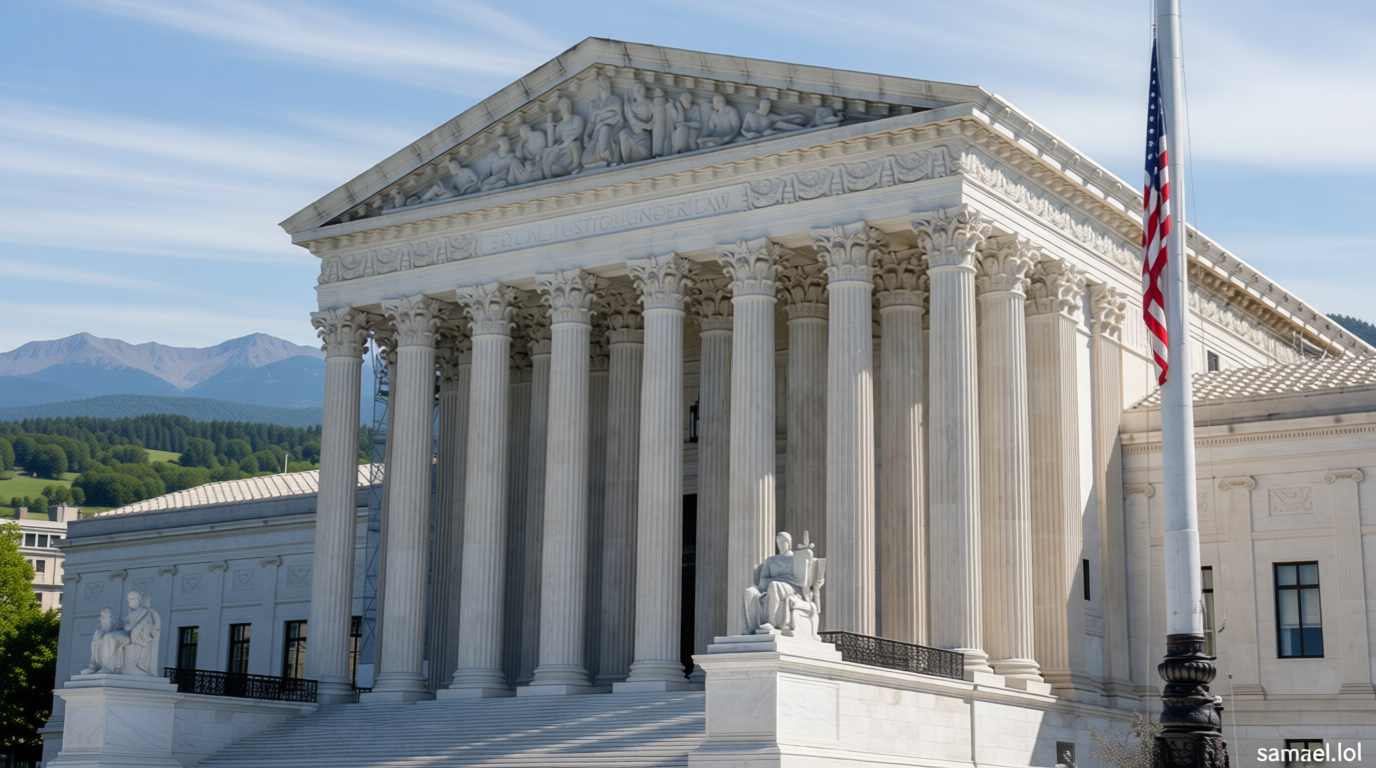
Samael.lol – The U.S. Supreme Court has invalidated Colorado’s prohibition on conversion therapy, determining it violates the First Amendment’s protection of free speech. This decision overturns a previous ruling that upheld the state’s law, which restricts licensed mental health professionals from attempting to alter the sexual orientation or gender identity of LGBTQ youth through therapeutic practices.
Colorado’s legislation, enacted in 2019 under Democratic Governor Jared Polis—the first openly gay man to lead a U.S. state—banned such therapies for minors. However, the high court’s 6-3 decision on Tuesday reversed this, with eight justices supporting the argument that the law suppresses speech based on viewpoint. Only one justice dissented, joining the majority in the initial ruling.
Kaley Chiles, a Christian counselor from the Alliance Defending Freedom, challenged the law, claiming it infringes on constitutional rights. Her case highlighted the tension between state regulation of therapeutic practices and individual freedoms of expression. The court sent the matter back to lower courts for further review under stricter First Amendment scrutiny.
Broader Context of Conversion Therapy Bans
Over 20 U.S. states and parts of Europe, including Germany, have implemented similar bans. Advocacy groups like the American Psychiatric Association and the American Psychological Association have long opposed conversion therapy, citing its discriminatory nature. The United Nations has also urged a global ban, calling the practice humiliating and harmful to personal autonomy.
“Colorado’s law addressing conversion therapy does not just ban physical interventions. In cases like this, it censors speech based on viewpoint,” wrote Justice Neil Gorsuch, leading the majority opinion. “Colorado may regard its policy as essential to public health and safety. Certainly, censorious governments throughout history have believed the same. But the First Amendment stands as a shield against any effort to enforce orthodoxy in thought or speech in this country.”
Splitting the Constitutional Debate
While the ruling aligns with recent trends of conservative-majority decisions, two liberal justices—Elena Kagan and Sonia Sotomayor—also rejected the ban. Kagan emphasized the constitutional issue: “Once again, because the State has suppressed one side of a debate, while aiding the other, the constitutional issue is straightforward.” Justice Ketanji Brown Jackson, the sole dissenter, warned of “a dangerous can of worms,” arguing that the ruling weakens states’ ability to regulate potentially harmful medical practices.
In her dissent, Jackson stated, “The Constitution does not pose a barrier to reasonable regulation of harmful medical treatments just because substandard care comes via speech instead of scalpel.” The decision leaves room for restrictions on non-speech forms of conversion therapy, such as aversive physical interventions, but signals a shift in how speech-related regulations are evaluated.