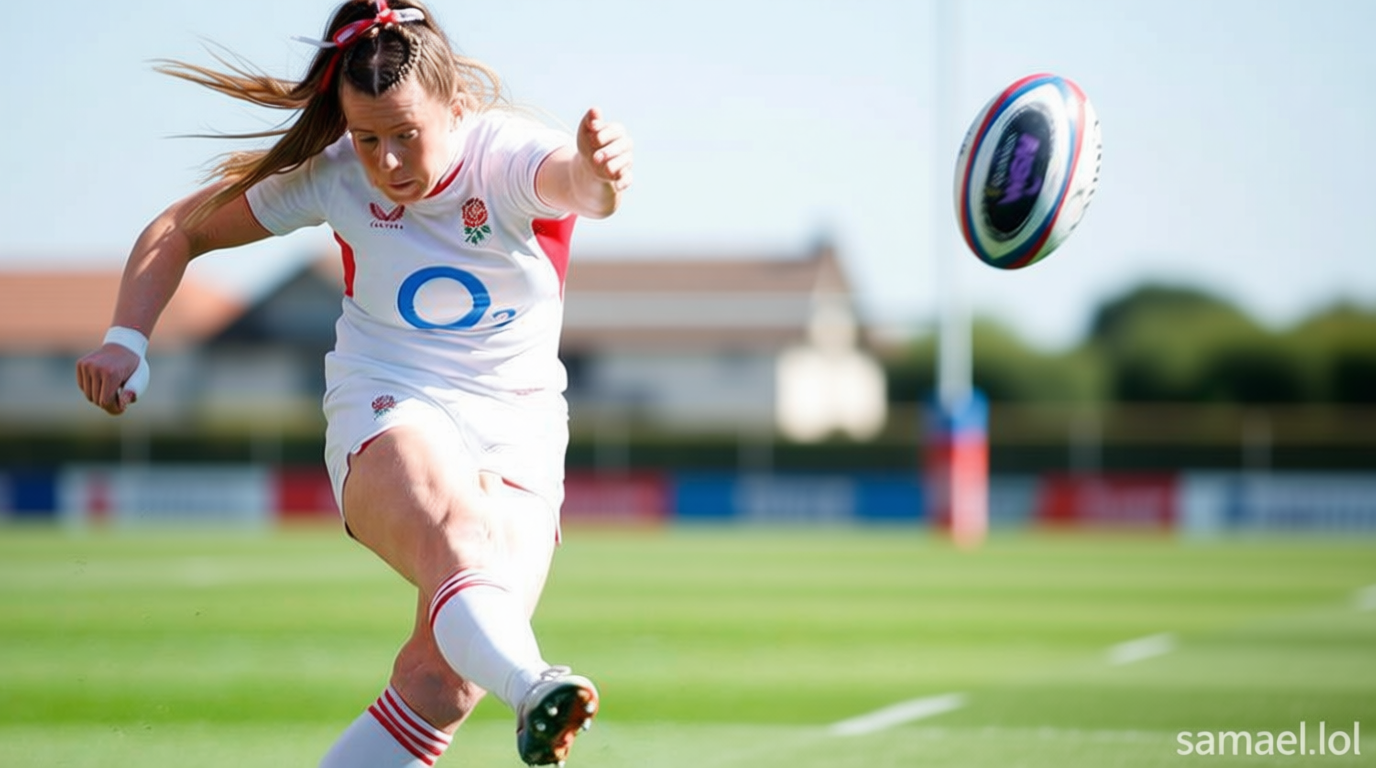
Zoe Harrison’s Strong Criticism of Smaller Balls in Women’s Rugby
Samael.lol – Zoe Harrison, the fly-half for England’s Women’s Six Nations team, has voiced her strong opposition to the decision to introduce smaller rugby balls for the upcoming WXV Global Series. The 28-year-old player described the move as “the worst decision someone has ever made,” emphasizing her belief that the change could negatively impact the game’s fundamentals. At the heart of the controversy is the size 4.5 ball, which is approximately 3% smaller than the standard size 5 but maintains the same weight. This adjustment is set to be implemented in September and October, during the tournament that aims to showcase elite women’s Test rugby on a global stage.
The decision followed a trial conducted by World Rugby involving female athletes on the top-tier Sevens circuit in November. The governing body announced that the smaller ball would also be used in the WXV Global Series, a move intended to make women’s equipment more aligned with the men’s game. While the rationale is to enhance accuracy and reduce handling errors, Harrison and other critics argue that it could undermine the distinct identity of women’s rugby and create additional challenges for grassroots clubs.
World Rugby’s Decision and Trial Process
World Rugby’s introduction of the size 4.5 ball was not without adjustments. A previous trial during the 2024 Under-18 Six Nations had used a lighter version of the ball, but the weight was later increased to address concerns from kickers like Harrison. The organization claims that the current iteration has received positive feedback from players who have tested it. “Along with the sevens players, we’ll carefully take stock of player feedback, injury surveillance and shape of the game data from the WXV Global Series,” explained Mark Harrington, World Rugby’s chief player welfare and rugby services officer. The goal is to evaluate the impact of the smaller ball and determine its long-term viability in the women’s game.
Despite the adjustments, Harrison remains unconvinced. Her frustration stems from a personal experience: “I’ve not kicked any less than a size five since I was 14.” The player highlights the difference in surface area, noting that the smaller ball may be harder to grip and control. This concern is echoed by other athletes, who point out that men’s hands are roughly 10-15% larger than women’s. While sports like athletics and basketball have adapted equipment to suit female body types, rugby’s move has sparked debate about whether it prioritizes uniformity over practicality.
Harrison’s Performance Metrics and Kicking Philosophy
Harrison’s current form in the Women’s Six Nations has been nothing short of exceptional. She has converted all 15 kicks she has attempted this season, demonstrating precision from across the pitch. Data experts at Opta have even noted her standout performance, calculating that she has exceeded their xGK expectations by 6.3 points. When compared to the average kicker in the tournament, Harrison’s skill level is even more impressive, as she is 8.2 points better than the model predicts.
Her consistency is partly attributed to a straightforward approach to the game. “I put the ball down, line it up, take a couple of steps back and just kick the ball,” Harrison said. “That might seem really unserious, but that is just the way it has worked until now.” This method, which minimizes overthinking, has allowed her to maintain focus and deliver reliable results. “If I think about it more, it doesn’t work in my favour. You just get in your own head—thinking you have to do this or that—and really, you just have to kick the ball,” she added.
However, Harrison’s confidence in her technique is a product of years of dedication. She began her rugby journey at Hartpury College, where a focused program helped her refine her skills. Before committing to rugby, she was an avid Chelsea fan who played football. “I think the reason I can kick a ball so far is because having a ball around your feet growing up gives you an ability to kick and an understanding of how to handle it,” she explained. While she acknowledges the differences between the two sports, Harrison credits her football background for developing the foundational skills that now serve her in rugby.
Controversy and Concerns About the Women’s Game
Although the smaller ball is designed to promote accuracy and reduce handling errors, critics argue it may harm the image of women’s rugby. The decision to align equipment with the men’s game could be seen as diminishing the unique aspects of the women’s sport. “It’s the worst decision that someone has ever made,” Harrison reiterated, noting that she only learned about the trial when journalists asked her about it. Her disappointment reflects a broader sentiment among players and fans who worry the change might make the game less recognizable.
Additionally, the cost implications for grassroots clubs have been raised. Smaller balls require new equipment, which could be a financial burden for teams with limited resources. This concern is particularly relevant as the WXV Global Series expands the scope of women’s rugby, potentially increasing demand for standardized gear. While World Rugby maintains that the smaller ball is a necessary step for progression, the debate continues to highlight the tension between innovation and tradition in the sport.
Future Implications and Player Adaptation
As the WXV Global Series approaches, the focus is on how players will adapt to the new ball. Harrison’s comments underscore the need for a careful transition. “We’ll assess the findings and look at where we go next,” Harrington said, emphasizing collaboration with the wider women’s game. The data collected from the tournament will be crucial in determining whether the smaller ball becomes a permanent fixture or if adjustments are made based on player feedback.
For Harrison, the challenge is not just about the ball’s size but about maintaining her competitive edge. Her remarkable performance this season has been a testament to her skill and mental approach. However, she is quick to remind that her success is tied to the equipment she has grown up with. “It’s good that it’s happened, but… it’s my job to keep kicking the ball the way I have,” she said. Her words reflect the balance between embracing change and preserving the essence of the sport.
The introduction of size 4.5 balls represents a bold step for World Rugby, but it also raises questions about the impact on women’s rugby as a distinct discipline. As the new tournament unfolds, the success of this decision will depend on how players like Harrison adapt and how the broader rugby community perceives the shift. For now, the debate continues, with Harrison’s critique serving as a reminder of the importance of considering player perspectives in shaping the future of the game.
Italy v England Women’s Six Nations Saturday 9 May, kick