Where do Bayern’s prolific trio rank in greatest front threes ever?
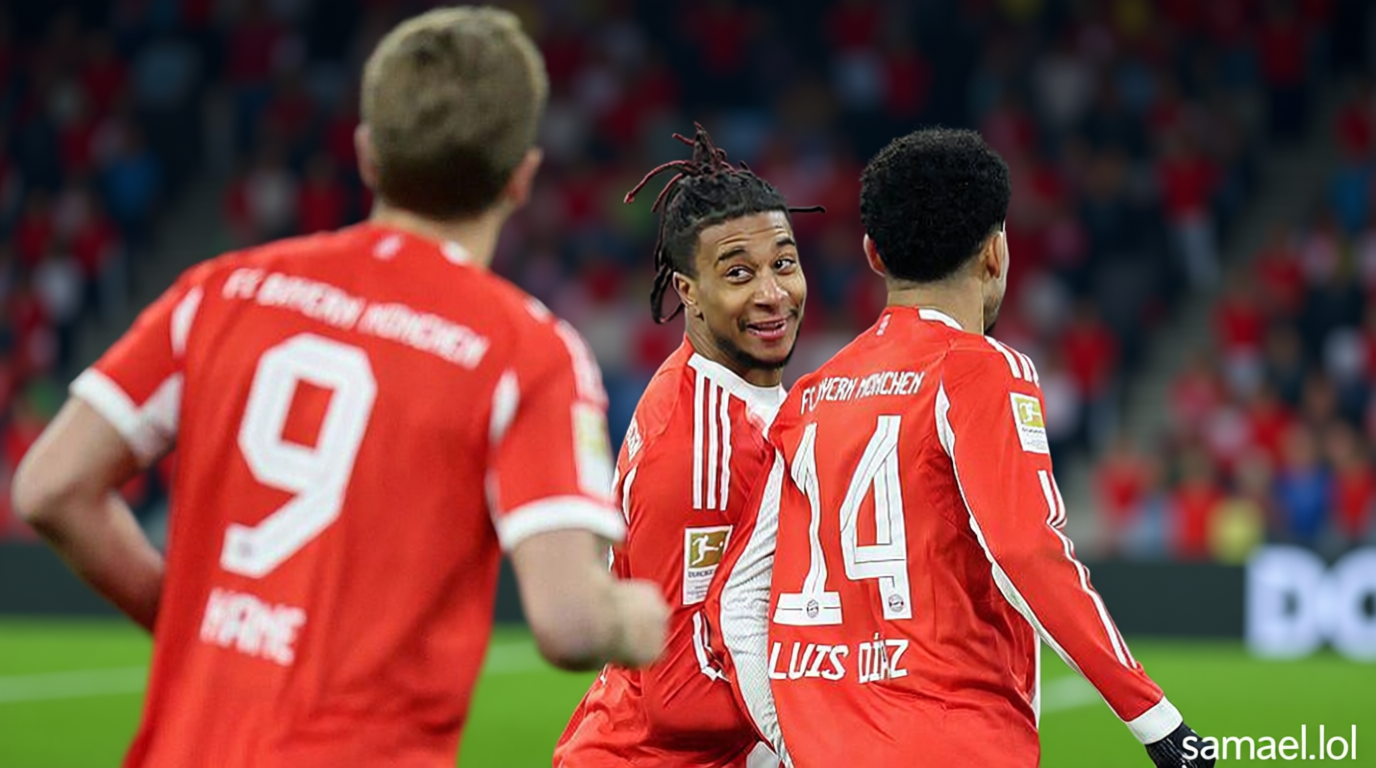
Samael.lol – Bayern Munich’s front three of Harry Kane, Michael Olise, and Luis Diaz has been a dominant force this season, amassing over 100 goals across all competitions. Their recent performance in the Champions League semi-final first leg against Paris St-Germain showcased their lethal efficiency, with all three players contributing to the scoring. This trio’s success has not only fueled Bayern’s pursuit of a historic treble but also positioned them as one of the most formidable attacking units in modern football. However, questions remain about how they stack up against other legendary three-man forward lines in European history.
The Rise of the Three-Man Attack
The three-man forward line has become a staple in football strategy, but its popularity has surged over the past 15 years. This evolution was spearheaded by Pep Guardiola’s Barcelona, whose possession-based approach redefined the role of attackers. Under Guardiola’s guidance, the Blaugrana’s front three—Lionel Messi, Luis Suarez, and Neymar—operated with fluidity, creating space through intricate movement and overlapping runs. Their success set a new standard, proving that a traditional number nine wasn’t always necessary.
Guardiola’s system emphasized interplay between midfield and forwards, with Messi often acting as the central pivot. His ability to drop deep, link play, and draw defenders out of position made him an indispensable asset. The trio’s collective output during Guardiola’s tenure was staggering: in three consecutive seasons from 2014–15 to 2016–17, they scored 122, 131, and 111 goals, respectively. This dominance earned them a reputation as one of the most feared attacking combinations in Europe, a legacy that continues to influence modern tactics.
A New Era of Lethality
Fast forward to the present, and Bayern Munich has replicated this success with their own trio. By acquiring Kane, Olise, and Diaz in consecutive summers since 2023, the Bavarians have meticulously built a forward line that blends pace, technical skill, and clinical finishing. Their ability to consistently find the back of the net has made them the first German team to achieve a century of goals in a single season by a front three. This feat is even more remarkable given that the Bundesliga champions had previously come close, with Gerd Muller, Uli Hoeness, and Willi Hoffman netting 99 goals in the 1972–73 season.
While the 1972–73 trio was a product of its era, Bayern’s current lineup benefits from modern training methods and tactical adaptability. The trio’s versatility allows them to exploit spaces in the opposition’s defense, often creating overloads in wide areas while maintaining a central presence. This balance has been critical to their success, as seen in their semi-final clash with PSG, where they scored five goals in a single match. Such performances highlight the trio’s capacity to dominate both defensively and offensively, a rarity in the history of the competition.
Comparisons to Great Forward Lines
When analyzing the numbers, Bayern’s trio joins an elite group of attacking trios that have consistently surpassed 100 goals in a season. Since the turn of the century, only five such trios have achieved this milestone. The first was Barcelona’s Messi, Suarez, and Neymar, who set the bar high with their relentless creativity. Real Madrid’s Gareth Bale, Cristiano Ronaldo, and Karim Benzema followed in 2014–15, netting exactly 100 goals, a feat that underscores their impact during a pivotal era in Spanish football.
Other notable trios include Liverpool’s Sadio Mane, Roberto Firmino, and Mohamed Salah, who came agonizingly close to the 100-goal mark in the 2017–18 season. Though they settled for 91 goals, their ability to dismantle defenses and orchestrate attacks remains legendary. These combinations exemplify the shift from individual brilliance to collective synergy, a philosophy that Bayern has embraced with their current trio. The trio’s chemistry is evident in their ability to rotate positions, adapt to different formations, and maintain high efficiency even under pressure.
Bayern’s success with Kane, Olise, and Diaz is not just a statistical anomaly. Their attacking dynamism has transformed the way teams approach the Bundesliga and Champions League. Kane, a seasoned striker, brings experience and a knack for scoring in crucial moments. Olise, a dynamic winger, offers speed and width, while Diaz, a clinical forward, adds an element of unpredictability. Together, they create a balanced attack that can stretch defenses and exploit gaps, a combination that has been rare in modern football.
Champions League Challenges and Legacy
With the Bundesliga title secured last month, Bayern’s focus has turned to the Champions League. Their semi-final encounter with PSG has already seen them trail 5-4 after the first leg, a testament to their ability to deliver under pressure. The next challenge is to maintain their form in the second leg, where a decisive victory would cement their place in European football history. This opportunity to add the DFB Pokal and Champions League to their trophy cabinet is a fitting reward for their relentless performances this season.
Looking back, the rise of three-man forward lines has reshaped the game’s attacking strategies. Teams like Real Madrid and PSG have adopted similar tactics, integrating speed and movement into their playbooks. However, the key difference lies in how these trios adapt to different formations. While Real Madrid’s trio often relied on a central striker, Bayern’s setup allows for greater flexibility, with each player able to operate in multiple roles. This adaptability has made them a versatile threat, capable of breaking through even the most organized defenses.
Despite their success, Bayern’s trio is still in the early stages of their development. Their ability to maintain such a high goal-scoring rate over the next few seasons will determine their long-term legacy. Historically, only a handful of trios have managed to sustain this level of performance, making Bayern’s achievement all the more impressive. The combination of Kane’s experience, Olise’s potential, and Diaz’s finishing ability suggests that this front three could be a long-term powerhouse.
Global Impact and Future Prospects
Bayern’s success has also inspired other clubs to invest heavily in three-man systems. Teams like PSG, who have recently reshaped their attack with Ousmane Dembele, Desire Doue, and Khvicha Kvaratskhelia, are now emulating this approach. While PSG’s trio is still finding its rhythm, the comparison to Bayern’s lethal frontline underscores the trend toward fluid attacking structures. This evolution is a direct result of the success of trios like Barcelona’s, Real Madrid’s, and Liverpool’s, which proved that a forward line can be more than just a collection of top scorers.
The significance of Bayern’s achievement lies in its rarity. Since 2013–14, only five trios have reached the 100-goal mark, with three of them being the same team—Barcelona. This means that Bayern’s trio is not only a recent addition to the list but also a testament to the club’s strategic focus on attacking play. Their ability to consistently score in high-stakes matches has raised the bar for what is possible in modern football, setting a new benchmark for attacking efficiency.
In conclusion, Bayern’s trio of Kane, Olise, and Diaz has redefined the role of forwards in the Bundesliga and Champions League. Their 100+ goal output in a single season is a rare feat, and their attacking prowess has positioned them as one of the greatest forward lines of recent times. As they prepare for the semi-final against PSG, the focus is on how they will translate their form into European glory. Whether they can maintain this momentum or build on it for future success will determine their place in football’s history.