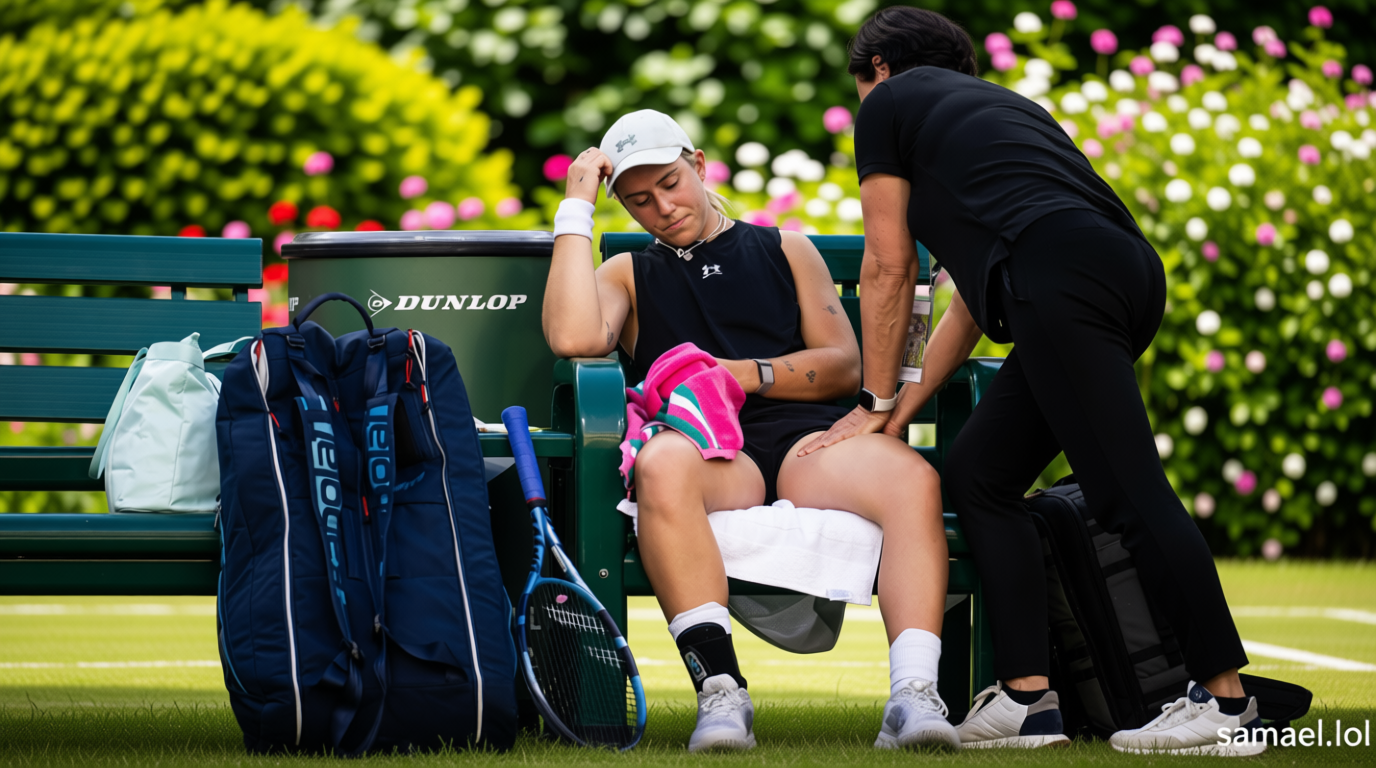
No substitutes in tennis – why are so many British players injured?
Samael.lol – Since March 12th, Sonay Kartal has been sidelined due to an injury sustained during her match against Elena Rybakina at Indian Wells. For Jack Draper, the issue has been his right knee, while Kartal’s back injury and Jacob Fearnley’s rib strain have further strained the resources of Britain’s top 100 players. Adding to this, Emma Raducanu’s two-month absence from the tour due to post-viral symptoms has highlighted the challenges of maintaining peak performance during the clay-court season. This pattern of frequent injuries raises questions about the demands placed on athletes in tennis and the measures being taken to address them.
While the problem is not unique to British players, the country’s athletes have experienced a disproportionate number of setbacks this year. Carlos Alcaraz, the reigning French Open champion, has been unable to defend his title due to a wrist injury, and world number seven Taylor Fritz has spent weeks rehabilitating a long-term knee issue. Despite these global examples, the LTA has noted that British players are particularly affected by recurring injuries, though it claims there is no consistent pattern among them. Performance director Michael Bourne attributes this to the “high load” athletes face, which is difficult to manage in a sport where matches are non-stop and substitutions are not an option.
Bourne explained to BBC Sport that tennis differs from other sports in its relentless pace. “Tennis players tend to play more matches than a lot of other sports,” he said. To illustrate, he compared the workload of footballers like Federico Valverde, who played 101 hours for Real Madrid last season, with that of tennis stars such as Jannik Sinner, who allegedly logged 182 hours, and Carlos Alcaraz, who played 176 hours. “In football, you can substitute players,” Bourne noted, “but in tennis, once you step on the court, you’re there for the full duration. That makes it hard to control how long you’re exposed to physical strain.”
“Tennis players tend to play more matches than a lot of other sports,” said Michael Bourne. “You don’t get to substitute in a game of tennis – once you are on, you are on.”
The LTA has been proactive in addressing these issues, refreshing its entire physiotherapy team over the past 18 months to ensure players have access to modern expertise. However, the organization now faces the challenge of enhancing recovery facilities to keep up with the demands of the sport. British players, who often have more resources at their disposal compared to those from other nations, are still navigating the balance between rigorous training and injury prevention.
Sonay Kartal, for instance, was in the process of rebuilding her form after a back injury during her run to the fourth round at Indian Wells. Her absence has not only impacted her own progress but also limited the availability of top-tier talent during the clay-court swing. Meanwhile, Cameron Norrie remains the sole British player among the top 100 who has avoided significant injury or illness this year. His recent return to the world’s top 20 underscores the importance of consistent performance and resilience in a competitive landscape.
Emma Raducanu’s withdrawal from the Rome tournament last week further exemplifies the difficulties of maintaining a schedule. The 23-year-old was set to make a comeback at the Italian Open but had to pull out after her media obligations left her with post-viral symptoms. Her situation reflects the broader issue of players juggling professional demands with their health. “Financially, there might be people that don’t have that luxury to stop a week out of their schedule and not play,” said Katie Boulter, the British number three who has climbed back into the top 60. “The majority of us are still trying to make a living.” Boulter emphasized that even with data from fitness trackers, it’s challenging to step away when the pressure to perform is constant.
Raducanu’s case also highlights the role of external factors in injury management. While fitness trackers are now being trialed at this year’s remaining Grand Slams, they have been used on the men’s and women’s tours for some time. These devices provide real-time insights into player workload and recovery, but Boulter argued that they are not always enough. “I think it’s impossible as a tennis player to be like, ‘I’m going to take the week off because my wearable says I’m in red,'” she said. “Sometimes the information doesn’t align with the reality of the game.”
British players are increasingly relying on personal support networks to manage their injuries. While the LTA has sent physios to tournaments like Miami to assist with urgent cases, the emphasis is also on players building their own resilience and recovery strategies. This dual approach aims to mitigate the risks of overtraining and prolonged competition. Yet, the long 11-month season remains a significant contributor to the strain on athletes. “Right now it feels like you have to play every single week for 10 months,” Jessica Pegula, chair of the WTA Tour Architecture Council, told BBC Sport in Indian Wells. “If you miss out, it can come back and bite you.” Pegula, who has played the third-most matches in the WTA this season, is advocating for structural changes to the tour to reduce injury risks.
With the global tennis calendar expanding, the need for balance between competition and recovery has never been more critical. While the LTA has taken steps to improve its medical support, the broader tennis community must also address the seasonal demands that lead to burnout and recurring injuries. For British players, the challenge is not only to stay healthy but to maintain momentum in a sport where every match counts. As the grass-court season approaches, the focus will shift to whether these efforts can prevent further setbacks and ensure a more sustainable path for the next generation of talent.
Ultimately, the key to reducing injuries lies in a combination of advanced monitoring, strategic rest periods, and a willingness to prioritize long-term health over short-term gains. For players like Kartal, Draper, and Fearnley, the road to recovery is a testament to their determination, but it also underscores the need for systemic changes in how the sport is structured. As the season progresses, the hope is that these adjustments will help create a more resilient and injury-aware environment for all athletes, both in Britain and around the world.