Germany’s Merz Faces Criticism for Syrian Refugee Remarks
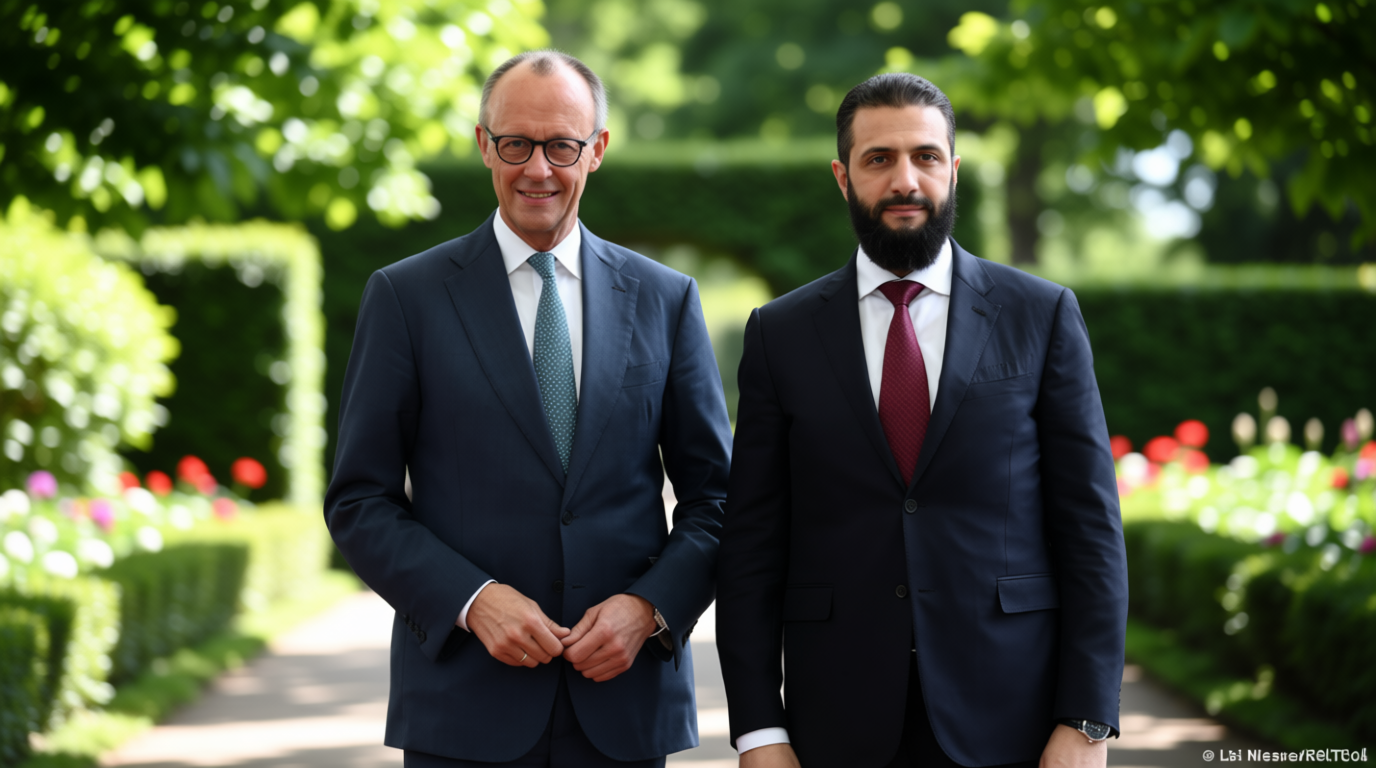
Samael.lol – Chancellor Friedrich Merz stated that approximately 80% of Syrians currently residing in Germany would return to their home country within the next three years. The claim sparked immediate controversy, leading to his clarification. The statement was made during a press conference at Berlin’s Chancellery on Monday, where Merz and Syrian interim president Ahmed al-Sharaa met with journalists following their discussion.
When asked about the number of Syrians in Germany who should return, Merz responded, “In the longer term, over the next three years, and this has also been President Sharaa’s wish, around 80% of the Syrians currently living here should go back to Syria.” This left journalists puzzled. Could 80% of the over 900,000 Syrians in Germany realistically return in three years? Did Merz actually say that?
Hours passed before political figures and commentators began reacting. By Tuesday, Merz reiterated that he had simply shared the Syrian president’s vision. However, al-Sharaa quickly denied this, stating, “I didn’t say that. That was the Chancellor’s statement,” as reported in a Chatham House discussion on Tuesday evening, translated from Arabic.
The situation now risks becoming a diplomatic dispute. Johann Wadephul, the foreign minister, defended Merz on Tuesday, asserting that the remark reflected the German government’s goals. Meanwhile, Green Party representative Luise Amtsberg criticized the claim as “not only out of touch with reality but also cynical.” She argued that the statement overlooked “both the fragile security situation in Syria and the deep integration of many Syrian refugees into German society.”
Other government officials also expressed concern. Anke Rehlinger, the premier of Saarland and a member of the center-left SPD, told RND, “It’s not wise for the Chancellor to propose specific numbers and timeframes, as it may set unmet expectations.” Roderich Kiesewetter, CDU’s foreign policy expert, added in Handelsblatt that “many Syrians work in nursing and medical fields. Their departure could create challenges,” he noted.
The German Hospital Federation supported this view. Henriette Neumeyer, the federation’s vice-chair, highlighted that Syrian doctors form the largest group of foreign medical professionals in the country. Merz had previously mentioned this during Monday’s press conference, saying, “Our interest lies in keeping those who are integrated, as President al-Sharaa emphasized the role of healthcare workers in German hospitals.”
As of now, 1.2 million Syrians live in Germany, a country with a total population of 84 million. Over a quarter of them hold German citizenship. Most refugees arrived after the civil war in Syria began 15 years ago. Around 600,000 Syrians settled in Germany before 2019, while the pandemic significantly slowed the influx. Most Syrians in Germany have subsidiary protection, allowing them to stay as long as they face threats from war, disasters, hunger, or poverty in their homeland. The federal government claims the civil war ended in late 2024, with al-Sharaa, a former militant Islamist leader, now in power.
After an average of seven years in Germany, 42% of Syrian refugees have found employment, with 75% in skilled positions. Those who are working