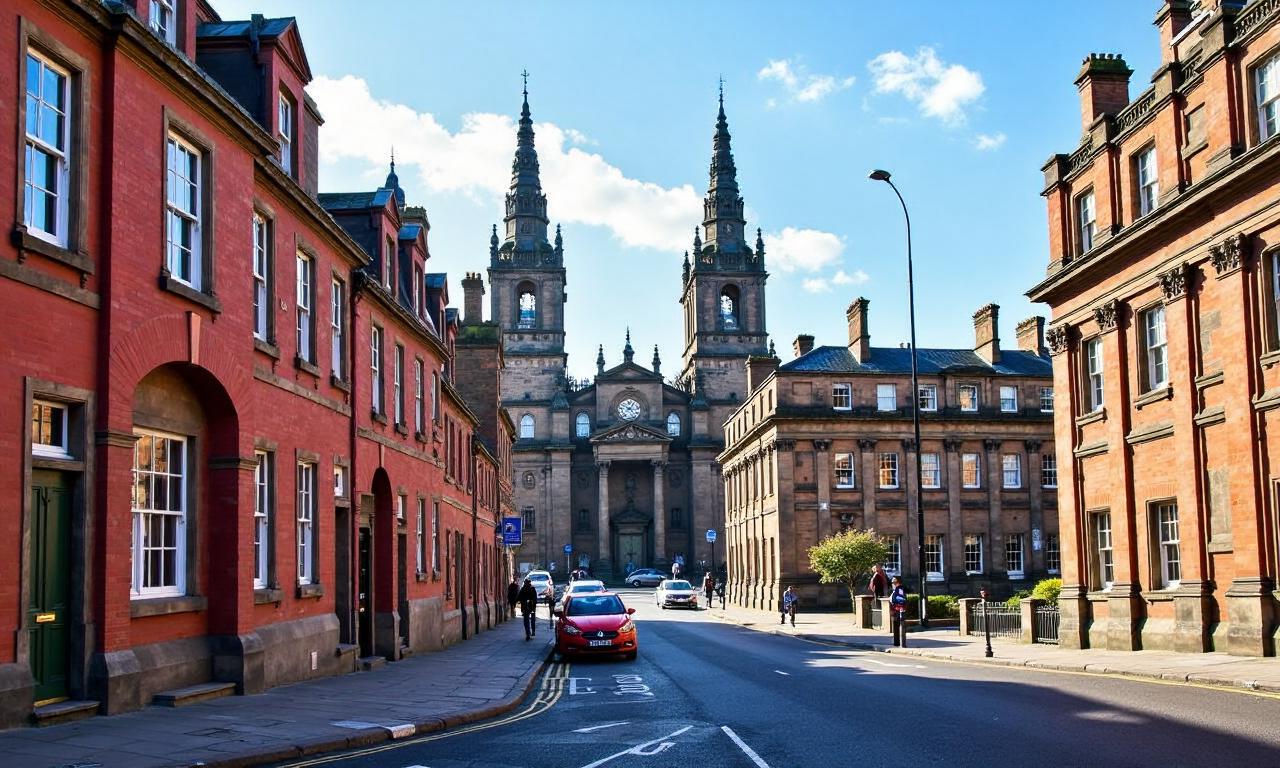
Why a slice of Edinburgh is being bought up by overseas owners
The Transformation of Quartermile
Samael.lol – Quartermile, a neighborhood in Edinburgh, lies between the city’s historic Old Town and The Meadows, a bustling urban park that serves as a green oasis in the heart of the capital. Once home to the Royal Infirmary of Edinburgh, the site has undergone a dramatic transformation, giving way to a modern architectural landscape dominated by glass and steel towers. These structures now stand in contrast to the 19th-century sandstone buildings that originally occupied the area, creating a unique blend of old and new. While the district’s revitalization has drawn attention for its sleek design and commercial appeal, a closer look at its property ownership reveals an unexpected trend: a significant portion of its assets are controlled by international buyers.
A Growing Trend in Overseas Ownership
Recent data from the Registers of Scotland (RoS) highlights a notable shift in property ownership patterns. Over 263 of the 751 titles at Quartermile were registered to overseas addresses during their purchase, with Hong Kong alone accounting for 95 of these. This statistic places Quartermile among the city’s 5,000+ properties where the buyer’s location was outside the UK. While the majority of Scottish land is held by domestic entities, RoS records show that 1.4% of all titles—equivalent to 28,825 properties—are owned by foreign individuals or companies. Edinburgh contributes 18.7% of these international registrations, underscoring the city’s role in this trend.
Quartermile’s name derives from its quarter-mile span from one end to the other, a detail that reflects its scale and ambition. However, the development has sparked debate, particularly due to its towering glass structures and the relocation of the hospital to a site with limited transport access. Critics argue that this shift has altered the district’s character, turning a once-recognizable part of Edinburgh into a symbol of urban redevelopment. Despite these concerns, the area has become a commercial success, attracting tenants such as Skyscanner and prominent legal firms. Its flats, meanwhile, have proven highly desirable, with demand driven by factors such as location and modern amenities.
Implications for the Local Market
The rise in overseas ownership has had a measurable impact on Edinburgh’s real estate market. Data from Citylets, a residential lettings platform, reveals that average monthly rents in the city have surged by 59% over the past decade, reaching £1,509. Quartermile’s properties, though more expensive than comparable ones elsewhere, have seen sustained interest from international buyers. A senior property manager at an Edinburgh firm, who chose to remain anonymous, noted that the district’s central position near the university and city center creates a premium for its location. “This proximity to key institutions and landmarks makes Quartermile an attractive option for those seeking high-value investments,” they said. “As these prices stabilize, they begin to influence the broader market, reflecting a shift toward globalized property dynamics.”
The influx of foreign buyers has also coincided with Edinburgh’s broader economic transformation. As the city increasingly caters to high-end markets, luxury hotels, upscale dining, and boutique shops have become more prevalent. This evolution has created a demand for properties that align with international tastes and expectations. Malcolm Fraser, an Edinburgh-based architect and member of the Common Weal think tank, attributes this phenomenon to the city’s growing foreign ownership. “Quartermile has become a hotbed for speculation because it mirrors developments seen in global hubs like London,” he remarked. “But this trend isn’t just about aesthetics—it’s tied to a wider economic shift, where profits from sectors such as energy and agriculture flow out of the country, often to overseas entities.”
Global Investors and the Role of International Demand
Quartermile’s appeal to overseas buyers extends beyond its architectural flair. It is believed that many of the flats have been purchased by international students and their families, who seek long-term rental opportunities or investment prospects. Additionally, global property investors have shown a strong interest in the area, drawn by its strategic location and potential for capital growth. The data shows that 263 titles were registered to overseas addresses, spread across 44 countries, including Russia, the Cayman Islands, and Singapore. Notably, 95 titles were linked to Hong Kong, while 51 were associated with Singapore and 12 with Malaysia.
Malcolm Fraser further emphasized that the city’s reliance on foreign investment has created a cycle where property value increases are exported rather than reinvested locally. “The rising values in Quartermile, driven by international demand, often benefit overseas investors instead of the local community,” he said. “This reflects a broader pattern in Scotland’s economy, where foreign ownership plays a central role in shaping real estate trends.” Fraser’s critique highlights the tension between urban development and local economic equity, suggesting that the district’s success might come at the expense of its original purpose as a healthcare hub.
Recent Developments and Future Outlook
As of 31 December last year, a total of 5,385 property titles in Scotland were registered with addresses outside the UK, illustrating a steady rise in international ownership. Quartermile’s contribution to this trend is significant, with its 263 overseas titles representing a key segment of the city’s real estate landscape. The district’s mix of offices, luxury housing, and retail spaces has created a microcosm of global urban development, attracting attention from both local and international markets.
One example of this transformation is the India Buildings, a historic structure on Victoria Street that has been leased to Virgin Hotels. Such landmarks, now repurposed for commercial use, symbolize the changing face of Edinburgh. While this shift has brought economic benefits, such as job creation and increased property values, it has also raised questions about the long-term implications for the city’s identity and affordability. As the Quartermile continues to evolve, its story serves as a case study for how urban redevelopment can intersect with global investment trends, reshaping the landscape of a once-traditional area.
Quartermile’s story is not just about architecture or commerce—it’s about the broader forces driving property markets in Scotland. The district’s growth reflects a national pattern where foreign investment is becoming increasingly influential, particularly in areas like Edinburgh that offer a combination of historical charm and modern infrastructure. While this development has brought prosperity to some, it also raises important questions about who truly benefits from the rising values. As the city moves forward, the balance between international investment and local needs will remain a critical factor in shaping its future.