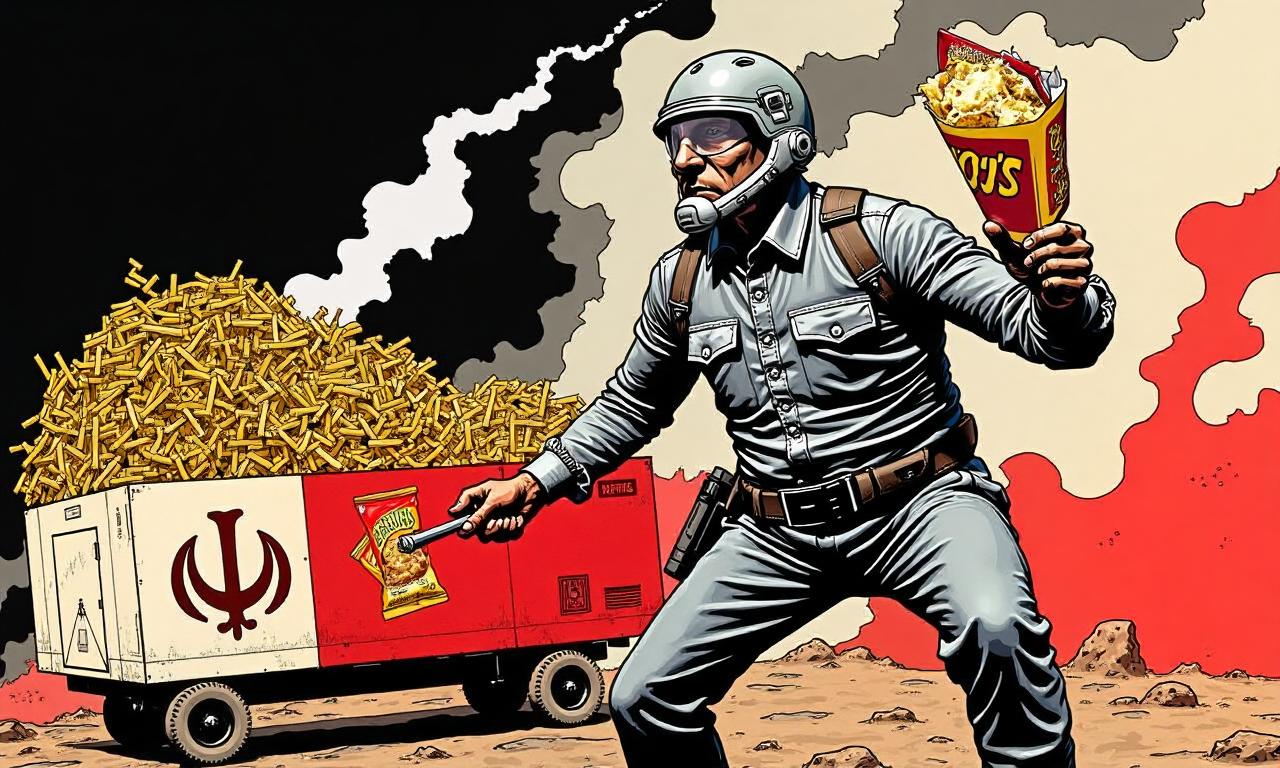
Snack Giant Switches to Black and White Packaging as Iran War Disrupts Ink Supplies
Samael.lol – Calbee, a leading Japanese snack manufacturer, has announced a temporary shift to black-and-white packaging for several of its popular products due to supply chain issues related to ink ingredients caused by the Iran conflict. This change will affect 14 items, including crisps and prawn crackers, which will be available in Japanese stores starting May 25. The company attributed the design adjustment to “supply instability affecting raw materials amid ongoing tensions in the Middle East,” aiming to safeguard product availability during the crisis.
Strait of Hormuz Closure Sparks Global Supply Chain Concerns
The disruption began when Iran effectively closed the Strait of Hormuz, a critical maritime passage for global energy trade, in retaliation for U.S. and Israeli attacks on its facilities. This action has triggered widespread supply chain challenges, with businesses worldwide reporting increased costs from fuel, plastics, and helium shortages. Calbee’s move highlights how even seemingly routine goods are now grappling with the ripple effects of geopolitical tensions.
“This measure is intended to help maintain a stable supply of products,” said Calbee in a statement, emphasizing the urgency of addressing raw material shortages.
Oil and gas prices have risen sharply since the conflict erupted on February 28, as shipping through the Strait of Hormuz came to a standstill. Naphtha, a key byproduct of oil refining used in both ink and plastics, has faced particularly severe supply issues. In Asia, naphtha prices have nearly doubled, forcing companies to absorb higher costs. The deputy chief cabinet secretary of Japan, Kei Sato, noted that approximately 40% of the nation’s naphtha imports originate from the Middle East, underscoring the region’s economic dependence on the area.
Japan’s Efforts to Diversify Energy Imports
In response to the growing vulnerability, Japanese Prime Minister Sanae Takaichi revealed plans to diversify naphtha sources. The government is now seeking alternatives beyond the Middle East, including imports from the United States. Sato added that authorities are working to “stabilise and resolve any supply imbalances and bottlenecks,” signaling a broader strategy to mitigate risks from regional conflicts. This initiative comes amid mounting pressure to reduce reliance on Middle Eastern energy supplies, which have become a focal point of global trade disruptions.
Broader Industry Impacts
Calbee’s packaging change is part of a larger pattern affecting industries across the globe. In April, Japanese foodmaker Mizkan halted sales of certain products and increased prices for others due to a shortage of polystyrene containers, a material integral to food packaging. Similarly, car manufacturers like Toyota and Hyundai have experienced reduced profits, citing higher material costs and slower sales as consequences of the war. These examples illustrate the far-reaching economic consequences of the Strait of Hormuz blockade.
The crisis has also disrupted air travel, with numerous airlines halting flights or grounding aircraft due to soaring jet fuel prices. In the U.K., fashion retailer Next raised prices by up to 8% in non-European markets, linking the increase to both higher fuel costs and global supply chain disruptions. These actions reflect the interconnected nature of modern economies, where a single event in a strategic region can reverberate across multiple sectors.
While the focus has been on the Middle East, the effects of the conflict extend to other parts of the world. For instance, the Japanese government has been closely monitoring energy markets, as the nation’s industries rely heavily on imported naphtha for manufacturing processes. The situation has also raised concerns about the availability of other essential materials, such as helium, which is critical for technology and healthcare sectors. These disruptions are not isolated incidents but rather a symptom of a broader challenge in maintaining global supply chains during times of geopolitical uncertainty.
Long-Term Implications for the Global Economy
Experts warn that the current disruptions could have lasting impacts on the global economy. The closure of the Strait of Hormuz has exposed the fragility of international trade routes, particularly for countries dependent on Middle Eastern energy exports. With naphtha prices surging, businesses face not only immediate financial strain but also long-term adjustments to sourcing strategies. Calbee’s temporary packaging shift serves as a practical example of how companies are adapting to these challenges, even if it means altering long-standing design traditions.
The Middle East’s role as a primary supplier of raw materials has made it a linchpin in the global economy. For Japan, the 40% naphtha import dependency means that any interruption in shipments can lead to significant supply gaps. This has prompted both government and corporate responses, including diversification efforts and cost management measures. However, the full extent of the crisis remains uncertain, as businesses continue to navigate the complexities of a disrupted supply chain.
Meanwhile, the conflict has sparked debates about energy security. Some analysts argue that the situation highlights the need for greater investment in alternative energy sources and regional infrastructure to reduce dependence on single routes for critical supplies. Calbee’s decision, while seemingly minor, underscores the broader implications of the war on everyday consumer goods and the resilience required to adapt to sudden changes in global markets.
As the situation evolves, industries will face ongoing challenges. From food packaging to automotive manufacturing and fashion retail, the ripple effects of the Iran war are reshaping supply chains and consumer habits. The transition to black-and-white packaging may be a small adjustment, but it symbolizes the larger shifts in production and distribution strategies needed to withstand the pressures of the current geopolitical climate. With international tensions persisting, the global economy remains on high alert for further disruptions. The coming months will likely reveal how effectively businesses can mitigate these impacts and whether the changes made in response to the crisis will become permanent adaptations or temporary fixes. For now, the focus is on stability, as companies strive to keep products flowing despite the challenges posed by the war.