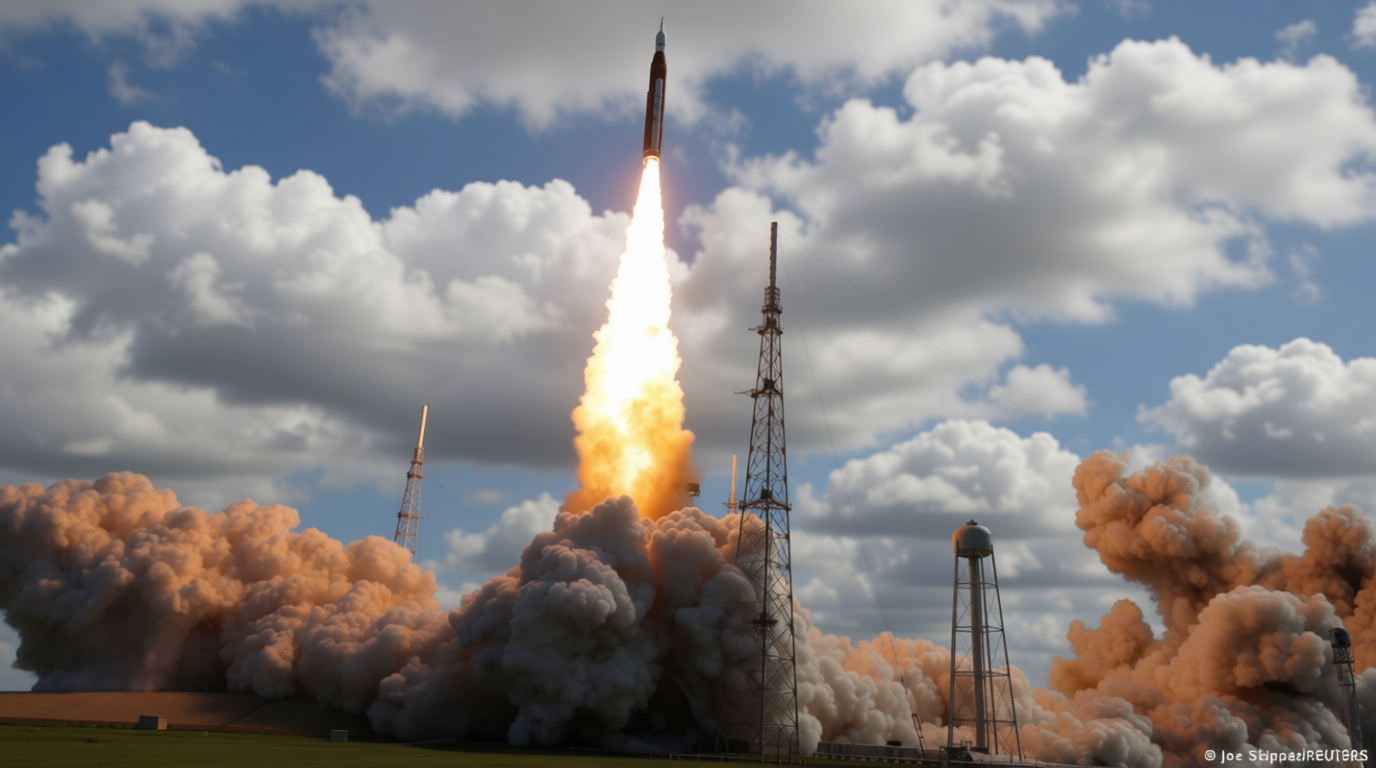
Artemis II Mission Launch Marks Return to Lunar Exploration
Samael.lol – The Artemis II spacecraft launched Wednesday evening from Florida’s Kennedy Space Center, signaling the resumption of human lunar missions after a 50-year hiatus. This 10-day journey serves as a pivotal test for NASA’s long-term goal of establishing a sustained presence on the Moon. The crew of four astronauts embarked on a historic orbital flight, setting the stage for future surface landings.
Key Details of the Launch
NASA’s launch window opened at 6:24 p.m. ET (22:24 GMT) and lasted two hours. The mission represents the agency’s most ambitious undertaking in recent decades, preparing for a planned crewed landing before China’s anticipated first lunar touchdown. The spacecraft traveled approximately 252,000 miles (406,000 km) from Earth, reaching the farthest point humans have ventured into space.
Orion’s Role and Testing Objectives
Astronauts aboard the Orion capsule will manually operate the spacecraft during the lunar orbit mission, a first for the program. This trial flight aims to validate the systems that will support future Artemis missions, including life-support mechanisms, crew interfaces, and communication protocols. While no landing is planned this time, the mission will simulate key phases of a full Moon landing, such as navigating beyond the Moon’s orbit and executing a precise return to Earth.
The European Service Module (ESM) aboard Orion, developed by Airbus for the European Space Agency, functions as the spacecraft’s core power source. It integrates propulsion, thermal control, and life-sustaining systems, utilizing 33 engines, including a repurposed Shuttle orbital maneuvering unit. This critical component highlights international collaboration in NASA’s deep space exploration efforts.
Following the launch, NASA astronauts Christina Koch, Victor Glover, Reid Wiseman, and Canadian astronaut Jeremy Hansen returned to Florida from Houston after a two-week quarantine. The mission’s success will provide essential data to refine the Artemis program, with a target for a permanent lunar base by 2028. The next step involves a crewed landing near the Moon’s south pole, marking a new era in space exploration.
Artemis II represents a foundational phase in NASA’s plans to return humans to the Moon. By testing the Space Launch System rocket and Orion capsule in orbit, the mission ensures the reliability of systems that will enable future surface operations. This milestone underscores the agency’s commitment to redefining humanity’s presence beyond Earth.
Watch the launch live on NASA’s YouTube channel. The event marks a significant moment in the agency’s journey toward long-term lunar exploration, with the Artemis program poised to build on this historic achievement.