Fact Check: Donald Trump Speaks on Iran, Oil, and Economy
Trump’s Assertions on Iran’s Leadership
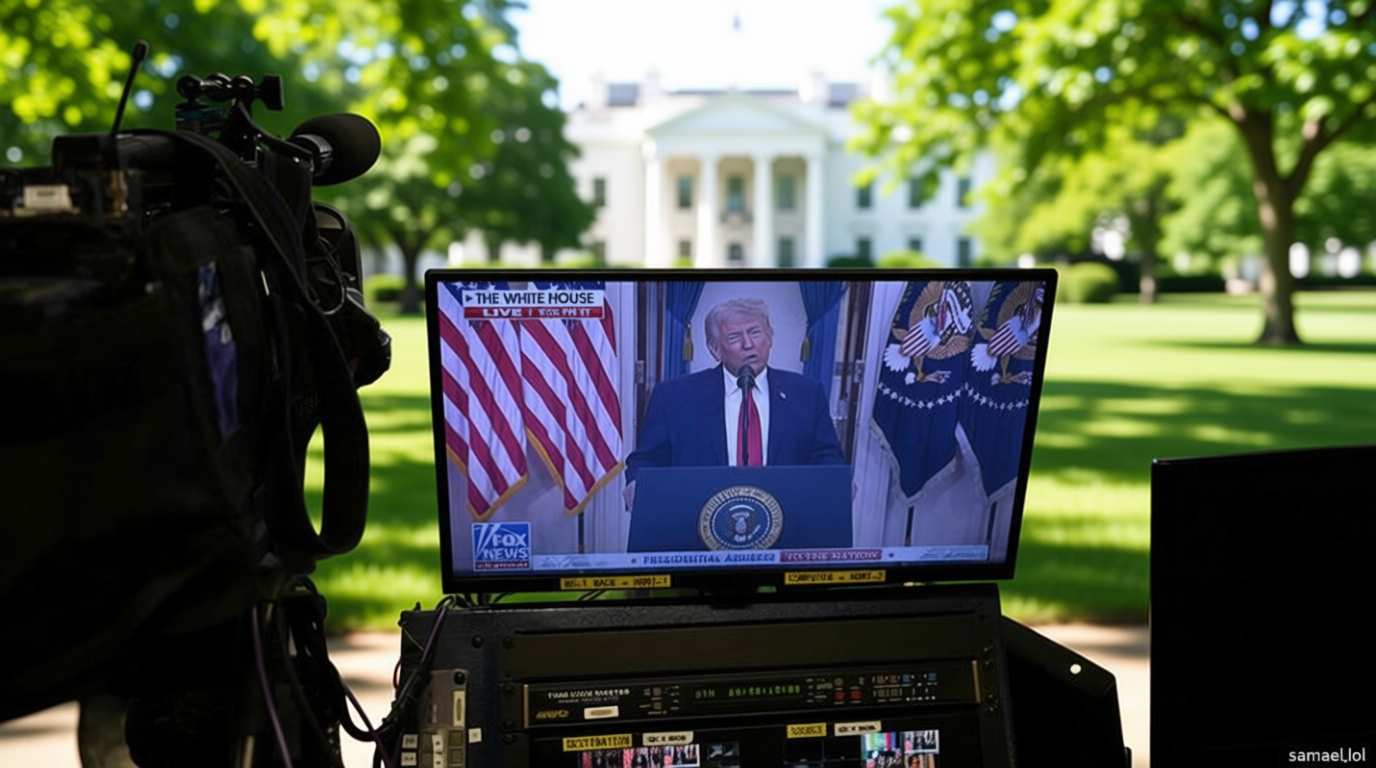
Samael.lol – In a national address, US President Donald Trump outlined his stance on the Iran conflict, asserting that “all of their original leaders” have perished and that the nation is “totally independent” of Middle Eastern oil. However, the accuracy of these claims has been questioned. A month following the war’s initiation, Trump delivered a speech on April 1st from the White House, stating the US would “hit Iran extremely hard over the next two to three weeks” and “bring them back to the Stone Ages, where they belong.” He also claimed that “core strategic objectives are nearing completion.”
“Regime change was not our goal. We never said regime change, but regime change has occurred because of all of their original leaders’ death. They’re all dead,” Trump stated in a transcript.
While it is true that Trump did not explicitly frame regime change as a primary objective at the war’s outset, he later implied its occurrence. Key figures such as Qassem Soleimani, a top Iranian military leader, were killed during his first term. In the current conflict, several high-ranking Iranian leaders have been eliminated, including Supreme Leader Ayatollah Ali Khamenei. Yet, his son Mojtaba Khamenei now holds the position, suggesting a potential continuity rather than a complete shift in governance. Other vital officials, like President Masoud Pezeshkian and Foreign Minister Abbas Araghchi, remain in place, further complicating the narrative of total regime transformation.
Oil Independence and Economic Impact
Trump emphasized the US’s “total independence” from Middle Eastern oil, but data tells a different story. The nation leads global crude oil production, according to the US Energy Information Administration (EIA) and the Energy Institute’s Statistical Review of World Energy. Still, the American Fuel & Petrochemical Manufacturers (AFPM) reports that 40% of US oil imports come from the Middle East. In 2022, 12% of this originated in the Persian Gulf, and by 2025, the share had dropped to 8.5%, equivalent to roughly 250 million barrels.
“We’re now totally independent of the Middle East, and yet we are there to help. We don’t have to be there. We don’t need their oil,” Trump declared.
Despite production dominance, the US remains reliant on Middle Eastern oil. In 2025, total imports from the region reached $56.9 billion, as per the Office of the United States Trade Representative. Shahryar Pasandideh, a Ph.D. candidate in political science at The George Washington University, noted that “American consumers are already competing with buyers elsewhere for barrels of crude oil embedded in the refined products they use.” This suggests that even partial self-sufficiency does not fully insulate the US from regional economic disruptions.
Economic Investment Claims
Trump also highlighted the influx of investments into the US since his presidency, stating the country has “received more than $18 trillion in investments.” This claim, however, requires closer examination. While the figure is often cited, the exact details and sources of such a massive amount remain subject to debate. The statement was delivered in a 20-minute speech, where Trump contrasted his administration’s economic policies with the challenges faced under the previous government.
Ultimately, Trump’s remarks on Iran, oil, and the economy present a mix of bold assertions and nuanced realities. Fact-checkers have identified discrepancies in his claims, particularly regarding Iran’s leadership and the extent of US oil independence. The statements highlight both strategic goals and economic motivations, offering a glimpse into the broader implications of his policies.