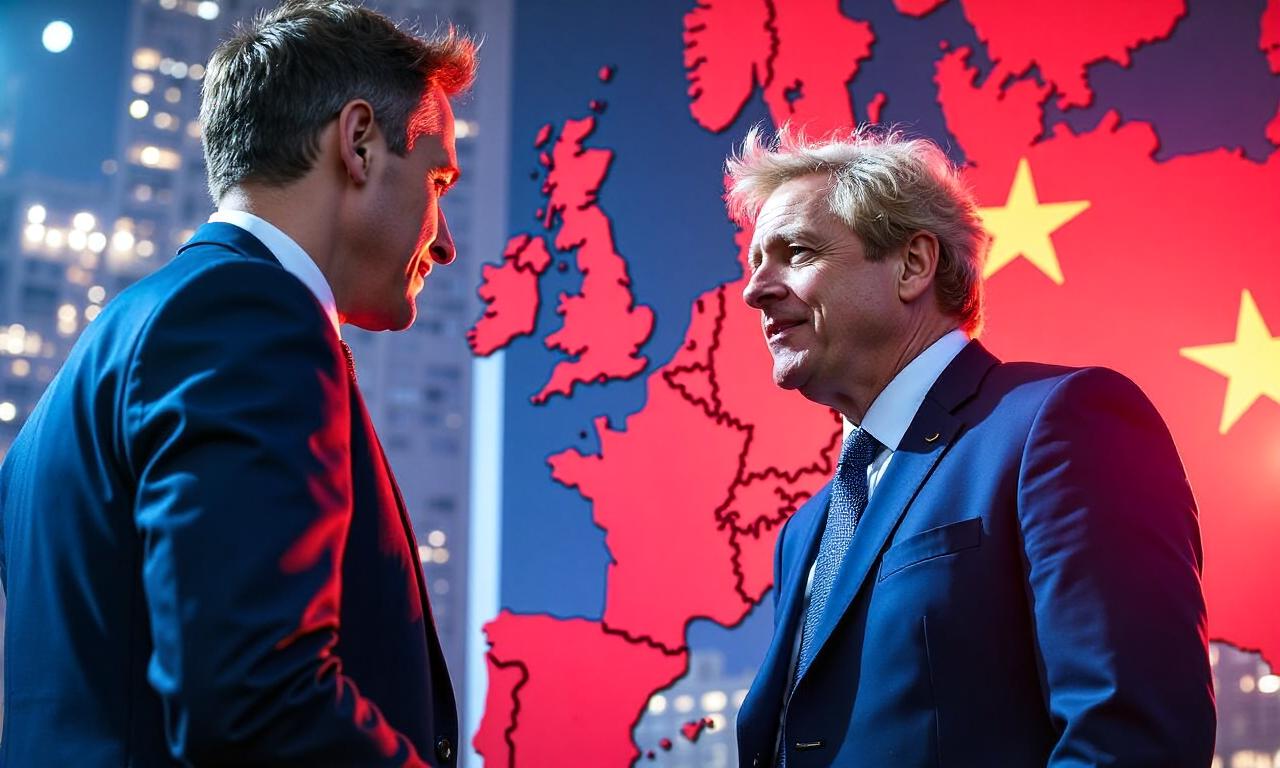
Britain at the Heart of Europe: How Starmer’s Plans Are Reshaping EU Relations
Samael.lol – Prime Minister Sir Keir Starmer has positioned himself as a leader aiming to rekindle the UK’s ties with the European Union, framing this as a strategic move to secure public support. This approach, however, has sparked mixed reactions across the EU, where some view it as a promising shift, while others remain skeptical. The idea of a UK government seeking closer alignment with the EU, especially as the 10th anniversary of the Brexit vote approaches next month, is surprising given the political divide that once seemed insurmountable.
The Defiant Speech and Political Necessity
Starmer’s address, which came shortly after a significant setback in local elections, marked a pivotal moment in his campaign to stabilize his leadership. The speech was presented as a bold declaration, with the prime minister emphasizing the need for a renewed focus on Europe. He outlined a vision of a Labour government that would “rebuild our relationship with Europe” and position the UK as a central pillar of EU engagement. This, he argued, would strengthen the nation in key areas such as economic stability, trade agreements, and defense cooperation.
“This Labour government will be defined by rebuilding our relationship with Europe, by putting Britain at the heart of Europe, so that we are stronger on the economy, stronger on trade, stronger on defence,” Starmer asserted in his address.
The speech was framed as a response to the recent challenges, with Starmer aiming to reframe his political narrative. Yet, some within the EU have questioned whether his promises are more than symbolic. For instance, Jill Rutter, a former British civil servant and senior research fellow at the UK in a Changing Europe think tank, called the speech “a damp squib.” She noted that it lacked a single, concrete proposal, leaving the EU to wonder if the UK’s commitment to closer ties was genuine or a temporary political strategy.
Regional Divisions in the EU’s Response
The reactions from EU members have been divided, reflecting differing priorities. On defense and security matters, there is a more unified front, as Europe grapples with pressing global threats like the Iran conflict, the Russia-Ukraine war, and strained relations with the United States under Donald Trump. The UK, as a steadfast NATO ally and a reliable partner to the EU, is seen as a key player in these areas. Recent moves, such as the announcement of new sanctions against Russia, underscore the UK’s active role in shaping international strategy.
Conversely, economic concerns have led to a more cautious stance in Brussels. The EU has long been wary of the UK’s potential to exploit its post-Brexit flexibility for short-term gains, rather than committing to deeper integration. While some EU nations support Starmer’s bid, others question the feasibility of meaningful progress without significant concessions on issues like free movement of labor and regulatory alignment.
Starmer’s Focus on Sector-Specific Agreements
Starmer has centered his European outreach around a few specific agreements, including the SPS (Sanitary and Phytosanitary) framework for food and drink safety, a carbon emissions trading pact, and the youth experience scheme. The latter, which aims to help disadvantaged young people gain international exposure, has drawn attention for its dual purpose: addressing domestic concerns about youth opportunities while aligning with EU interests. However, the scheme was initially pushed back by the Starmer government, which had resisted EU demands for greater labor mobility.
These sectoral agreements, while pragmatic, are seen as limited in scope. The EU has been clear that any meaningful economic benefit requires more than just incremental changes. A customs union, for example, would eliminate trade barriers and create a more integrated market, while joining the EU single market would offer broader access to goods and services. Yet, Starmer’s current proposals have not yet addressed these larger ambitions, leaving room for doubt about the depth of his commitment.
The Free Movement of Workers: A Point of Contention
One of the most critical hurdles in deepening UK-EU relations is the issue of free movement of workers. The EU insists that economic integration depends on this principle, which allows citizens of member states to live and work in any other country within the bloc. This is a major sticking point, particularly for UK voters who have consistently expressed concerns about immigration. The UK’s recent emphasis on immigration as a political priority has made it challenging to secure widespread support for abandoning free movement.
Starmer’s rhetoric of “a bigger response” on Europe has been met with scrutiny. While he acknowledges the need for more substantial action, the question remains: what exactly constitutes this “bigger response”? The EU has been patient, welcoming any effort from the UK to mend relations, but progress has been slow. The current framework of post-Brexit agreements, while useful, has not been enough to fully satisfy European ambitions for closer ties.
Strategic Reassessment and Future Prospects
Despite the cautious optimism in Brussels, there is a growing sense that the UK’s foreign policy will remain consistent, regardless of political changes. The EU’s confidence in Starmer’s leadership, as well as his potential rivals, suggests that the UK’s role as a reliable international actor is unlikely to shift. This is evident in the continued support for initiatives like the Ukraine war effort and the formation of an international maritime force to protect the Strait of Hormuz. These actions align the UK with European priorities, even as it navigates domestic debates on immigration and economic policy.
Yet, the economic dimension of UK-EU relations remains a point of contention. The EU’s member states, driven by self-interest, are hesitant to grant the UK unrestricted access to the single market without reciprocal commitments. This has led to a standoff where the UK seeks incremental improvements, while the EU pushes for more comprehensive agreements. The challenge for Starmer lies in balancing these competing demands and convincing both domestic and international stakeholders that his vision for a “heart of Europe” strategy is viable.
Pathways to Deeper Integration
To achieve meaningful economic gains, the UK would need to embrace more ambitious steps. A customs union, which would harmonize trade rules and reduce tariffs, is often cited as a critical pathway. Similarly, joining the EU single market would provide access to a larger pool of consumers and businesses, fostering growth and stability. These options, however, require a shift in the UK’s approach, moving beyond sector-specific deals to a broader alignment with EU regulations and policies.
Starmer’s challenge is to sell this vision to a public that remains deeply divided on Brexit. While his speech highlighted the need for a “bigger response,” it is unclear whether this translates into concrete policy. The EU, meanwhile, continues to emphasize the importance of consistency and long-term commitment. As the next EU-UK summit approaches, the outcome will be a test of Starmer’s ability to bridge the gap between UK and EU interests, particularly in the economic sphere.
Ultimately, the success of Starmer’s strategy will depend on whether the UK can convince the EU that it is willing to make necessary compromises. The 10th anniversary of Brexit serves as a reminder of the UK’s transformative journey, but it also highlights the ongoing challenges of redefining its relationship with Europe. With the upcoming summit as a key opportunity, the stakes have never been higher for