Dozens of Nigerian Fishermen Feared Dead After Chad Air Strikes on Boko Haram
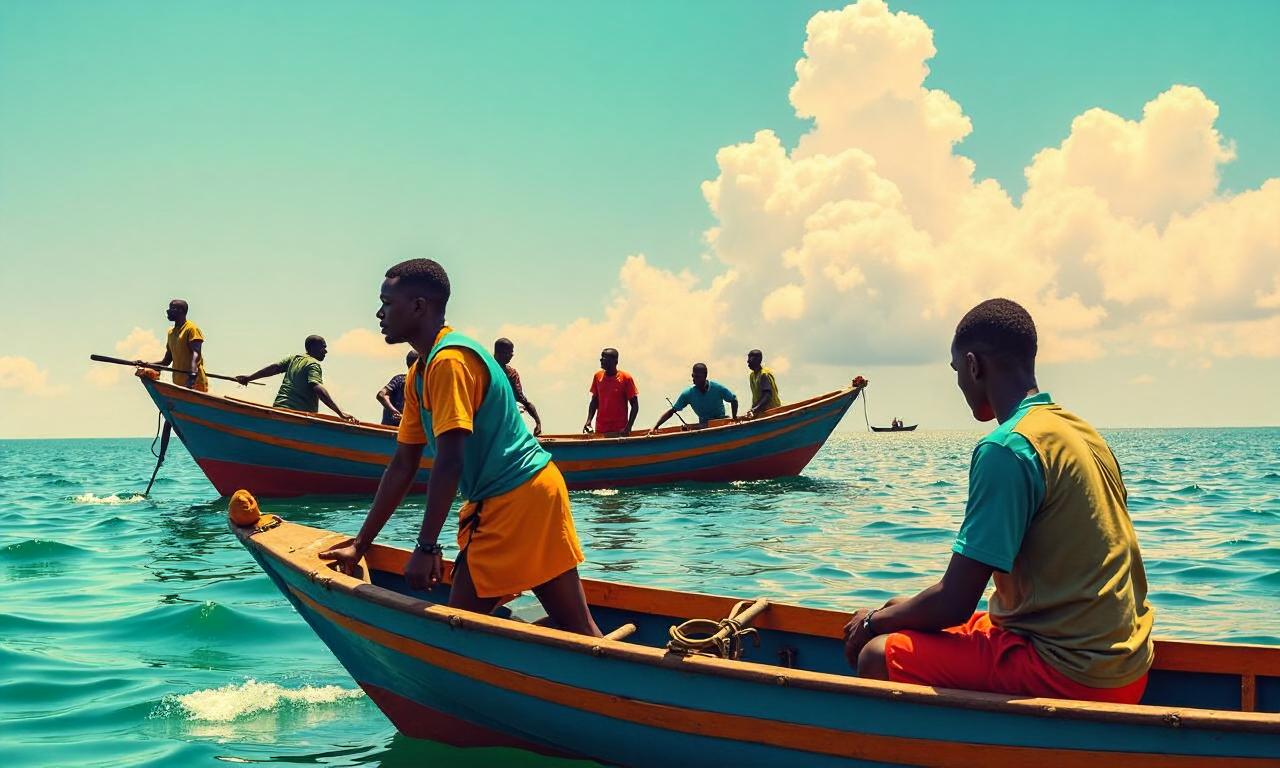
Samael.lol – Recent air strikes conducted by Chad’s military in the Lake Chad region have raised fears of significant casualties among Nigerian fishermen, according to a local leader. The attack, targeting Boko Haram militants, has left many in the community concerned about the lives lost. Abubakar Gamandi Usman, chairman of the Lake Chad Basin Fisheries Association of Nigeria, reported that several members of his organization are missing, with estimates suggesting over 40 individuals may have been killed. While no bodies have been recovered yet, Usman believes that the strikes have hit both Boko Haram fighters and fishermen, with some drowning after fleeing in overloaded boats.
The Lake Chad basin, a vast expanse of interconnected waterways and marshlands, spans across four nations: Nigeria, Chad, Niger, and Cameroon. This region has historically been a hub for Boko Haram and its rival faction, Islamic State West Africa Province (Iswap), which have long used the area as a base for their operations. Usman explained that the militant group retreated to islands following an attack on Chadian military bases, a move that displaced local fishermen who also reside in these areas. The chaos created by the air strikes has intensified the risk for civilians, as both Boko Haram and the fishermen scrambled to escape.
In a statement shared on Facebook, the Chadian presidency announced that it had carried out “intensive air strikes” in retaliation for “unjustified attacks” by Boko Haram. These attacks occurred on Monday and Wednesday of the previous week, targeting Chadian military installations near Lake Chad. The statement claimed the strikes were necessary to counter the insurgency, which had reportedly killed at least 24 soldiers and two generals. However, the focus of the operations has shifted to the civilian population, particularly those who rely on the lake for their livelihood.
Usman emphasized that the islands, critical for fishing activities, are now battlegrounds. He noted that the same islands, which were once safe havens for fishermen, have become perilous due to the militants’ presence. “After Boko Haram attacked Chadian forces, they retreated to islands they operate from. Fishermen also inhabit these islands,” Usman told the BBC. This overlap has led to a tragic situation where fishermen are caught in the crossfire, unable to distinguish between enemy combatants and their own community.
Following the Chadian air force’s operations on Friday, panic spread across the region. Boko Haram fighters and fishermen alike attempted to flee, but the deep waters of Lake Chad have complicated rescue efforts. Usman described the challenges faced by the community, stating that some areas of the lake are too deep for effective search and recovery. Additionally, the local fishermen have limited access to canoes, as many are controlled by the militant group. This control extends to the transportation of fish to markets, with Boko Haram collecting taxes from those who use the waterways.
The conflict in the Lake Chad region has escalated in recent months, with attacks on security forces becoming more frequent. Alongside these assaults, there have been reports of kidnappings and raids on nearby villages, deepening the crisis for civilians. Usman highlighted that the situation is not new, pointing out that Chad’s military operations have previously resulted in civilian casualties. In October 2024, for instance, air strikes targeting Boko Haram on Tilma Island were said to have killed dozens of Nigerian fishermen, raising questions about the proportionality of such actions.
While Chad’s military has been accused of causing unintended harm to civilians, the Nigerian military has also faced similar criticism. Both forces have been described as claiming civilian deaths during operations against armed groups and jihadist fighters, though they often attribute these losses to accidental collateral damage. Most recently, the Nigerian military denied media reports that suggested civilian casualties during air strikes in the central Niger state on Sunday. A military spokesperson, Maj Gen Michael Onoja, stated that the operations were based on “credible, actionable intelligence,” aiming to minimize risks to non-combatants.
Despite these efforts, the region remains vulnerable. The dual threat posed by Boko Haram and the Chadian military has created an environment of uncertainty for the local population. Fishermen, who have long depended on the lake for sustenance, now face the constant danger of being caught in crossfire. The community’s reliance on the waterways, combined with Boko Haram’s control over access, has made them easy targets during attacks. This has led to a growing sense of insecurity, with families fearing for their safety as the conflict continues to spread.
As the situation evolves, the focus remains on the human cost of the conflict. With each air strike, the lives of fishermen are at risk, underscoring the need for improved coordination between military forces and local communities. The ongoing struggle for control over the Lake Chad region highlights the complex interplay between security operations and civilian livelihoods, as the area becomes a front line in the broader fight against terrorism. The BBC continues to monitor developments, providing updates on the impact of these strikes on the people living in the region.
For more news from the African continent, visit BBCAfrica.com. Follow us on Twitter @BBCAfrica, on Facebook at BBC Africa, or on Instagram at bbcafrica.