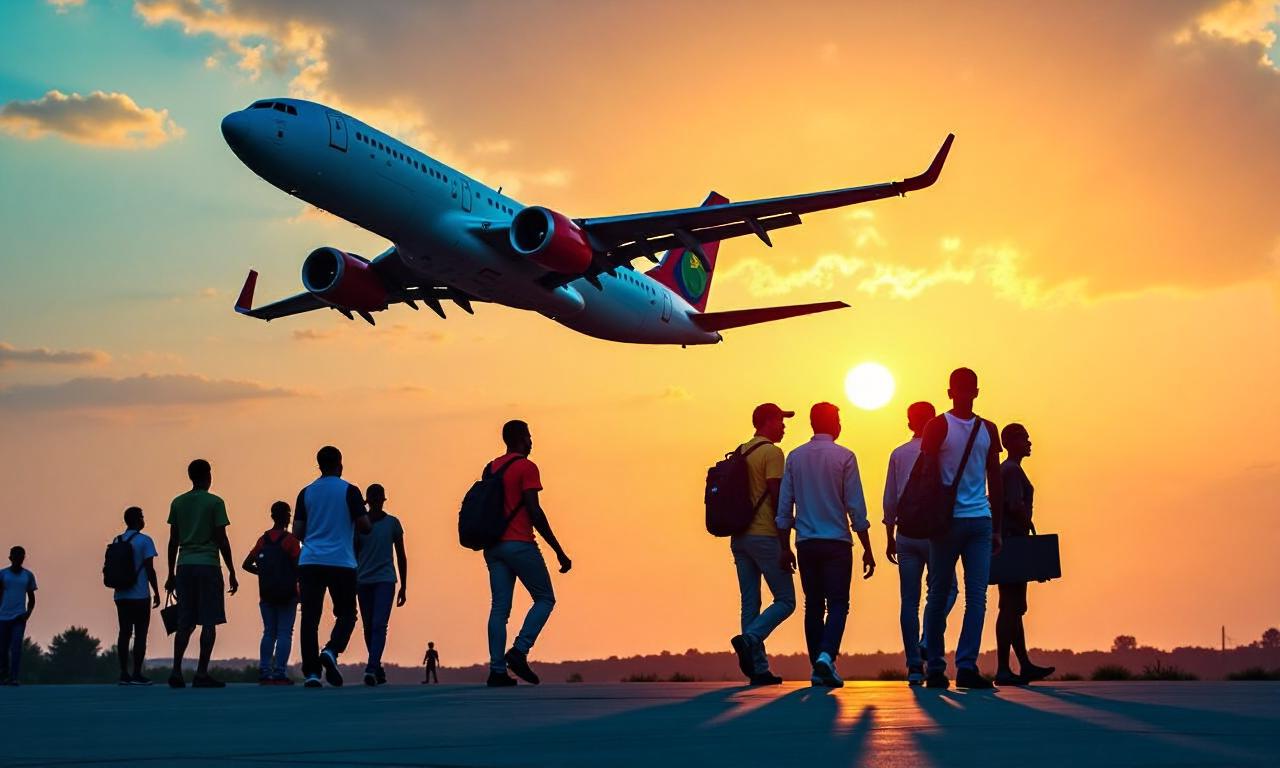
Ghana to Evacuate 300 Citizens from South Africa Amid Xenophobic Tensions
Samael.lol – Ghana has decided to repatriate 300 of its citizens from South Africa as xenophobic demonstrations intensify across the country. The move comes after a surge in anti-immigrant violence, prompting the nation’s foreign minister to issue an urgent directive. Samuel Okudzeto Ablakwa, Ghana’s Foreign Minister, shared a statement on X (formerly Twitter) on Tuesday, confirming that the president had authorized the “immediate evacuation” of distressed Ghanaians. The announcement followed reports of safety concerns, with affected nationals seeking assistance at the Ghanaian embassy in Pretoria to prepare for relocation.
Protests Target Foreign Nationals
The protests, which have drawn thousands of participants, are centered around demands to curb illegal immigration. Demonstrators argue that an influx of undocumented foreigners has strained local resources, contributing to rising unemployment, housing shortages, and increased crime rates. While the government has condemned the violence as “isolated acts of criminality,” the situation has sparked fears of a broader xenophobic backlash. The Foreign Ministry’s advisory urged Ghanaians to avoid public gatherings and close their businesses in Durban, a key port city, ahead of planned demonstrations. This precautionary measure aims to protect citizens from potential harm during the unrest.
“Protests and criminal acts directed at foreign nationals do not reflect government policy,” said South African President Cyril Ramaphosa on Monday. He emphasized that the country would continue to “regulate migration, secure our borders, and enforce our laws” to address the issue systematically. However, the president’s reassurance did little to calm concerns, as the protests have already left a visible impact on communities.
South Africa’s Denial of Attacks
Last week, South African authorities initially dismissed allegations of targeted violence, stating that the videos widely circulated online were fake. Despite this, the foreign ministry’s evacuation plan was triggered by a sense of urgency, with Ghanaians reportedly registering at embassies to be prioritized for rescue. The decision reflects growing international pressure on South Africa to address the safety of its African diaspora. Meanwhile, the government has reiterated its stance that xenophobic incidents are sporadic and not part of a coordinated national strategy.
Among the most vocal critics, Ghana and Nigeria have recently summoned South African envoys to their capitals, citing mistreatment and harassment of their citizens. Ghana has also escalated its efforts by writing to the African Union (AU), urging a discussion on the matter. The nation highlighted that the crisis posed a “serious risk to the safety and wellbeing” of Africans in South Africa, emphasizing the need for a unified response. The AU, however, has yet to issue a formal statement on the issue, though it is expected to address it in upcoming meetings.
Global Concerns and Regional Impact
The situation has not gone unnoticed by other African nations. Kenya, Malawi, Lesotho, and Zimbabwe have similarly advised their citizens to remain cautious in South Africa. These warnings highlight the interconnected nature of migration challenges across the continent, as well as the shared responsibility to protect vulnerable communities. South Africa, home to more than three million foreigners—comprising about 5% of its population—faces an ongoing debate over the balance between economic integration and national security.
“Xenophobia has long been an issue in our country, and occasional outbursts of deadly attacks have been part of this trend,” noted a regional analyst in a recent interview. The phenomenon is rooted in historical tensions and socio-economic grievances, with many South Africans feeling that foreign workers are displacing locals in the job market. This sentiment has fueled protests, even as the government seeks to distance itself from the violence.
The evacuation of Ghanaian nationals underscores the severity of the situation, as over three million foreigners reside in South Africa, though the actual number of undocumented immigrants is believed to be higher. The government has faced criticism for its handling of the crisis, particularly after the release of videos showing attacks on foreign nationals. While some have interpreted these clips as evidence of a xenophobic surge, others argue that they are exaggerated or selectively shared to provoke public outrage.
Despite the recent protests, South Africa’s officials have maintained that the country is not responsible for the violence. “We have nothing to hide,” a government spokesperson said, defending the administration’s approach. The statement comes as the nation works to manage its diverse population while addressing concerns about economic competition and cultural integration. However, the repeated incidents have eroded public trust, with many Ghanaians and other African nationals now viewing the country as a potential threat to their safety.
As the protests continue, the Ghanaian government has taken proactive steps to ensure the well-being of its citizens abroad. The evacuation of 300 individuals is part of a broader effort to mitigate risks and provide support to those affected by xenophobic violence. Meanwhile, the international community watches closely, with the African Union potentially stepping in to mediate discussions on the crisis. For now, the focus remains on immediate safety, but the underlying tensions suggest a longer-term challenge for South Africa’s leadership.
Xenophobia has been a persistent issue in South Africa, with historical roots in colonial-era policies and economic disparities. In recent years, the phenomenon has resurfaced in waves, often linked to political rhetoric that frames foreign nationals as economic competitors. The latest wave of protests, which began last week, has intensified this sentiment, prompting both local and international responses. As the government works to stabilize the situation, the evacuation of Ghanaians serves as a reminder of the global reach of these domestic challenges.
With the African Union poised to address the issue, the crisis has become a focal point for regional cooperation. Ghana’s call for a unified approach highlights the shared vulnerability of African communities across the continent. South Africa’s response, however, has been measured, with officials insisting that the government remains committed to managing migration effectively. The upcoming discussions may determine whether the country can restore confidence and prevent further escalation of xenophobic violence.
The BBCAfrica.com website offers additional insights into the evolving dynamics of migration and xenophobia on the African continent. For real-time updates and further coverage, follow us on Twitter @BBCAfrica, on Facebook at BBC Africa, or on Instagram at bbcafrica.