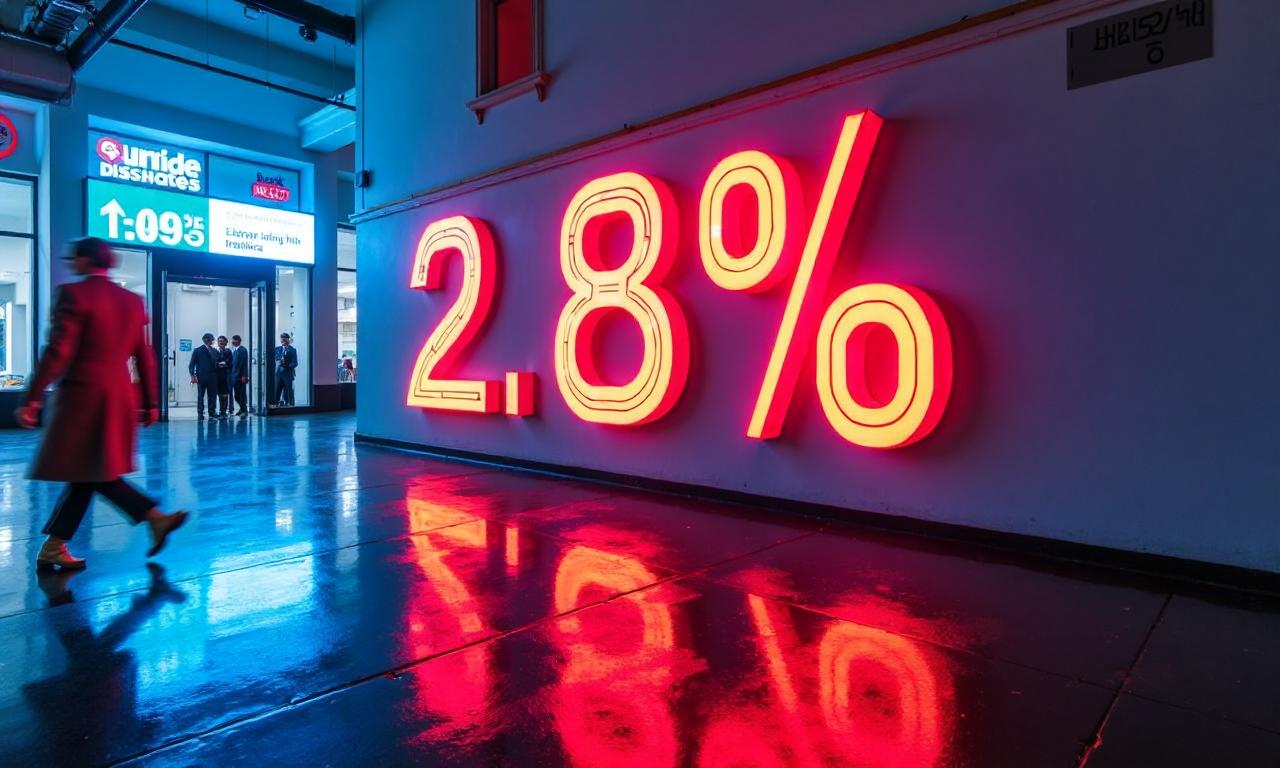
Inflation falls to 2.8% but is expected to rise from here
Samael.lol – The UK’s inflation rate saw a more significant decline than anticipated in April, dropping to 2.8% from 3.3% in March. This decrease, however, is not seen as a permanent trend, with economists anticipating further upward pressure on prices in the coming months. The primary factor driving this reduction was the government’s intervention in energy costs, coupled with the easing of wholesale energy price pressures before the escalation of the Iran war. These elements collectively contributed to a moderation in the overall inflationary environment.
According to the Office for National Statistics (ONS), the energy price cap was reduced by 7% in April, a move that provided immediate relief to consumers. This decline was supported by the government’s energy bill assistance program, which helped stabilize household expenses. However, the ONS also pointed out that the ongoing conflict in the Middle East is set to counteract these gains, pushing inflation higher in the short term. Analysts suggest that the war’s impact on global oil markets is likely to drive up fuel prices, creating a ripple effect across other sectors.
Fuel Prices and Their Impact
Despite the overall drop in inflation, fuel prices remained a key concern. The average cost of petrol in April reached 156.8p per litre, marking the highest level since November 2022. Diesel prices, meanwhile, surged by over 30p during the same period, bringing the average to 190p per litre—the highest in seven months. This increase in fuel costs is expected to persist, with the RAC reporting that petrol prices hit a new peak of 158.52p per litre in May. While these figures highlight a temporary reprieve, they underscore the continued strain on consumers and businesses from rising energy expenses.
Yael Selfin, chief economist at KPMG, noted that the current 2.8% inflation rate represents a low point, with expectations of a gradual increase throughout 2026. “The 2.8% figure is likely as low as it gets for some time,” she stated, emphasizing that inflationary pressures remain embedded in the economy. The National Institute of Economic and Social Research (NIESR) echoed this sentiment, suggesting that the UK could face a return to 4% inflation by the year’s end. This projection is based on the assumption that the Middle East conflict will continue to influence global commodity prices, particularly oil and petrol, which are critical to everyday costs.
Shadow Chancellor Mel Stride criticized the government’s handling of the energy crisis, arguing that the drop in inflation does not reflect broader economic stability. “Prices are still rising far too fast,” he said, adding that Labour’s policies have left the economy vulnerable to external shocks like the Iran war. Stride’s remarks highlight a divide in perspectives on inflation, with some viewing the decline as a success and others as a temporary fix that fails to address deeper structural issues.
Consumer and Business Challenges
While the energy sector showed signs of relief, other areas of the economy remain under strain. Lindsay James, an investment strategist at Quilter, warned that the 7% reduction in the energy price cap would have limited long-term benefits. “This is a short-lived reprieve,” she said, stressing that higher fuel prices could reignite inflationary pressures. James pointed to the volatility in energy markets as a key risk, noting that the war in Iran has created an environment where price shocks are frequent and unpredictable.
The ONS also highlighted that the drop in inflation was partially due to a slowdown in price increases for food and alcohol. Over the past year, food inflation fell to 3%, down from 3.7% in March. This decline is attributed to the availability of cheaper goods and a moderation in the cost of staple items like chocolate and meat. However, the ONS cautioned that these trends may not be sustained, as global supply chain disruptions and rising input costs could reverse this progress.
Grant Fitzner, chief economist at the Office for National Statistics, noted that the reduction in inflation was influenced by factors beyond energy, such as lower water and sewage bills and reduced vehicle tax compared to last year. “These elements helped ease the overall inflationary burden,” he said. Still, the annual cost of raw materials and goods leaving factories rose by 7.7% in the year to April, driven by higher oil and petrol prices. This data suggests that the UK’s inflationary challenges are not solely tied to energy but are also linked to broader economic conditions.
Bank of England’s Role and Policy Response
The Bank of England plays a central role in managing inflation, with its mandate to maintain a 2% target. To achieve this, the bank can adjust interest rates, either raising or lowering them to influence spending and investment behaviors. When inflation exceeds the target, rate hikes are typically used to cool down economic activity, reducing demand for goods and services and slowing price growth. However, much of the inflationary pressure currently affecting the UK stems from external factors, particularly the Iran war’s impact on global oil prices.
As a result, the Bank’s rate-setting committee may be more cautious in its next move. KPMG’s Selfin suggested that the committee is likely to delay any rate increases until there is clearer evidence of a resurgence in domestic inflation. “We anticipate a gradual rise in inflation throughout 2026, but the Bank will need stronger data to justify action,” she said. This approach aligns with the current economic context, where inflation is driven by international events rather than domestic demand.
Data released on Tuesday also indicated a weakening jobs market, with the unemployment rate reaching 5% in April. This trend has raised concerns about the broader implications for household incomes and consumer spending. While the government has introduced measures to ease the burden of rising energy costs, such as freezing rail fares and reducing energy bills, the challenge remains in balancing these efforts with the need to address inflation in other sectors.
Chancellor Rachel Reeves is set to announce additional cost-of-living support measures in response to these developments. Her statements suggested that the government is preparing for a potential increase in energy prices, which could lead to renewed inflationary pressures. “Decisions taken in the Budget last year have helped keep inflation in check during a period of global instability,” Reeves said, highlighting the interplay between domestic policy and international economic conditions.
Analysts agree that the path to higher inflation is inevitable, but the timing and magnitude remain uncertain. The ONS’s Fitzner emphasized that while the immediate drop in inflation is welcome, the underlying factors—such as rising oil prices and global supply chain tensions—will continue to shape the economic landscape. “The annual cost of materials and finished goods has increased, indicating that inflationary pressures are still active,” he said. This outlook suggests that the UK’s inflation rate will need to be closely monitored as the war in the Middle East evolves and its effects on global markets intensify.