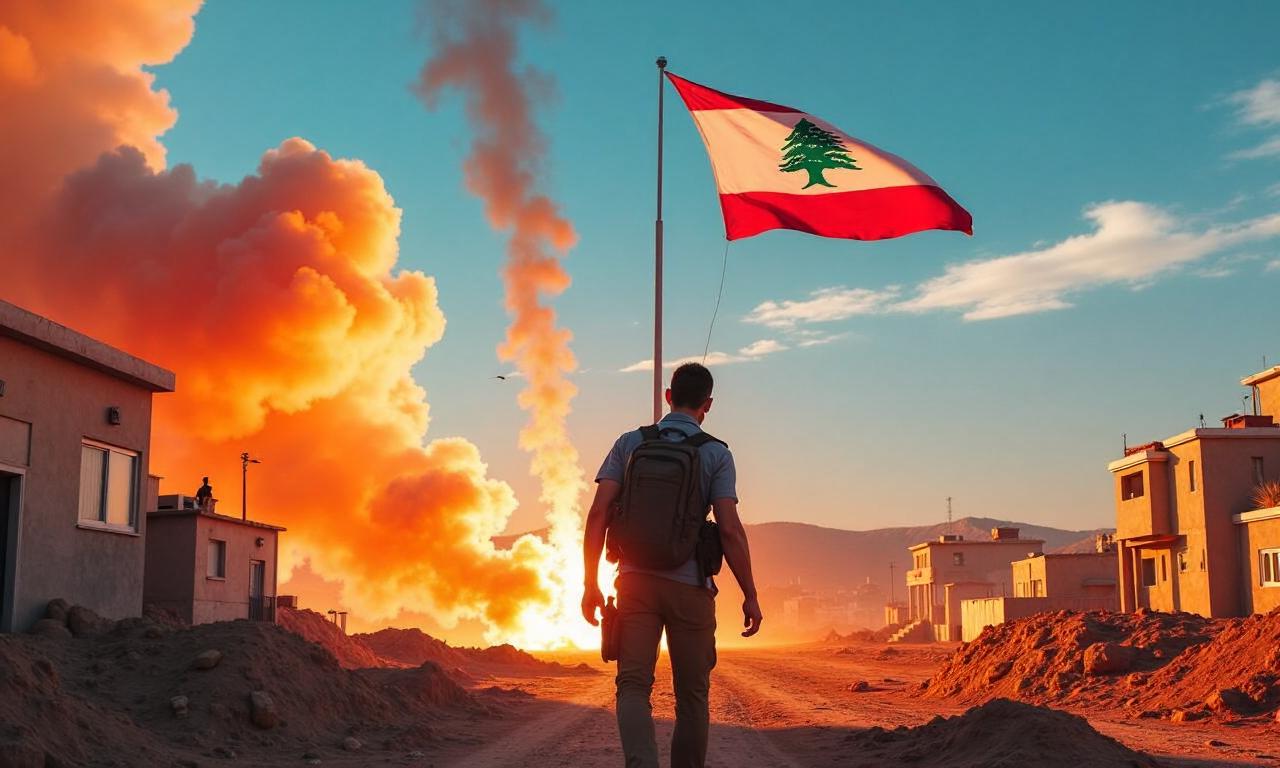
Israel’s Escalated Aerial Assaults on Lebanon During Ceasefire
Samael.lol – Amid a reported truce between Israel and Iran, the Israeli military has ramped up its bombardment of Lebanon, targeting Hezbollah strongholds with increased frequency. Verified footage confirms that recent strikes have devastated residential areas in southern Lebanon, with multiple buildings reduced to rubble. The videos capture the immediate aftermath, showing charred remains and displaced civilians struggling to navigate the debris. This escalation has drawn international attention, as the conflict continues to blur the lines between military and civilian casualties.
According to Lebanon’s state-run National News Agency, at least 10 individuals lost their lives and 27 were injured in the latest attacks. The health ministry has confirmed a grim total of over 3,000 fatalities since the war’s commencement, raising concerns about the effectiveness of the ceasefire. Merlyn Thomas, a BBC reporter, documented the toll, emphasizing the human cost amid the ongoing hostilities. The footage, produced by Tom Joyner and supported by graphics from Mesut Ersoz, has been verified by Emma Pengelly, Sarah Jalali, and Sherie Ryder, ensuring its authenticity in the face of conflicting narratives.
Regional Tensions and the Ceasefire Dilemma
The BBC’s Sarah Smith has analyzed the fragile dynamics between Israel and Lebanon, highlighting how the ceasefire remains a contentious agreement. Despite initial optimism, the conflict has entered a cycle of negotiations, with President Trump asserting that progress has been made. However, the situation remains precarious, as both sides continue to test the limits of the truce. Iranian authorities have imposed an internet blackout in several cities, disrupting communication and limiting the spread of information from the ground.
Special correspondent Fergal Keane managed to gather testimonies from residents caught in the crossfire, despite the restrictions. These accounts reveal a community deeply affected by the war, with many expressing fear of both military action and government repression. The psychological impact is evident, as families mourn losses and rebuild lives in the shadow of relentless attacks. Meanwhile, the Palestine Marathon in Bethlehem has drawn thousands of participants, marking a return to normalcy after a two-year hiatus due to the Gaza War. This event symbolizes resilience, yet it also underscores the ongoing instability in the region.
Strait of Hormuz and the US-Iran Power Struggle
The strategic significance of the Strait of Hormuz has intensified as the US and Iran engage in a tense standoff. President Trump announced the suspension of a joint operation aimed at ensuring safe passage for ships through the vital waterway, a move that has sparked debate over its implications. Capt Raman Kapoor’s vessel, one of several stranded in the strait, has become a focal point of this conflict. BBC Verify outlines the timeline, detailing how the ceasefire has influenced maritime operations and the broader geopolitical landscape.
Lyse Doucet, the BBC’s chief international correspondent, has described the situation as a “test of wills” between the two nations. Her observations highlight the precarious balance of power, with both sides vying for control over the region’s critical shipping lanes. The strait, one of the world’s busiest oil corridors, has become a flashpoint for tensions, as analysts note that parts of the video evidence suggest some footage was captured hours after ships were reportedly seized. This timing raises questions about the authenticity of the events and the role of propaganda in shaping public perception.
Paul Adams, a BBC contributor, explains the inherent dangers of navigating the strait, where even a minor incident can lead to significant disruptions. The economic stakes are high, as the potential for a blockade threatens global oil supply chains. At the same time, the UAE has made a surprising decision to withdraw from Opec, ending its nearly six-decade membership. This move signals a shift in regional alliances, as the UAE seeks to align more closely with the US in its economic and political strategies.
Personal Stories and Broader Impacts
As the conflict unfolds, personal stories emerge from the heart of the action. In Syria, eyewitnesses recorded a harrowing moment when a burning fuel tanker rolled through the streets of Hasakah, leaving a path of destruction and panic. This incident, captured in real-time, illustrates the far-reaching consequences of the war, as it spills over into neighboring countries. The images serve as a stark reminder of the human and material toll of the ongoing struggle.
Lyse Doucet also notes the aspirations of Iranians seeking a resolution to the long-standing animosity with the US. However, she reports that leaders remain reluctant to compromise on terms favorable to Washington. This divide is reflected in the population’s daily lives, where the constant threat of bombs and regime crackdowns has created a climate of fear. Despite the ceasefire, the war’s legacy persists, with civilians bearing the brunt of the conflict’s intensity.
Meanwhile, a separate development has seen 300 couples selected through a random draw to participate in a joint celebration, a gesture of unity amid the turmoil. Yet, this event stands in contrast to the violence that has defined much of the region’s recent history. The selection process, involving nearly 2,000 applicants, highlights the desire for normalcy and connection in a fractured society. However, the ceasefire’s effectiveness remains uncertain, as both Israel and Lebanon continue to test its boundaries.
Trump’s claim of saving eight Iranian women from execution has also drawn scrutiny, with Iran disputing the account. This incident, combined with the broader diplomatic efforts, reveals the complexity of the US-Iran relationship. While the ceasefire offers a temporary reprieve, it is not without its challenges. The interplay of military action, political maneuvering, and humanitarian concerns continues to shape the narrative, with the BBC providing a platform for diverse perspectives.