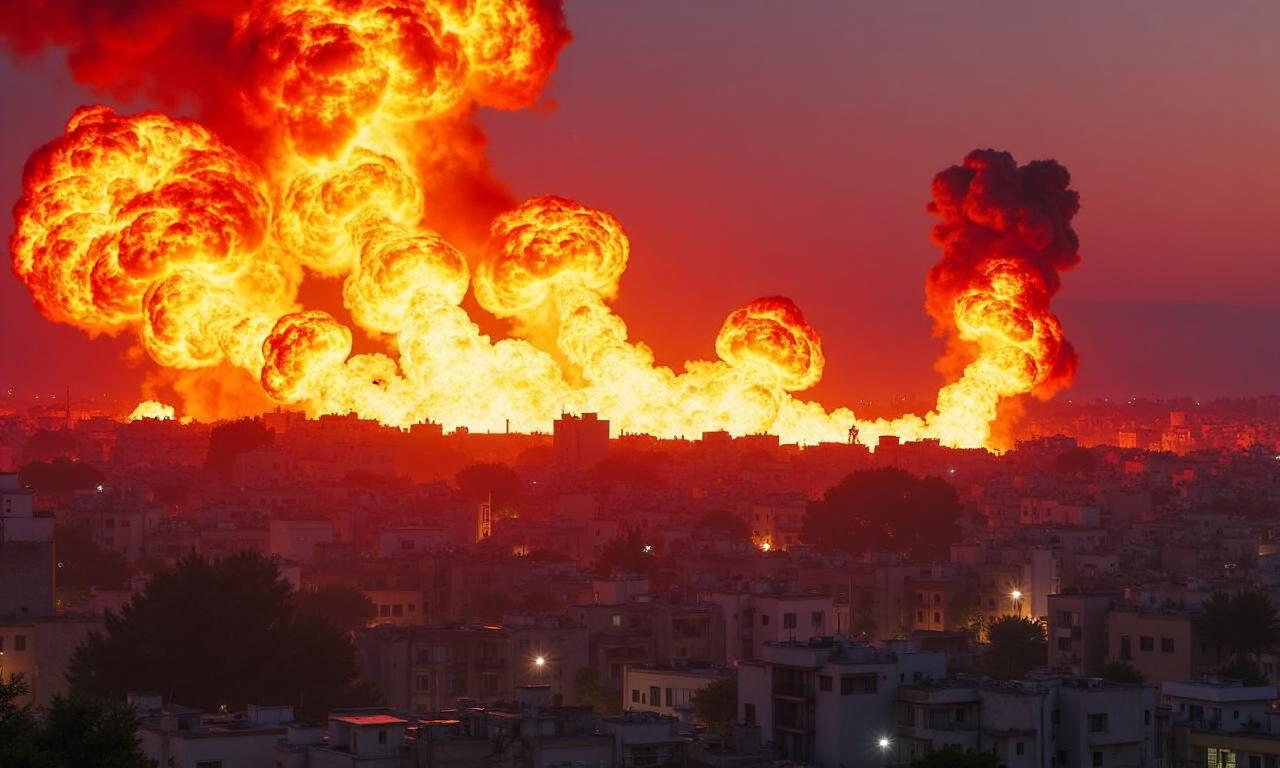
Lebanon Reports Six Casualties in Israeli Strike as Ceasefire Extension Announced
Samael.lol – Following a recent escalation in hostilities, Lebanon’s health ministry confirmed that an Israeli air strike in the southern region of the country had resulted in six fatalities, among them three paramedics. The attack, which targeted the town of Harouf, also left a fourth emergency worker with severe injuries. The incident occurred just days after the United States extended a 45-day ceasefire agreement between Israel and Lebanon, following tense negotiations in Washington, D.C.
Israeli Claims of Targeting Hezbollah Terrorists
The Israeli military stated that it had “identified and neutralized” two Hezbollah militants during the strike, emphasizing its efforts to “minimize civilian casualties.” Officials noted that the operation was part of a broader strategy to secure a buffer zone in southern Lebanon, aiming to prevent future attacks by the militant group. This approach has been likened to tactics used in Gaza, where entire villages were reportedly destroyed in similar campaigns.
Despite these claims, Lebanon’s health ministry has accused Israel of deliberately targeting civilians and medical personnel, a charge the Israeli forces deny. The conflict has intensified in recent days, with Israel launching a series of air and artillery strikes focused on Hezbollah positions. These attacks have continued even after the U.S. brokered a temporary truce, which was announced by President Donald Trump on April 16.
Context of the Ceasefire Extension
The U.S. State Department announced the extension of the ceasefire, highlighting its intention to “reinitiate political dialogue” in June and “launch a security-focused initiative” at the Pentagon on May 29. The goal, as stated by State Department spokesman Tommy Pigott, is to achieve “sustainable peace, mutual recognition of sovereignty, and secure borders” between the two nations. However, the agreement remains fragile, with sporadic clashes persisting along the border.
Lebanon’s Prime Minister Nawaf Salam expressed hope that the negotiations would “unite Arab and international support” to strengthen Lebanon’s stance. Meanwhile, Israel’s ambassador to the U.S., Yechiel Leiter, described the talks as “open and productive,” underscoring the collaborative efforts between the two countries. The ceasefire, however, has not halted the daily exchanges of fire between Hezbollah and Israeli forces, which have continued since its inception.
Humanitarian Impact and Regional Tensions
The ongoing conflict has displaced over a million Lebanese citizens, representing 20% of the population. The majority of those affected have fled from southern Lebanon, the eastern Bekaa Valley, and Dahieh, the southern Beirut suburb where Hezbollah exerts significant influence. This displacement has placed immense pressure on local communities and strained resources in areas under sustained bombardment.
Lebanon’s health ministry reported that Israeli strikes had killed 22 individuals, including eight children, in the south over the past week. The ministry has called for accountability, while Israeli authorities maintain that their actions have targeted only combatants and infrastructure linked to Hezbollah. The U.S. has sought to mediate, but the situation remains volatile, with both sides accusing each other of aggression.
Hezbollah, in turn, has launched its own attacks on Israeli troops stationed in Lebanon and northern Israel, using rockets and drones. These actions have been part of the group’s broader campaign to challenge Israeli military operations in the region. The conflict began on March 2, following a joint U.S.-Israeli strike on Iran’s facilities, which triggered a retaliatory rocket attack by Hezbollah. Since then, the war has claimed at least 2,896 lives in Lebanon, according to official figures, with 18 Israeli soldiers and four civilians also reported as casualties.
International Efforts and Ongoing Challenges
As the ceasefire extension takes effect, international actors are closely monitoring the situation. The U.S. has positioned itself as a key mediator, but the success of the agreement depends on sustained cooperation between Israel and Lebanon. The State Department’s plan to “revisit the political track” in June aims to address deeper issues, including territorial disputes and security guarantees.
Meanwhile, human rights organizations have raised concerns about the potential for war crimes, citing the systematic targeting of civilians in Israeli operations. These groups argue that the destruction of villages in southern Lebanon parallels tactics used in Gaza, where civilian casualties were widely documented. The Israeli military has dismissed these allegations, insisting that its strikes are precision-targeted and necessary to counter Hezbollah threats.
Amid these tensions, the Lebanese government continues to advocate for a lasting peace. The Prime Minister emphasized the need for “collective efforts” to ensure the ceasefire’s durability, while the health ministry remains focused on documenting the human toll of the conflict. With nearly daily reports of shelling and rocket fire, the fragile truce faces constant challenges, and the outcome will likely shape the region’s future for months to come.