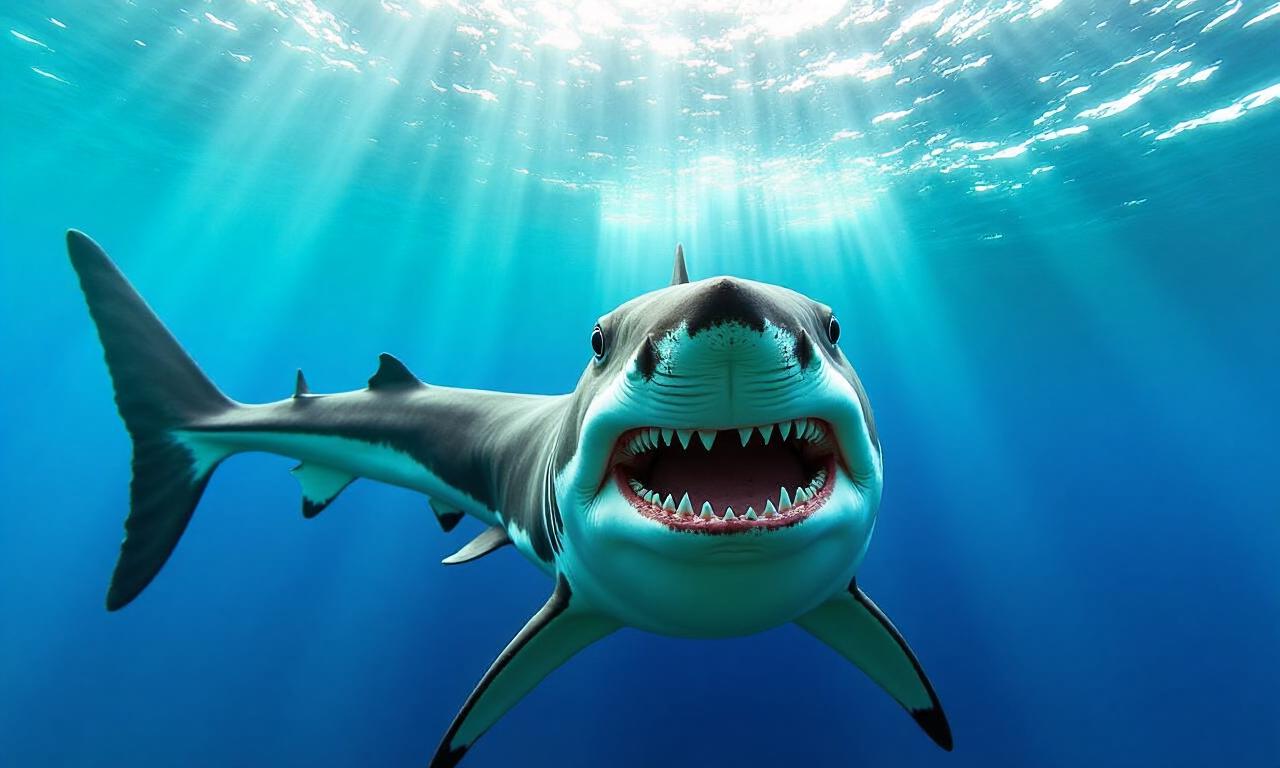
Man Killed by 13ft Great White Shark in Western Australia
Samael.lol – On Saturday, a 38-year-old man lost his life after being attacked by a 13ft (4m) great white shark near the city of Perth, according to local police. The incident occurred at Horseshoe Reef, a region situated northwest of the well-known Rottnest Island, which has long been a destination for tourists and water enthusiasts. The timing of the attack, just before 10:00 local time (03:00 BST), added to the urgency of the response from authorities.
Footage captured from the air revealed the man being swiftly brought to shore by a boat, as reported by local media outlet ABC. Upon reaching the Geordie Bay jetty, paramedics and police personnel immediately initiated CPR, working together to stabilize the victim. However, despite their efforts, the man could not be revived, as stated in a
from a police spokesperson: ” Sadly the man was unable to be revived.”
Following the incident, the state’s Department of Primary Industries and Regional Development confirmed it had received a report about the shark attack. The department issued a warning to the public, advising them to exercise “additional caution” in the waters surrounding the area. This precaution comes after a series of recent shark-related events that have heightened concerns among residents and visitors.
According to records maintained since 1791, Australia has experienced nearly 1,300 documented shark attacks, with over 260 of these resulting in fatalities. The latest incident in Western Australia marks the first deadly encounter in the region since March of the previous year, when a surfer was fatally attacked on a remote beach. This highlights the ongoing risk posed by sharks in coastal areas, even during periods of relatively low activity.
The recent surge in shark attacks has also been notable in other parts of the country. Earlier this year, in January, four incidents were reported along the New South Wales coast over the course of two days. Among the victims was 12-year-old Nico Antic, who tragically became the second person to be killed by a shark in 2024. His story unfolded when he leaped from a rock into Sydney Harbour, only to be attacked by a suspected bull shark. His family expressed profound grief, releasing a joint statement that described their anguish: “We are heartbroken.”
The shark attack in Western Australia has sparked renewed discussions about safety measures in marine environments. While Horseshoe Reef is not typically known for frequent shark encounters, its proximity to Rottnest Island, a popular tourist spot, means that visitors often venture into the area without awareness of the potential dangers. The incident has prompted local officials to reassess existing protocols for beach safety and to consider new strategies for mitigating risks in the region.
Environmental experts note that great white sharks are commonly found in the waters off Western Australia, particularly during the warmer months when their prey is more abundant. The area’s geography, with its combination of deep waters and rocky outcrops, creates an ideal habitat for these predators. Despite the dangers, the region remains a major draw for recreational activities such as snorkeling, diving, and swimming, which are integral to the local economy.
Following the death of the man in Perth, the Department of Primary Industries and Regional Development has emphasized the need for heightened vigilance. They have recommended that beachgoers remain alert, especially during dawn and dusk, when sharks are more likely to be active. Additionally, the department is exploring the possibility of deploying more advanced detection systems, such as acoustic sensors, to monitor shark movements in real-time.
Community leaders have also weighed in on the incident, calling for a balance between enjoying the ocean and acknowledging its risks. “While we cherish our coastal environment, it’s crucial to remember that sharks play a vital role in marine ecosystems,” said one local representative. “We must adapt our practices to coexist safely with these creatures.”
Meanwhile, the case of Nico Antic has drawn particular attention due to the age of the victim and the tragic circumstances of his death. His family’s statement, which underscored their emotional struggle, has resonated with many Australians who have experienced similar losses. “Our hearts are shattered, and we can’t imagine the fear he must have felt,” his parents said, highlighting the emotional toll of shark attacks on families and communities.
The frequency of such incidents has led to increased advocacy for shark protection initiatives. Conservationists argue that while shark attacks are alarming, they are a natural part of life in the ocean. “Sharks are not mindless predators; they are essential to maintaining the health of our seas,” said a marine biologist interviewed by AFP. “We need to educate the public and invest in technology to reduce the chances of such encounters.”
As the search for solutions continues, the recent attacks serve as a reminder of the complex relationship between humans and marine wildlife. While the immediate focus is on ensuring the safety of beachgoers, the broader goal is to foster a deeper understanding of shark behavior and habitat, allowing for more effective coexistence strategies. The tragedy in Western Australia, combined with the events in New South Wales, has intensified calls for action and awareness, as the nation grapples with the realities of living alongside these powerful creatures.