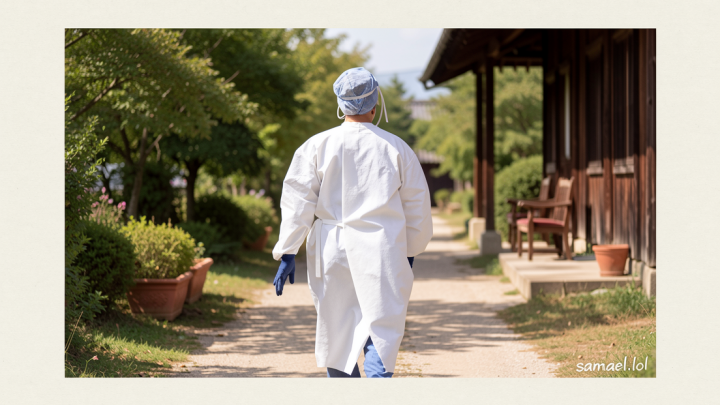
Speed, Money, and Compassion: Lessons from an Ebola Survivor and Other Experts
Samael.lol – In the heart of the Democratic Republic of Congo (DRC), a new wave of Ebola cases has sent shockwaves through communities, reigniting memories of past pandemics. Patrick Faley, a survivor of the 2014-2016 West African outbreak, recalls the harrowing moment when he watched the burial team carry eight bodies in a single bag. “I made new friends, but they ended up dying,” he says, reflecting on how the virus claimed the lives of his companions during that grim period. His story, now intertwined with the current crisis, underscores the critical need to learn from history to combat the spread of the disease effectively.
A Survivor’s Testimony
Faley’s journey began as a community volunteer in Liberia, where he was tasked with educating people about the deadly virus. His mission included explaining how Ebola spreads through bodily fluids and urging them to abandon handshakes, a common ritual during greetings. He also worked to dispel fears around traditional mourning practices, such as washing the deceased’s bodies, which were later identified as significant risk factors. These efforts, however, faced challenges when he personally forgot the advice during a colleague’s funeral. “You have to shake hands; you have to hug people,” he tells the BBC, highlighting the emotional struggle of balancing cultural traditions with public health protocols.
Three days after the funeral, Faley himself fell ill with Ebola, transforming his role from educator to patient. The experience of being admitted to Monrovia’s overcrowded hospital ward, where bodies lay piled high and patients gasped for breath, left an indelible mark. “We sat in the ambulance, and people were just dying at the front of the hospital,” he remembers, his voice tinged with both fear and resilience. Though he recovered, his wife and son were not as fortunate. Their four-year-old son, Momo, succumbed to the virus, a tragic loss that deepened the emotional toll of the outbreak.
Lessons from the Past
The lessons from Faley’s experience and the West African crisis are shaping the response to the current outbreak in the DRC. Dr. Patrick Otim, WHO’s area manager for Africa, emphasizes that early action is vital. “One of the biggest lessons from the West Africa outbreak and previous DRC Ebola crises is that speed matters,” he explains. Delays in identifying cases, isolating patients, and engaging local communities can rapidly escalate transmission chains, he warns. This outbreak, now the 17th in the DRC since the virus was first discovered in 1976, has sparked renewed urgency.
Community trust remains a cornerstone of effective containment. Otim highlights that medical interventions alone are insufficient. “Safe and dignified burials, local leadership engagement, and clear communication are just as important as laboratories and treatment centres,” he says. This insight is crucial as authorities in the DRC implement strict measures, such as banning funerals for those suspected of infection. While these rules aim to curb the spread, they have also sown discord, as seen in Bunia, where a crowd angrily set fire to a hospital building after being denied access to a deceased relative.
The Science of Strain Differences
The current outbreak presents a unique challenge: it is the third recorded case of the Bundibugyo strain of Ebola, a rare variant that differs significantly from the more common Zaire strain. Unlike the West African outbreak, which was eventually controlled with vaccines, this strain lacks a known treatment or vaccine. “Just because a vaccine works against one type of virus doesn’t mean it’s effective against another,” says Professor Thomas Geisbert, a leading expert in Ebola research from the University of Texas Medical Branch. Geisbert co-invented the first known vaccine, Ervebo, which remains the sole option in the global stockpile.
Genetic differences between Bundibugyo and Zaire are approximately 30%, according to Geisbert. This divergence means existing vaccines, while life-saving in previous outbreaks, are not applicable here. The WHO estimates it could take up to nine months to develop an effective vaccine for this strain, adding pressure on healthcare workers and communities to adapt quickly. Faley’s story serves as a reminder that while scientific advancements offer hope, they must be paired with compassion and cultural sensitivity to succeed.
Compassion in Crisis
As the DRC grapples with the latest surge, the interplay of speed, resources, and empathy is more critical than ever. Faley’s experience illustrates the human cost of inaction and the importance of community involvement. His transformation from a volunteer to a patient highlights the emotional toll of the disease, yet also the power of personal stories to drive change. “We had to forget the advice,” he admits, referring to the moment he contracted Ebola. This act of forgetting underscores the tension between survival instincts and the necessity of adhering to public health guidelines.
Experts stress that while medical tools are essential, they must be complemented by efforts to address community concerns. In the DRC, where traditional practices often conflict with modern health protocols, this balance is key. The recent ban on funerals for suspected cases has been met with resistance, but authorities are working to mitigate this through education and dialogue. “It’s essential to learn from the past,” Otim says, “and ensure affected communities feel heard and supported.” The challenge lies not only in controlling the virus but in fostering trust and cooperation amid fear and uncertainty.
Foley’s survival and the subsequent loss of his son have left a lasting legacy. His story is now part of a broader narrative about resilience and the importance of learning from previous outbreaks. The DRC’s 17th Ebola epidemic, though daunting, offers an opportunity to refine strategies that combine scientific innovation with culturally informed approaches. As the World Health Organization races to develop a vaccine for the Bundibugyo strain, the focus remains on preventing another cycle of panic and loss. For Faley, the memories of the past are both a warning and a call to action, urging the world to prioritize speed, resources, and compassion in the fight against Ebola.