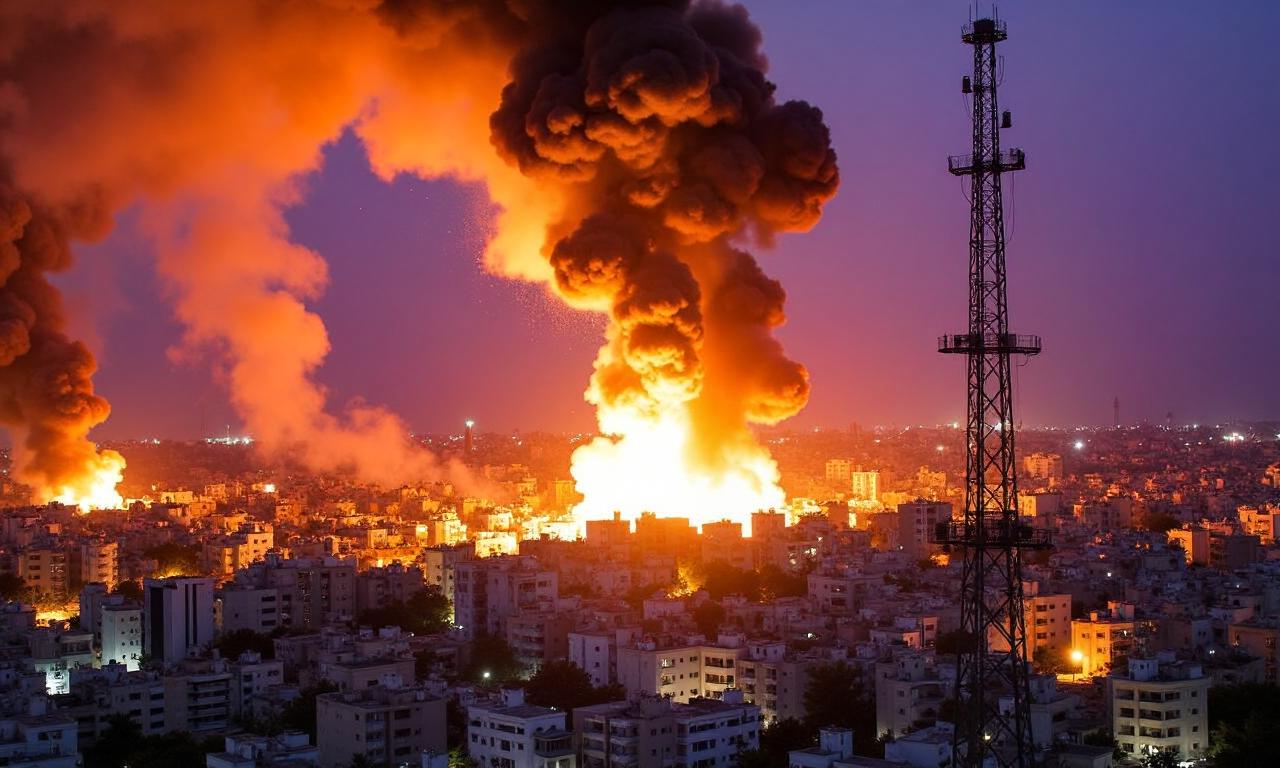
Israeli Air Strike in Gaza City Claims Three Lives, Injures Dozens
Samael.lol – Residents of Gaza City reported at least three fatalities and numerous injuries following a significant Israeli air strike that hit a residential building in a high-traffic market area. The incident, which occurred as the Muslim holiday Eid al-Adha approached, left the upper three floors of the al-Kayali building severely damaged, disrupting daily life in the densely populated district. According to local medical workers and onlookers, the attack targeted the building’s upper levels, where shoppers were actively moving through the bustling streets before the strike.
Target of the Attack: Hamas’s Armed Wing Commander
Israeli Prime Minister Benjamin Netanyahu’s office confirmed the strike was aimed at Mohammed Odeh, a senior commander of Hamas’s military wing. Odeh was identified as a key figure in orchestrating the October 7, 2023, attacks that led to the deaths of over 1,200 Israelis and the capture of 251 hostages. His predecessor, Izz ad-Din al-Haddad, had been killed in a similar strike earlier that year, underscoring the Israeli military’s focus on eliminating high-ranking Hamas officials.
“Odeh was responsible for the murder, abduction, and wounding of many Israeli citizens and IDF soldiers,” stated Netanyahu’s office, framing the attack as a necessary measure to disrupt Hamas operations.
Escalation Amid Ceasefire Tensions
Despite a ceasefire agreement between Israel and Hamas, the latest strike highlights the ongoing volatility of the conflict. The attack on al-Kayali occurred days after al-Haddad’s death, demonstrating that Israel has not paused its military operations against Hamas leadership. Both parties have remained silent on whether Odeh was indeed killed, leaving questions about the attack’s effectiveness and strategic intent.
Rescue efforts faced challenges due to the extent of the damage and the chaotic conditions in the market area. Teams were unable to quickly access the upper floors, where most of the casualties were concentrated. Witnesses described the scene as a blur of destruction, with at least five missiles striking the building in quick succession from multiple angles. One survivor recounted hearing the sound of a helicopter circling overhead before the explosion, suggesting aerial support was involved in the assault.
Humanitarian Impact and Casualty Numbers
The strike has intensified concerns over civilian casualties in the ongoing conflict. Gaza’s health ministry has documented over 800 deaths from Israeli attacks since the ceasefire began on October 10, 2023. This figure, according to the UN, reflects the sustained impact of military operations on the territory’s population. The Israeli military asserts it has the authority to target Hamas members, citing the need to dismantle their infrastructure and capabilities.
Hamas, meanwhile, has accused Israel of violating the ceasefire by attacking civilians. The group’s reassertion of control in the region has been complicated by the Israeli military’s continued operations, which have displaced hundreds of thousands of Palestinians and reduced large parts of Gaza to rubble. The attack on al-Kayali adds to a pattern of strikes that have kept the territory under constant threat, even as diplomatic efforts seek to stabilize the situation.
US Peace Plan and Stalled Progress
Meanwhile, the US-led peace plan for Gaza, which includes a two-phase approach to governance and security, has seen limited success. The second phase, announced in January, envisioned a transitional technocratic administration to oversee the territory alongside efforts to demilitarize and rebuild it. However, progress has stalled since the US and Israel entered a conflict with Iran in February. Hamas has since reactivated its police force, signaling a renewed push for autonomy and challenging the plan’s implementation.
The Israeli government maintains its commitment to targeting Hamas operatives, even as it faces criticism for civilian casualties. The ongoing strikes in Gaza are part of a broader strategy to weaken the group’s military infrastructure, a goal that has remained central to the conflict. This approach, however, has drawn scrutiny from international observers and humanitarian organizations, who highlight the human cost of sustained bombardment.
Regional Spillover and Military Vows
The attack on al-Kayali follows recent Israeli strikes in Lebanon, where 11 civilians were killed. Netanyahu has vowed to intensify military operations in the region, citing the need to counter Hezbollah’s growing influence. Israeli forces claim their attacks have targeted Hezbollah sites, aiming to disrupt the group’s ties to Hamas and prevent further cross-border threats. This regional escalation has drawn attention to the interconnected nature of the conflict, with operations in one area affecting tensions in another.
While the US peace plan remains on hold, the Israeli military continues its campaign, leveraging airstrikes to degrade Hamas’s capabilities. The combination of military pressure and political maneuvering has created a complex landscape, with both sides blaming each other for breaches of the ceasefire. Hamas argues that Israel has not fully disarmed, while Israel contends that its actions are justified under the agreement’s terms.
Broader Context of the Ceasefire
The current ceasefire, signed on October 10, 2023, was meant to provide a respite for Gaza’s residents. Yet, the al-Kayali strike illustrates that the agreement has not fully prevented violence. The incident has reignited debates about the balance between military objectives and civilian protection. With over 72,744 Palestinians killed in Gaza since the start of the conflict, the humanitarian toll continues to mount, raising questions about the sustainability of the ceasefire.
Netanyahu’s office emphasized that the attack was part of a broader effort to hold Hamas accountable for the October 7 massacre. This framing aligns with the Israeli government’s narrative that its actions are targeted and necessary to prevent further attacks. However, the damage to the al-Kayali building and the surrounding market area underscores the challenges of distinguishing between combatants and civilians in densely populated zones.
Legacy of the October 7 Attacks
The October 7 attacks, which Hamas launched against Israel, remain a defining moment in the current conflict. The strikes killed approximately 1,200 Israelis and took hundreds of hostages, prompting an Israeli military response that has reshaped the conflict’s dynamics. While the ceasefire was intended to ease tensions, the targeting of Hamas leadership has kept the war in motion, with both sides accusing each other of undermining the agreement.
As the situation in Gaza continues to evolve, the al-Kayali strike serves as a reminder of the fragile nature of the ceasefire. The combination of political rhetoric and military action highlights the ongoing struggle to achieve lasting peace. With the US peace plan in limbo and regional conflicts persisting, the path forward remains uncertain, leaving the people of Gaza to bear the brunt of the violence.