Trump vs Xi: Who has the upper hand?
Samael.lol – During Donald Trump’s upcoming visit to Beijing, the U.S. and Chinese leaders will convene for high-stakes discussions. The focus of their talks is expected to include the Iran conflict, trade relations, and technological advancements. The BBC’s Sarah Smith provides insight into the potential outcomes of this significant meeting and the challenges Trump might face in asserting dominance.
Strategic Tensions in the Region
Though the primary agenda remains the Iran issue, trade and technology are also anticipated topics. Trump’s administration has emphasized trade imbalances and intellectual property disputes, which could reignite tensions with China. Meanwhile, the development of 5G networks and semiconductor technologies has become a critical point of contention between the two nations. Analysts suggest that China’s economic influence and strategic partnerships may give it an edge in these negotiations.
“The challenges in this meeting are as complex as the issues on the table,” says Sarah Smith. “Both leaders have distinct goals, but the outcome will likely depend on compromise.”
Earlier this week, the French president took an unexpected step during a conference in Kenya, commanding the crowd to silence. He remarked that it was “impossible” for speakers to be heard, highlighting the need for clarity in international diplomacy. Meanwhile, in the Netherlands, officials confirmed the removal of a British, German, and Dutch national from a virus-stricken vessel, underscoring the global impact of the pandemic.
Symbolism and Subtlety
Back in Washington, DC, an art installation features bears that symbolize the Ukrainian children Ukraine claims have been taken by Russia. Each bear represents a specific case, offering a poignant visual reminder of the ongoing conflict. The installation has sparked debates about the role of symbolism in political discourse, with some viewing it as a powerful statement and others as a mere artistic gesture.
Environmental factors are playing a crucial role in the recent wildfires affecting multiple regions. Officials in both states have cited arid conditions, strong winds, and water shortages as primary contributors to the challenges in containing the blazes. These elements have made firefighting efforts increasingly difficult, drawing attention to the broader implications of climate change on global stability.
Iran and the Ceasefire
Trump’s recent announcement of a two-week ceasefire with Iran has not fully quelled concerns about the ongoing conflict. Despite the agreement, several vessels have been attacked in the Strait of Hormuz, indicating that the situation remains volatile. The BBC’s Ione Wells explores the next steps for the U.S. and the surrounding region, noting that the ceasefire may be a temporary measure rather than a long-term solution.
“The ceasefire is a win for the U.S., but the attacks show that Iran is not backing down,” reports Ione Wells. “This highlights the fragility of diplomatic efforts in the region.”
As part of its naval strategy, the U.S. has intercepted an Iranian-flagged cargo ship in the Gulf, marking the continuation of its blockade on Iranian ports. This move has drawn criticism from Iranian officials, who argue that it hinders their ability to trade and sustain the economy. Esmail Baghaei, a spokesperson for Iran, expressed worries about the impact of the blockade on their ports and the seizure of vessels, calling it a “strategic blow.”
Economic Risks and Global Implications
The BBC’s Michelle Fleury highlights oil prices, inflation, and interest rates as key risks for the global economy. With the IMF warning that war and rising energy costs could destabilize markets, these factors are being closely monitored. The report also notes that some of the cheapest fuel in the country is available on tribal land, benefiting from tax exemptions and reducing reliance on foreign suppliers.
Frank Gardner, BBC Security Correspondent, explains the mechanics of the U.S. blockade of Iranian ports. The strategy involves restricting the flow of goods and resources, aiming to weaken Iran’s economic position. However, the effectiveness of this approach is being debated, with some experts questioning its long-term impact on regional dynamics.
Domestic Reactions and Political Shifts
Residents from both political parties in Social Circle, Georgia, have rejected a proposal by the Department of Homeland Security to convert an empty warehouse into a detention center. This decision reflects growing public resistance to immigration policies, even as the administration pushes for border control measures. The BBC’s coverage of the largest conservative gathering in the country revealed mixed sentiments about Trump’s stance on Iran, the economy, and immigration.
Meanwhile, the vice-president made an announcement following 21 hours of negotiations in Islamabad, Pakistan. The talks, which are part of broader peace efforts, have yet to confirm a specific date for the ceasefire agreement. The BBC’s Azadeh Moshiri is on-site, providing updates on the progress and obstacles facing the peace process.
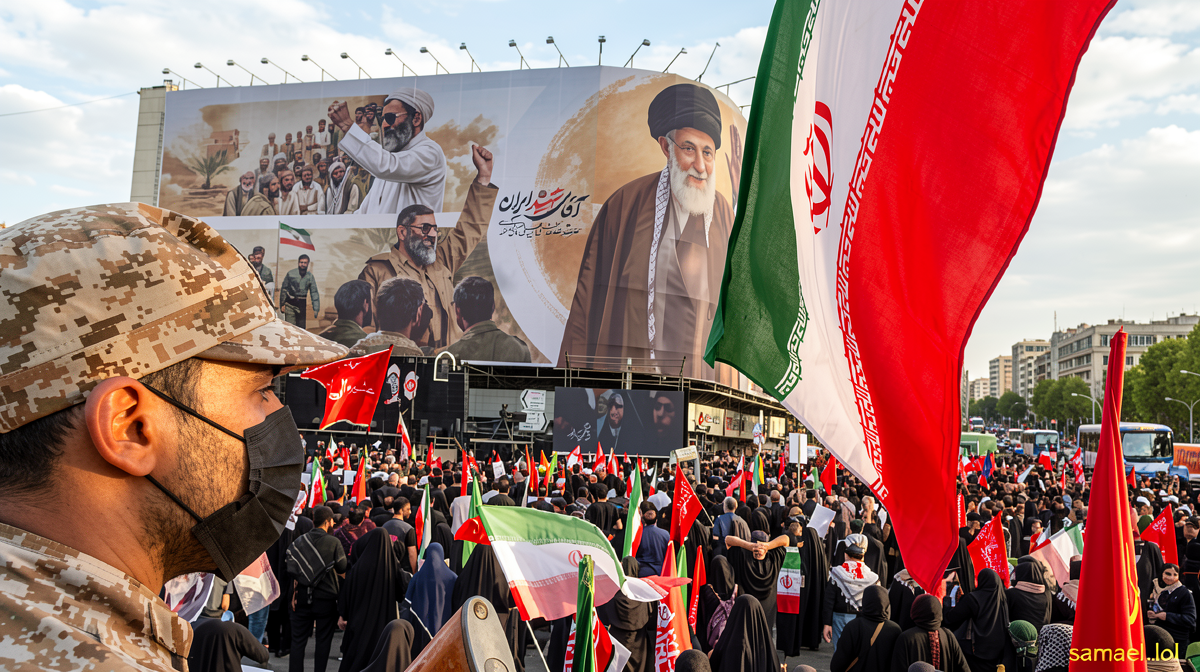
Tehran has also taken proactive steps in response to Trump’s threats. The capital has urged citizens to gather outside potential U.S. and Israeli targets, signaling readiness for possible retaliation. This demonstrates the interconnected nature of regional tensions, where actions in one part of the world can have ripple effects across the globe.
Legacy of Leadership
Trump’s recent conflict with Pope Leo has further complicated his international image. The pontiff’s criticism of the war in Iran led to a sharp response from the U.S. president, who launched a direct attack on the Pope’s leadership. This incident has reignited discussions about the role of religious figures in political affairs and the impact of personal relationships on foreign policy.
As the meeting between Trump and Xi approaches, the focus remains on resolving the Iran issue and addressing trade disputes. However, the broader implications of their interactions will likely extend beyond the immediate negotiations, shaping global alliances and economic strategies for years to come.