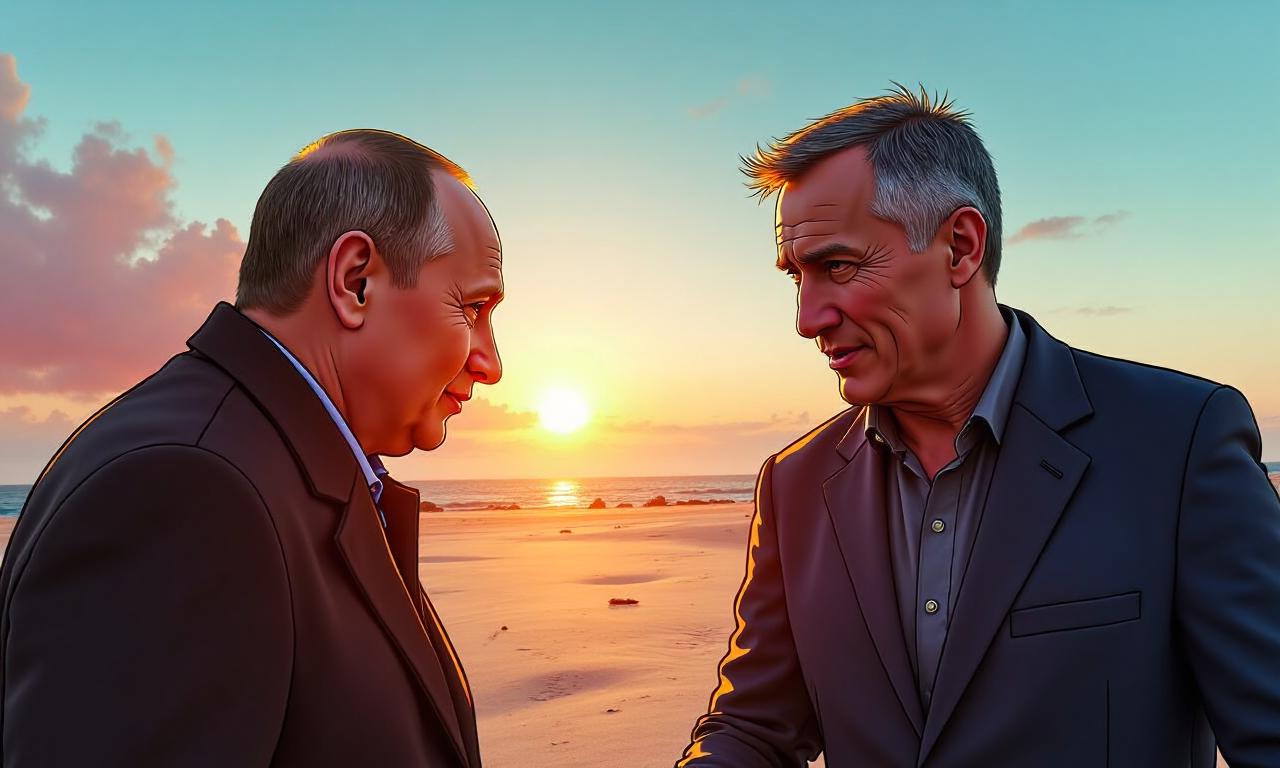
Trump Warns Taiwan Against Declaring Independence, Hours After Summit with China’s Xi
Samael.lol – During a Friday interview with Fox News, U.S. President Donald Trump expressed caution toward Taiwan, urging the island to avoid formal steps toward independence. This statement came shortly after his two-day summit with Chinese President Xi Jinping in Beijing, where the leaders discussed a range of geopolitical issues. Trump emphasized his preference for maintaining stability, stating that he was not interested in provoking a conflict over Taiwan’s status.
U.S. Policy and Taiwan’s Sovereignty Claims
Taiwan’s president, Lai Ching-te, has previously argued that the island already identifies as a sovereign nation, making a formal declaration of independence unnecessary. However, Trump’s remarks highlight the U.S. government’s traditional stance on the issue, which has long been shaped by its commitment to the one-China policy. While the U.S. supports Taiwan’s defense through military aid, it has consistently balanced this support with its diplomatic ties to mainland China.
“I’m not looking to have somebody go independent,” Trump said during the interview. “We’re supposed to travel 9,500 miles to fight a war. I’m not looking for that. I want them to cool down. I want China to cool down.”
Trump clarified that the U.S. had not altered its position on Taiwan, reaffirming that it would not actively push for independence. He suggested that the island’s leaders should temper their ambitions, as the U.S. aims to avoid military confrontation. “We’re not looking to have wars, and if you kept it the way it is, I think China’s going to be OK with that,” he added.
Xi’s Stance on the Taiwan Question
During the summit, Xi Jinping reiterated that the Taiwan question remains the most critical issue in U.S.-China relations. According to Chinese state media, Xi emphasized that any missteps on the matter could lead to a collision or even a full-scale conflict between the two nations. Trump echoed this sentiment, stating that Xi “doesn’t want to see a movement for independence” and that both leaders had discussed the matter extensively.
Despite Trump’s reassurances, China has maintained its resolve to unify the island, often threatening military action to achieve this goal. The country has increased its military drills around Taiwan in recent years, testing the limits of U.S. commitments and heightening regional tensions. These exercises are designed to demonstrate China’s capability to assert control over Taiwan, a move that has raised concerns about the potential for escalation.
Weapons Sales and Diplomatic Tensions
Earlier in the year, the Trump administration announced an $11 billion package of weapons to be sold to Taiwan, including advanced rocket launchers and a variety of missiles. This decision, however, drew sharp criticism from Beijing, which viewed the sales as a provocative act. Trump indicated that he would soon decide on the finalization of the deal, noting that he and Xi had deliberated over the matter in great detail.
“I’m going to say I have to speak to the person that right now is, you know, you know who he is, that’s running Taiwan,” Trump remarked. This comment underscores the U.S. president’s intention to directly engage with Taiwan’s leader, a step that could strain relations with China. While such interactions are not typical for U.S. presidents, they signal a willingness to prioritize Taiwan’s security interests in the short term.
Taiwan’s Deputy Foreign Minister, Chen Ming-chi, called for clarity on Trump’s statements, suggesting that the U.S. needed to define its exact position. He noted that arms sales are enshrined in U.S. law and serve as a cornerstone of regional stability. “Taiwan-US arms sales have always been a cornerstone of regional peace and stability,” Chen stated, emphasizing the importance of these sales in deterring potential threats.
Historical Context and Strategic Balance
The U.S. has historically maintained an unofficial relationship with Taiwan, providing it with military and economic support while recognizing the People’s Republic of China as the sole legitimate government. This delicate balance has been tested by U.S. actions that appear to favor Taiwan’s independence aspirations. For example, in February 2025, the State Department removed a statement from its website that explicitly opposed any unilateral changes to the status quo, a move Beijing interpreted as a signal to separatist forces.
“If mishandled, the two nations could collide or even come into conflict,” Xi warned during the summit. This statement highlights the sensitivity of the Taiwan issue in the broader context of U.S.-China relations. Trump acknowledged the importance of the topic, but his comments suggested a pragmatic approach to avoid direct confrontation. “No, I don’t think so. I think we’ll be fine,” he said when asked about the possibility of a conflict over Taiwan.
Regional Implications and Future Outlook
Taiwan’s strategic position in the Asia-Pacific region makes it a focal point for both the U.S. and China. The island’s autonomy, while not formally recognized by Beijing, is a key element in the balance of power. Trump’s remarks during the summit indicate that the U.S. is prepared to support Taiwan militarily but is also mindful of China’s sensitivities. This dual approach reflects a broader strategy to maintain stability while safeguarding Taiwan’s interests.
“The U.S. does not have formal relations with Taiwan, though it maintains substantial unofficial ties,” a spokesperson for President Lai Ching-te noted. These ties are crucial for Taiwan’s security, as the U.S. provides it with defensive capabilities under the Taiwan Relations Act. However, the country’s actions must align with its commitment to the one-China policy to avoid diplomatic friction with Beijing.
As the U.S. and China continue to navigate their complex relationship, the Taiwan question remains a central challenge. Trump’s recent statements suggest that the administration is prioritizing dialogue and de-escalation, but the island’s leaders are determined to assert their autonomy. “If you kept it the way it is, I think China’s going to be OK with that,” Trump said, offering a glimpse into his vision for the region’s future.
Meanwhile, Taiwan’s Foreign Minister, Lin Chia-lung, has expressed vigilance regarding U.S. policy shifts. His team has been closely monitoring the administration’s actions to ensure they align with the island’s interests. “We have long stated that we oppose any unilateral changes to the status quo from either side,” U.S. officials in Taiwan said, reinforcing the importance of maintaining the current balance.
The summit in Beijing has set the stage for renewed efforts to manage tensions, with both leaders acknowledging the stakes involved. Trump’s emphasis on cooling down and avoiding conflict aligns with his broader foreign policy goals, while Xi’s firm stance on Taiwan’s unification underscores China’s determination to protect its territorial claims. As the world watches, the question remains: can these leaders find common ground, or will the Taiwan issue continue to be a flashpoint in the evolving relationship between the U.S. and China?