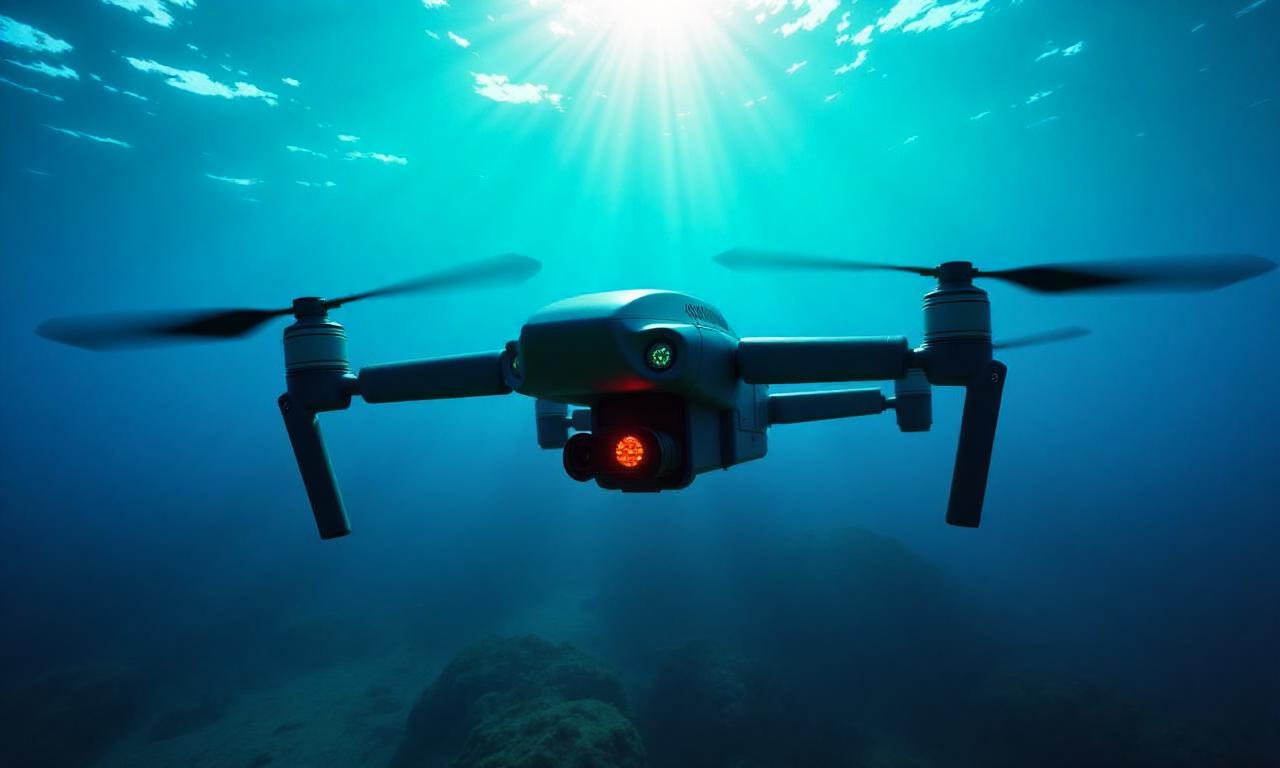
US, UK and Australia to develop underwater drone technology
Samael.lol – The United States, United Kingdom, and Australia have announced their joint initiative to advance underwater drone systems, aiming to safeguard critical undersea infrastructure and enhance maritime defense capabilities. This effort, part of the Aukus alliance, marks a significant step toward modernizing naval technology. The project is anticipated to be operational by the end of next year, though specific financial details were not disclosed. UK Defence Secretary John Healey confirmed that his country would allocate £150 million ($201 million) to the endeavor, signaling a commitment to tangible results after years of perceived delays.
The announcement, made during a security summit in Singapore, was a response to growing concerns about the pace of Aukus’s initiatives. Healey acknowledged past criticisms, stating, “for too long in Aukus, we talked too much and delivered too little,” and emphasized that the trio’s collaboration has now shifted toward action. This shift comes as the alliance seeks to counter rising threats in the Indo-Pacific region, particularly from China’s expanding maritime influence and its contested claims in areas like the South China Sea.
Advanced capabilities and strategic priorities
Aukus, established in 2021, initially focused on building nuclear-powered submarines for the UK and Australia. Now, its scope has expanded to include “advanced capabilities” under Pillar Two, which emphasizes joint innovation in fields such as undersea robotics, artificial intelligence, and long-range hypersonic missiles. The underwater drone project represents the alliance’s first major collaboration in this second pillar, with the goal of creating cutting-edge systems for unmanned underwater vehicles (UUVs).
A joint statement outlined the project’s objectives, noting that the new UUV technology would enable a range of operations, from protecting seabed infrastructure to conducting strikes and surveillance missions. Healey highlighted that the development of sensors and weapons systems for these drones would “rapidly give our forces advanced battle technologies,” which are essential for addressing threats to vital underwater cables and pipelines. Such cables underpin global communication networks, making their security a top priority for the alliance.
The strategic context of this project is increasingly tied to geopolitical tensions. Recent reports suggest that Russian submarines have been suspected of targeting undersea cables in waters north of the UK, prompting Healey to accuse Moscow of covert operations. This claim aligns with the UK’s broader concerns about Russian activity in the North Atlantic, where a separate agreement with Norway aims to detect and neutralize threats to critical infrastructure. The UK, connected by approximately 60 undersea cables, has noted a 30% increase in Russian vessels operating in its surrounding waters over the past few years.
Meanwhile, Chinese ships have been implicated in damaging undersea cables near Taiwan and in Swedish territorial waters. These incidents underscore the growing importance of undersea infrastructure in global power dynamics. Additional reports of cable damage in the Baltic Sea further illustrate the vulnerabilities of these networks, which are vital for international trade, defense, and data transmission. The new UUV technology is positioned to address these challenges by offering a more proactive and flexible solution.
“For too long in Aukus, we talked too much and delivered too little,” said UK Defence Secretary John Healey. “That has now changed under our three governments.”
The project’s launch also highlights the alliance’s commitment to addressing both immediate and long-term security concerns. While the UUVs are expected to provide rapid capabilities, the nuclear submarine component of Aukus remains a long-term goal, with the first submarines slated for completion in the 2040s. In the interim, the US and UK will rotate their nuclear-powered submarines through Australian waters, a measure designed to maintain operational readiness and share expertise.
Australia’s Defence Minister Richard Marles addressed these concerns days before the Shangri-la Dialogue in Singapore, stating that there was no “plan B” for the Aukus submarine program. He emphasized that the project’s timeline was necessary for Australia to transition from its aging fleet to a more advanced maritime force. The HMAS Stirling navy base in Western Australia is projected to be ready to host the rotational submarine force by the end of 2027, with construction of a dedicated submarine yard in South Australia progressing at a steady pace.
Despite the progress, questions linger about whether the Aukus submarine program will be completed on schedule. Australia, in particular, faces the challenge of replacing its fleet with new nuclear-powered vessels before the 2040s. The country’s reliance on the US for this technology underscores the broader implications of the alliance. By securing access to nuclear propulsion, Australia joins the UK as the second nation to benefit from this advanced capability, following decades of UK-US collaboration.
The underwater drone initiative is also a strategic countermeasure to China’s maritime expansion. As Beijing strengthens its presence in the South China Sea and other contested regions, the US, UK, and Australia seek to bolster their undersea surveillance and response capabilities. These drones could play a pivotal role in monitoring Chinese naval activities, detecting potential threats to cables, and enabling swift military interventions when needed.
While the three defense ministers did not explicitly link the UUV project to countering Russian or Chinese activities during their press briefing, the underlying intent is clear. The technology’s ability to conduct surveillance, reconnaissance, and logistics operations makes it a versatile tool for maritime security. As the Indo-Pacific region becomes more contested, such capabilities will be crucial for maintaining strategic balance and protecting vital global infrastructure.
Looking ahead, the success of the UUV program could set a precedent for future collaborations under Pillar Two. With its focus on innovation, the initiative aims to position the alliance as a leader in next-generation naval technology. By integrating advanced payloads and systems into UUVs, the partners seek to create a layered defense strategy that addresses both present and future challenges. The project’s completion is seen as a key milestone in strengthening deterrence across the Pacific, Atlantic, and Arctic regions.
Meanwhile, the US Defence Secretary Pete Hegseth confirmed that the rotational submarine plan is “still on track,” with the first US Navy personnel set to arrive in Australia later this year. This approach allows the alliance to maintain operational presence without waiting for the full deployment of Aukus submarines. The combination of immediate rotational support and long-term nuclear submarine development reflects a balanced strategy to address current threats while building future resilience.
As the Indo-Pacific becomes a focal point for global security, the Aukus alliance’s expansion into underwater drone technology underscores a commitment to innovation and collaboration. The project not only aims to protect undersea cables but also to enhance the defense capabilities of all three nations, reinforcing their strategic partnership in an increasingly complex maritime landscape.