
Watch: Moment earthquakes hit airport and buildings in Caracas
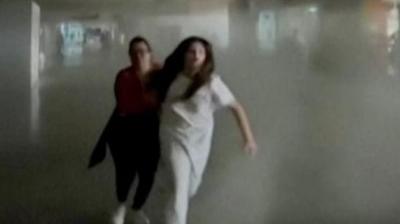
Watch: Moment Earthquakes Shatter Caracas, Triggering Panic and Collapse
Two Tremors Rock Capital in Rapid Succession
Watch: Moment earthquakes hit airport and buildings in Caracas – Just seconds apart, two significant earthquakes struck Caracas, the capital of Venezuela, sending shockwaves through the city’s skyline and causing widespread alarm. The second event, measuring a magnitude 7.5 on the Richter scale, emerged as one of the most powerful tremors to impact the nation in over a hundred years. According to local seismic reports, the initial quake was followed by a second, more intense shock that left infrastructure in disarray and residents scrambling for safety.
The first tremor, though less severe, rattled the city and raised immediate concerns. Within moments, the second quake struck with such force that it was felt across multiple districts, including the bustling financial district and residential neighborhoods. The BBC, through its on-the-ground reporters, captured footage of the momentary chaos, highlighting the stark contrast between the city’s modern architecture and the sudden vulnerability it faced.
As the ground shook, buildings—both commercial and residential—were seen buckling under the pressure. Skyscrapers, some of which had stood for decades, tilted precariously, while smaller structures crumbled entirely. The collapse of a notable building in the heart of the city became a focal point of the video, with the camera panning over debris and people rushing into the streets, clutching belongings and seeking open spaces.
Historical Context and Regional Impact
Caracas, located in the mountainous region of Venezuela, has a history of seismic activity due to its proximity to the Caribbean Plate and South American Plate. However, the magnitude 7.5 earthquake marked a rare and severe event, surpassing previous records. This was the strongest tremor to shake the country since the 1960s, when a similar magnitude quake caused extensive damage to the capital’s infrastructure.
Experts noted that the earthquake’s epicenter was near the city’s international airport, adding to the urgency of the situation. The airport, a critical hub for both domestic and international travel, experienced disruptions as aircraft and support structures were damaged. Emergency services were deployed swiftly, though the scale of the disaster posed challenges in assessing the full extent of the damage.
The video footage provided a harrowing glimpse into the aftermath, showing residents in the streets, some crying, others holding onto each other as they navigated the unfamiliar terrain of broken glass and fallen concrete. The BBC’s embedded team described the scene as “a city transformed in an instant,” emphasizing the suddenness and severity of the quake.
Government Response and State of Emergency
Venezuela’s interim president, Delcy Rodríguez, swiftly declared a state of emergency following the seismic events. In a televised address, she urged citizens to remain calm and emphasized the government’s commitment to restoring order and providing aid. “We are mobilizing all resources to ensure the safety of our people and to rebuild what has been lost,” she stated, addressing the nation with a mixture of resolve and urgency.
“The ground shook like a storm, and everything felt like it was moving. I’ve never seen anything like it in my life,” said one resident captured on camera, their voice trembling as they recounted the experience.
Rodríguez also announced the activation of emergency response teams, including the National Guard and civil protection units, to coordinate rescue efforts and assess damage. The declaration came as the city grappled with the immediate aftermath, with many residents stranded in the streets and others trapped in collapsed buildings. Hospitals reported an influx of patients, some suffering from injuries caused by falling objects or structural failures.
International observers and geologists expressed concern over the potential for further quakes in the region. While the initial tremors were isolated, the proximity of the epicenter to major urban centers raised fears of additional seismic activity. Scientists warned that the area’s tectonic activity could lead to more shocks in the coming days, urging caution and preparedness among the population.
Rebuilding and Resilience in the Face of Disaster
In the hours following the earthquakes, teams of engineers and volunteers began surveying the damage. Reports indicated that over 200 buildings had been affected, with a significant portion requiring immediate structural evaluation. The city’s iconic landmarks, such as the Central Post Office and the National Library, were among the structures most severely impacted, their facades cracked and their foundations weakened.
Residents, despite the devastation, demonstrated resilience in the face of crisis. Neighbors helped each other clear debris from sidewalks and assist those who had been displaced. “We look after our own when the world turns upside down,” said a local shopkeeper interviewed by BBC correspondents, who had opened his store to shelter families who had lost their homes.
As the situation stabilized, officials began planning for recovery. Rodríguez announced the allocation of emergency funds and the mobilization of aid trucks to supply food, water, and medical supplies to affected areas. The interim government also called for international assistance, recognizing the scale of the challenge ahead.
The video, which has since gone viral, serves as a stark reminder of the city’s fragility in the face of natural disasters. Analysts highlighted the need for improved building codes and disaster preparedness in Venezuela, where economic challenges have sometimes delayed infrastructure upgrades. “This quake exposed weaknesses we’ve long ignored,” remarked a geologist in a post-crisis assessment, urging the government to prioritize seismic safety in future urban development.
As the sun rose over Caracas, the city remained in a state of cautious recovery. The BBC’s footage, which captured the moment of crisis, continues to be a symbol of the resilience and vulnerability of a nation navigating both geological and political upheaval. For now, the focus remains on rebuilding and ensuring that the lessons of this disaster are not forgotten.