Watch: Sturgeon Stands by Her Position Amid Former Spouse’s Guilty Plea
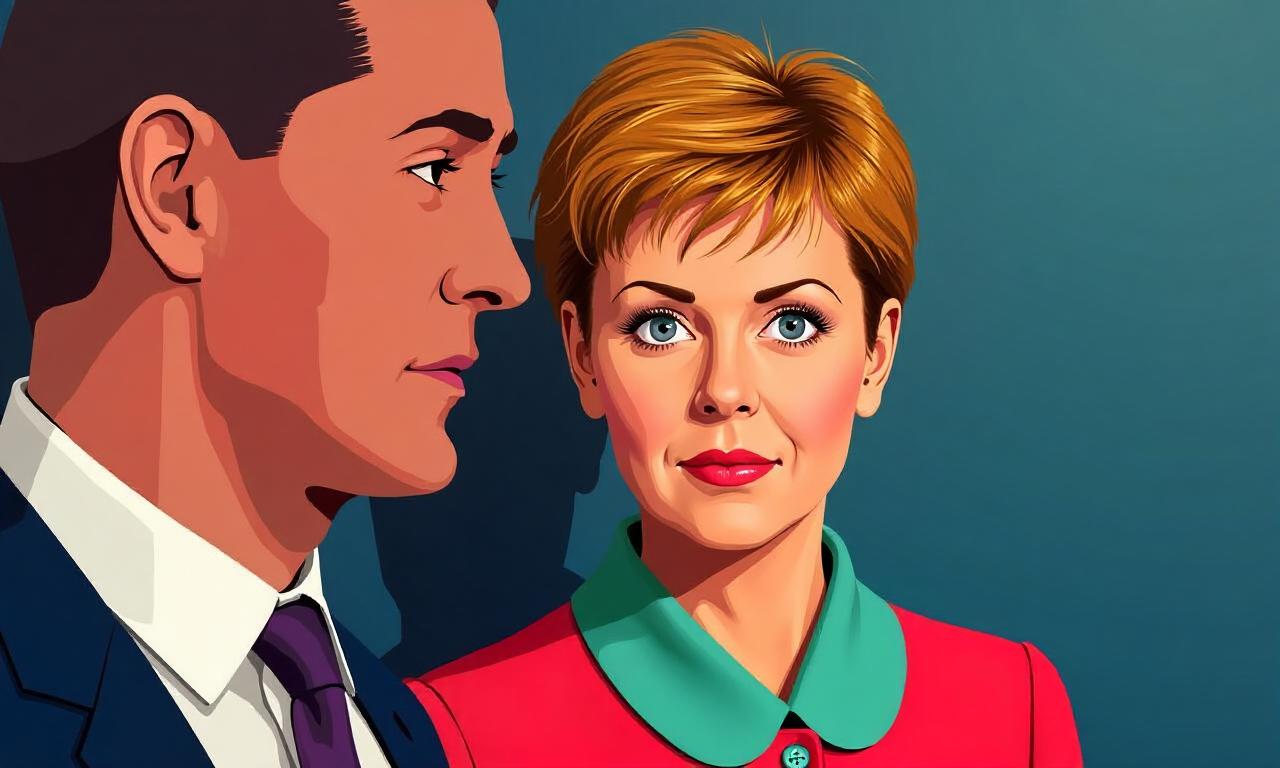
Samael.lol – Nicola Sturgeon, Scotland’s former First Minister, addressed the BBC in her inaugural post-split interview following Peter Murrell’s admission of guilt for embezzling £400,000 from the Scottish National Party. The conversation, led by Laura Kuenssberg, underscored Sturgeon’s steadfast stance as she clarified her stance on the financial misconduct attributed to her ex-husband. She emphasized that the burden of accountability for his actions rested squarely on him, rejecting the notion that she should bear the consequences of his decisions.
“I am not responsible for the crimes that my former husband committed and I’m not going to apologise for somebody else’s crimes,” Sturgeon stated, asserting her independence from the allegations tied to Murrell’s conduct. Her remarks highlighted a sense of personal resolve, as she felt she was “serving a sentence for a crime I did not commit.”
During the interview, Sturgeon expressed frustration with the political fallout, suggesting that the public was unfairly associating her with the financial missteps of a former partner. The former SNP chief executive, Peter Murrell, had recently pled guilty to using party funds to purchase luxury goods, jewelry, cosmetics, two cars, and a motorhome. Sturgeon, who serves as an MSP for Cunninghame North, has consistently maintained that she had no knowledge of these transactions, distancing herself from the accusations.
Meanwhile, the Scottish Parliament saw the swearing-in of new leaders as political dynamics shifted. Anas Sarwar, the leader of Scottish Labour, took the stage at the recent party conference, declaring that his decision to push for the UK Prime Minister’s removal represented “a political gamble of his career.” This bold move reflects the growing tensions within the party and the broader political landscape, where accountability and reform are central themes.
A New Era in Scottish Politics
At the same time, the Scottish Labour leadership continued to emphasize its commitment to reshaping key sectors. John Swinney, who recently stepped into the role of first minister, took the opportunity to address the need for a “line in the sand” against “a politics of fear.” His comments, delivered during a speech in Glasgow, aimed to inspire confidence in the party’s direction and its efforts to modernize the NHS.
Other voices within the political arena also contributed to the discourse. Graham Simpson, an emerging Reform MSP, shared his motivations for leaving the Scottish Conservatives and joining a new faction. In a conversation with Scotcast, he discussed the ideological shift that led to his decision, positioning himself as a advocate for a more streamlined approach to governance. Meanwhile, the passage of a bill to legalise assisted dying in Scotland marked a significant legislative step, with the BBC’s Glenn Campbell providing insight into the debate and its implications for healthcare policy.
International and Domestic Tensions
The political spotlight also extended to global affairs as the first minister voiced concerns about the potential US takeover of Gaza. She described this scenario as “unacceptable and dangerous,” underscoring her belief in a more balanced international approach to conflict resolution. This statement came amid broader discussions on the state pension reforms, where Sturgeon highlighted the inadequacy of warnings provided to women, calling for compensation measures to address the impact of the policy changes.
John Swinney further elaborated on the strategy to leverage Donald Trump’s Scottish connections, aiming to mitigate the effects of tariffs on imports. His comments, however, were met with criticism from Yousaf, who noted that Musk’s public statements often “highlight cases that involve only people of colour or Muslims.” This critique adds a layer of complexity to the debate on international trade and its social implications.
Legacy and Leadership
As the political landscape evolved, the legacy of former SNP leaders was also acknowledged. In the House of Commons, members paid tribute to the late SNP figure, whose leadership in 1999 was described as a “new dawn” for the nation. His contributions to the party’s growth and influence were highlighted, even as current leaders like John Swinney sought to redefine the party’s priorities through initiatives such as the Scottish independence leaflet.
The interview with Sturgeon also touched on her personal views about governance. She advocated for a grassroots approach to problem-solving, stating that she believed in tackling issues “from the bottom up.” This philosophy contrasted with the more centralized methods she had previously supported, showcasing a subtle shift in her political strategy. Meanwhile, the Supreme Court ruling by Lord Hodge provided clarity on legal matters, though it was not directly tied to the current political focus.
Amid these developments, the media continued to play a pivotal role in shaping public perception. The BBC featured coverage of Sturgeon’s remarks, while other outlets reported on the growing factionalism within Scottish politics. The electorate, increasingly divided by ideological differences, remains a key factor in determining the future of the nation’s political direction.
As the Scottish Parliament moves forward, the interplay between personal and political responsibilities becomes more pronounced. Sturgeon’s refusal to apologize for her former husband’s crimes sets a precedent for how leaders navigate the challenges of public accountability. Her words, echoed by other figures in the political arena, reflect a broader trend of defensiveness and determination in the face of scrutiny.
The current political climate is marked by both continuity and change. While Sturgeon’s tenure as First Minister is remembered for its progressive policies and strong advocacy, the recent events signal a new chapter in the nation’s political narrative. The ability to balance personal relationships with public duty remains a central theme, as leaders like Anas Sarwar and John Swinney navigate the complexities of their roles in a rapidly evolving political landscape.