Have Rangers Just Signed Scotland’s World Cup Number Nine?
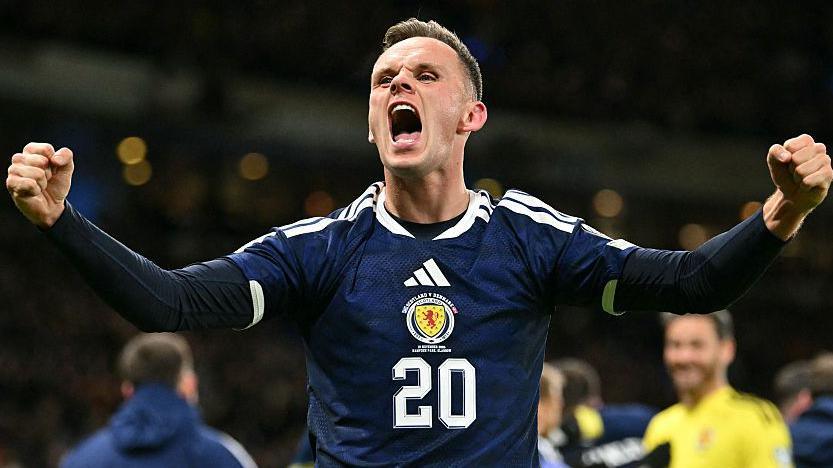
Samael.lol – Rangers’ acquisition of Lawrence Shankland, the captain of Heart of Midlothian, has sparked speculation about his role in Scotland’s upcoming World Cup campaign. While his move to Ibrox is being hailed as a pivotal transfer, questions linger about whether he will emerge as the focal point of the national team’s attacking play. For years, Scotland has struggled to identify a consistent, prolific striker, and Shankland’s emergence as a key figure at club level has raised hopes of a breakthrough on the international stage.
Shankland’s Rise and the Scotland Dilemma
At 30, Shankland’s career has been marked by steady growth. After a standout season with Hearts, where his 21 goals helped the club mount a strong challenge for the Scottish Premiership title, there is growing belief that he deserves a central role in the World Cup squad. However, his international career has been inconsistent, with only four of his 18 appearances for Scotland coming as starts. This has left him in the shadows of more established forwards, despite his proven ability to deliver in crucial moments.
Steven Naismith, who has worked with Shankland both as a player and now as Scotland’s assistant coach, has praised his development. “He’s taken a while to reach this level, but in the last two or three years, his progression has been exceptional,” Naismith remarked. “He’s faced challenges, but he’s always bounced back, delivering in high-stakes games. Going into the World Cup, he’s in the best possible mindset to be not just part of the team, but a vital contributor.”
“His game intelligence and finesse are top-level. He’s not only done it in comfortable situations, like when his team was leading 3-0, but also in tight, high-pressure moments. That’s what makes him special,” Naismith added.
Despite his lack of starting appearances, Shankland’s goal-scoring record for Scotland is notable. Four goals in 18 games, including a standout performance against Denmark in November that secured World Cup qualification, have demonstrated his ability to rise to the occasion. Yet, his limited minutes on the pitch have kept him from fully asserting himself as a mainstay in the national team.
Comparing Efficiency: Shankland’s Case for the Squad
If Scotland’s head coach, Steve Clarke, examines the statistical evidence, Shankland’s case for inclusion in the World Cup squad becomes stronger. His average goal involvement every 104.8 minutes ranks among the most efficient in the group. In contrast, Lyndon Dykes averages a goal every 205.4 minutes, Che Adams every 209 minutes, and George Hirst every 299 minutes. Ross Stewart, who has only played 34 minutes across two appearances, has yet to register a goal or assist, further highlighting Shankland’s value.
Shankland’s role at Hearts as captain has transformed him from a lone goal scorer into a more versatile and complete forward. His physicality, work rate, and ability to link play with teammates have improved significantly over the past few seasons. This evolution has not gone unnoticed by those who have worked alongside him, including Naismith, who recalls a different version of the player from his early days at Tynecastle.
“I first met him as a forward here when I was a player. He was a finisher, but not someone who brought much tactical awareness or defensive commitment. When I later coached him, that changed completely. His understanding of the game and technical precision are now on a professional level,” Naismith explained.
Naismith’s anecdotes underscore Shankland’s development. For instance, during a 2024 clash with Holland, Shankland chose to pass to Scott McTominay instead of taking a shot himself, a decision that reflected his growing leadership and team-oriented mindset. “Back then, he might have hesitated in that environment. Now, he’s confident enough to make the call that benefits the team most,” Naismith noted.
The Path Forward: A Battle for the Forward Line
Clarke, known for his loyalty to players with experience, has previously prioritized veterans in critical moments. While some fans might expect Lyndon Dykes or Che Adams to lead the attack, Shankland’s performance under pressure suggests he is ready for that responsibility. His ability to thrive in tight situations, combined with his captaincy experience at Hearts, positions him as a strong candidate for the role.
Shankland’s journey from a reliable goal scorer to a central figure in Scotland’s forward line is a testament to his adaptability. The Ibrox club, eager to build a competitive squad, has invested in his potential, and the challenge now is whether he can translate that form to the international stage. With the World Cup kicking off on 14 June against Haiti, the stakes are high for players like Shankland to step up.
His presence in the squad could also alleviate some of the pressure on other forwards. While Dykes and Adams have shown promise, their consistency has been questioned, and Stewart’s brief appearances have left fans wondering about his future. Shankland, with his proven track record and evolving skills, offers a reliable alternative. His efficiency in front of goal, paired with his defensive contributions and leadership, makes him a well-rounded option for Clarke’s team.
Context for the World Cup: Expectations and Opportunities
As Scotland prepares for the World Cup, the focus will be on how their forwards can perform under the spotlight. Shankland’s potential to lead the attack is tied to his ability to balance scoring with defensive duties and tactical awareness. His captaincy experience at Hearts, where he has inspired his teammates, adds another layer to his appeal for the national team.
The World Cup fixtures and group standings will determine the competition for starting spots. While Dykes and Adams may have the edge in terms of experience, Shankland’s recent form and statistical performance suggest he is a worthy contender. Fans are divided, with some questioning whether his inconsistent starts in recent matches have affected his confidence, but others argue that his talent and mindset make him a future leader.
Ultimately, the decision rests with Clarke, who has consistently chosen players he trusts. Shankland’s inclusion could signal a shift in strategy, emphasizing both goal-scoring prowess and all-round contribution. If he can maintain his form and adapt to the demands of the tournament, he may finally cement his place as Scotland’s key striker.
How to Watch the World Cup: A Guide for Fans
For those eager to follow Scotland’s campaign, the BBC provides comprehensive coverage. Fans can access live updates, expert analysis, and highlights of every match. The World Cup group standings will be a constant reference, offering insight into Scotland’s progress and the competitiveness of their group.
With the tournament set to begin on 14 June, the anticipation is palpable. Shankland’s potential as the nation’s primary striker will be tested in the opening game against Haiti. If he can deliver on the big stage, it may not only secure his place in the squad but also redefine his career. The journey from Hearts to Rangers, and now to the World Cup, has brought him to a crossroads where his talent and growth will be scrutinized more than ever.
As the summer transfer window closes, the focus shifts to the first major test of the year. Whether Shankland is the “number nine” that Scotland needs for the World Cup remains to be seen, but his recent performances and development suggest he is more than capable of stepping into that role. The challenge now is for Clarke to give him the chance to prove it on the world stage.