How Gerrard Went from ‘Best Night’ to ‘Head Like a Box of Frogs’
Samael.lol – Steven Gerrard’s career is often defined by moments that symbolize both triumph and turmoil. The 2005 Champions League final stands as one of his most celebrated achievements, yet the events that followed reveal a period of uncertainty and emotional conflict. Reflecting on that iconic night, Gerrard recalls it as the pinnacle of his career, but the following months brought a dramatic shift in his perspective. His relationship with Rafael Benitez, the Spanish manager who led Liverpool to victory, became a central theme in his later recollections, highlighting the tension between admiration and disillusionment.
The 2005 Triumph and Its Aftermath
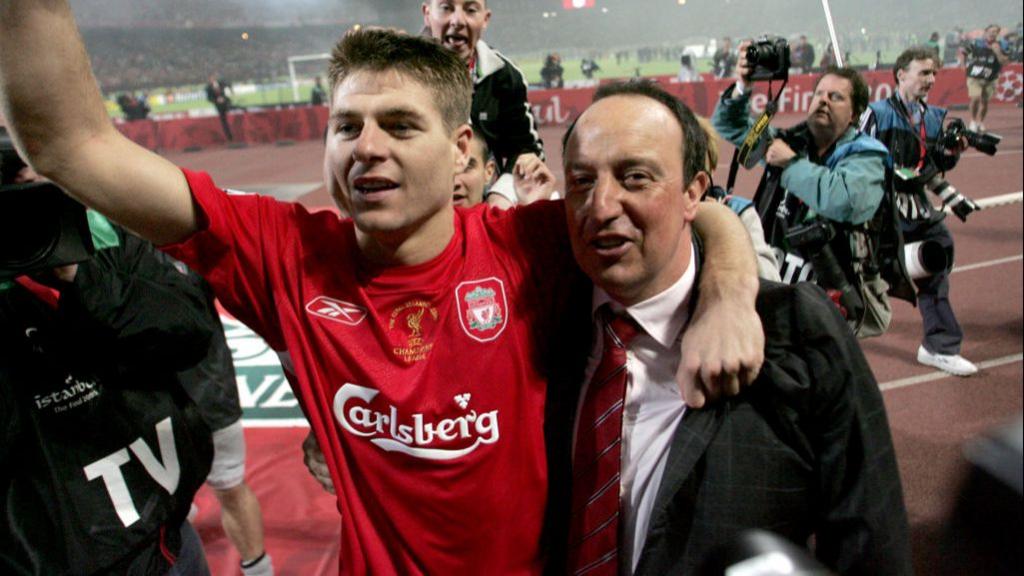
May 2005 was a month that etched itself into football history. Gerrard, as captain of Liverpool, orchestrated a stunning comeback against AC Milan, guiding his team from a 3-0 deficit at halftime to a 5-3 aggregate victory in the Champions League final. The match, held in Istanbul, was a masterclass in resilience and passion, with Gerrard’s leadership and final-minute heroics ensuring the club’s fifth European Cup. For fans, the win was a beacon of hope, suggesting that Gerrard’s future with Liverpool was secure. However, just two months after the triumph, the player announced his intention to leave the club, only to reverse his decision hours later.
“Mourinho was on the phone—arguably the best manager in the world at the time, offering ridiculous contracts that could easily sway your thinking. Chelsea were throwing money around, and he was guaranteed success there,” Gerrard explains in a Netflix documentary. “I couldn’t just set aside my bond with Liverpool. When they came, I didn’t know which way to go. Mentally, I was in a dark place. My head felt like a box of frogs.”
The metaphor of a “box of frogs” captures the chaos Gerrard felt during that turbulent period. While the 2005 final had solidified his status as a global star, the pressure to maintain his elite form and the managerial approach of Benitez began to weigh on him. The Spanish coach’s analytical nature and unrelenting critique of Gerrard’s playing style were seen as a catalyst for the player’s doubts. “I felt like he didn’t value me, didn’t trust me, and didn’t want me,” Gerrard adds, underscoring the emotional toll of Benitez’s methods.
The Struggle Between Passion and Precision
Benitez’s management philosophy, rooted in meticulous tactics and strict discipline, often clashed with Gerrard’s instinctive, emotive approach to the game. For the captain, football was about heart, grit, and the relentless pursuit of glory for the badge. Yet Benitez, in his pursuit of tactical perfection, seemed to challenge that identity. “My game was about emotion, passion, desire, commitment—for the badge, for the [Liver] bird, for the family,” Gerrard states. “It was ingrained in me, and I felt like he wanted to completely reshape who I was.”
Carragher, Gerrard’s former teammate and now a Sky Sports pundit, echoes this sentiment. “Rafa Benitez was never one for emotional support,” Carragher notes. “He’s very unemotional, and that can be tough when you’re playing for a team that feels like it’s not believing in itself.” The documentary reveals how Benitez’s critical nature, combined with the sense of underachievement in the team, left Gerrard questioning his place in the squad. “Nothing would ever satisfy him,” Gerrard remarks, a sentiment that reflects the internal conflict he faced.
Benitez’s Legacy and Gerrard’s Reckoning
Benitez, now 66, defends his approach in the documentary, arguing that his methods were essential for achieving success. “When I arrived at Liverpool, the culture was built on emotion,” he says. “But football requires more than just passion. If you’re too emotional, you don’t find the path to greatness.” This perspective highlights the tension between Benitez’s pragmatic strategies and Gerrard’s fiery personality. While the manager’s tactics propelled the team to historic victories, they also tested the resolve of players like Gerrard, who thrived on emotional connection to the game.
As time has passed, Gerrard has come to appreciate Benitez’s role in his development. “I look back at Rafa and think he’s the best coach I’ve ever worked with,” he says. This acknowledgment suggests that the initial friction between the pair was not insurmountable, and that Benitez’s influence helped shape Gerrard into the iconic figure he became. The manager’s emphasis on discipline and structure, though initially perceived as stifling, ultimately contributed to the team’s success in 2005 and beyond.
A Parallel Story: Michael Owen’s Exit
Benitez’s tenure at Liverpool was not without its challenges. A year before the Gerrard saga, another young talent—Michael Owen—was also grappling with his future. Owen, who had emerged from the club’s academy and earned the Ballon d’Or in 2001, had grown disillusioned with Anfield. His departure in August 2004 to Real Madrid, a move that cost £8 million, marked the beginning of a new chapter. Benitez, as the manager, faced the task of convincing Owen and Gerrard to stay, a challenge that proved difficult.
During a meeting in Portugal with the England squad at the European Championship, Benitez focused on tactical adjustments rather than emotional reassurance. “He was on me tactically,” Gerrard recalls. “‘I don’t want this, I don’t want that. You can’t play in this team unless we trust you.’ It was intense. I thought to myself, ‘I guarantee you, you’ll need me before I need you.’” Owen, now 46, remembers the session similarly. “He told me I needed to learn to turn the ball quicker,” Owen says. “That was what I was probably best at in the world at the time. He didn’t do much to convince me to stay.”
Despite Benitez’s efforts, Owen’s departure signaled a broader shift in the club’s direction. The manager’s approach, while effective in securing trophies, also sowed seeds of doubt among key players. For Gerrard, this uncertainty manifested in a desire to seek stability elsewhere, even as he remained deeply tied to Liverpool. The combination of Benitez’s criticism and the lure of Real Madrid and Chelsea created a perfect storm of indecision, but Gerrard’s loyalty to the club ultimately prevailed.
Looking back, both Gerrard and Owen recognize the complexities of Benitez’s tenure. While the manager’s methods may have clashed with their personal styles, they also played a pivotal role in the team’s transformation. The 2005 Champions League victory, though a highlight, was just one part of a larger narrative. For Gerrard, it became a turning point that revealed the challenges of balancing individual ambition with collective success. For Benitez, it was a testament to his ability to adapt and inspire, even as his relationship with his players remained a source of both admiration and frustration.