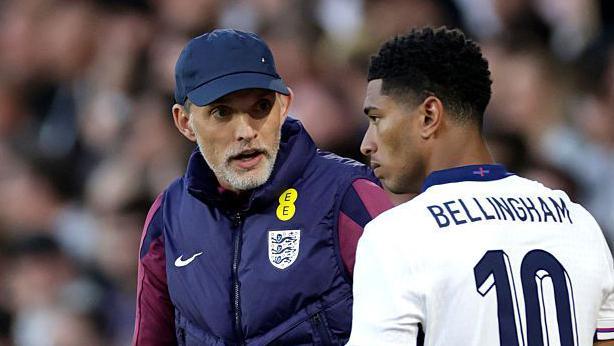
The World Cup Squad Dilemmas Facing Tuchel
Samael.lol – As the World Cup squad announcement approaches, Thomas Tuchel faces a series of tough decisions that will shape England’s campaign in the 2026 tournament. The German coach has already begun reaching out to players who narrowly missed selection, sending a message that could either motivate or haunt them. For many, representing their nation at the World Cup is the ultimate achievement, but for those who receive the call of rejection, it may leave them questioning their place in the team’s future plans.
Defensive Uncertainties and Leadership Tensions
Among Tuchel’s most pressing challenges are the selection dilemmas in defense. John Stones, a central defender, has been a cornerstone of England’s strategy, yet his inconsistent form this season has raised concerns. Despite his reputation as a reliable presence in the backline, Stones has only managed four Premier League starts this campaign, a stark contrast to his previous consistency. This has placed him in a difficult position, as the manager’s initial vision for his leadership group included Stones, Harry Kane, and Declan Rice.
“The leadership group is crucial, and Stones, Rice, and Kane are the foundation of our plans,” Tuchel said earlier in the season, emphasizing the trio’s importance. His communication with them—regular texts and discussions—has kept them informed of their roles, but their current fitness and performance levels remain under scrutiny.
While Stones’ injury-free status would secure his place, the emergence of alternatives like Marc Guehi and Ezri Konsa has complicated matters. Guehi, a young and versatile center-back, has shown promise in recent matches, while Konsa’s physicality and experience could make him a reliable option. Harry Maguire’s return to the national team in March has added another layer to the debate, as the Manchester United defender’s strong performances have bolstered his chances of inclusion.
Other defenders, such as Jarell Quansah and Trevoh Chalobah, have also had their moments. Quansah, though primarily a central defender, has demonstrated adaptability in different roles, which could be a deciding factor. Chalobah and Tomori, who featured in March’s friendlies against Uruguay and Japan, are fighting for spots in the final 26. Levi Colwill, still recovering from a long-term cruciate knee ligament injury, has been part of the extended 55-man squad but is unlikely to feature in the tournament.
The Right-Back Conundrum: Alexander-Arnold’s Fate
The competition for right-back positions has added another layer of uncertainty. Trent Alexander-Arnold, despite being a household name, was omitted from the March squad, leaving many to wonder if he would be left out again. His absence in the first selection was surprising, as Tuchel had previously indicated that Quansah was ahead of him in the pecking order.
However, the situation may yet change. Reece James, expected to start the tournament, has been hampered by recurring injuries, which have limited his availability. Tino Livramento, the Newcastle full-back, has also been sidelined due to a thigh injury, reducing his chances of making the squad. Ben White, recovering from a serious knee injury, is another potential candidate, but his fitness remains a concern.
Tottenham’s Djed Spence could be an unexpected option, having played under Tuchel during his time at Manchester City. His recent form has provided the manager with a dilemma: whether to prioritize stability or introduce fresh energy. Meanwhile, Luke Shaw’s resurgence has given Tuchel additional options, though his inclusion depends on his continued performance and fitness.
Striker Battles and Tactical Considerations
The striker position has seen its share of competition, with Harry Kane set to captain the team and lead the attack. While Kane’s leadership and goal-scoring record make him an automatic selection, the race for his backup role is intense. Tuchel’s strategy of having three strikers in the squad reflects his desire for versatility and depth, particularly in a tournament where match-ups can shift rapidly.
Ollie Watkins, who missed the previous squad, has fought back with a remarkable run of 11 goals in 14 games for Aston Villa. His pace and clinical finishing have made him a strong contender, especially as Tuchel looks to balance defensive solidity with attacking flair. Ivan Toney, who has been away from international duty for nearly a year, has also reemerged as a key player. His time in Saudi Arabia has been scrutinized, but his ability to score from set-pieces and his confidence in penalties could tip the scales in his favor.
Danny Welbeck, a veteran forward, has not been forgotten. His goal-scoring contribution for Brighton this season has reignited interest in his inclusion, despite his age and potential fitness limitations. Tuchel’s decision to consider multiple strikers highlights the importance of adaptability in the World Cup group stage, where teams may need to rotate players to maintain momentum and freshness.
Strategic Implications and Player Motivations
Tuchel’s squad choices will have far-reaching implications, not just for the players involved but for the team’s overall strategy. The selection of a balanced squad with depth in key positions is critical, especially as England faces Group L opponents like Croatia, Ghana, and Panama. The manager’s emphasis on possession and high pressing could benefit from the inclusion of players like Alexander-Arnold, who excels in defensive transitions and has the technical ability to control the game’s flow.
For players who receive the call of rejection, the emotional impact could be significant. The thrill of representing one’s country at the World Cup is a once-in-a-lifetime opportunity, and missing out may lead to frustration. However, Tuchel’s focus on long-term development and team cohesion suggests that some players may be left out to make room for those with a stronger track record in the upcoming matches.
The final 26-player squad will be announced on Friday, and the stakes are high for every individual involved. With the World Cup being a major test of skill, endurance, and teamwork, Tuchel’s decisions will determine whether England can capitalize on their potential as one of the favorites to win the tournament. The manager’s ability to navigate these challenges will be a key factor in the team’s success, as he balances experience, fitness, and tactical needs in the final selection.
Looking Ahead: The Weight of Expectation
As the squad announcement draws near, the pressure on Tuchel intensifies. The 2026 World Cup in North America is a prestigious stage, and England’s hopes are tied to the quality of their selection. Players like Stones and Kane are seen as cornerstones, but the competition for spots ensures that every decision is a calculated risk. For those on the outside looking in, the waiting period may be a test of resilience and determination.
The tournament’s format, which includes group stage matches against teams with varying strengths, means that every player’s role must be meticulously planned. Tuchel’s approach of blending experience with emerging talent could be the key to success, but it also means some players will have to step up their performance to earn a place. The final 26 will be a mix of veterans and rising stars, each with a story of their own.
With the squad set to be revealed, the focus shifts to the upcoming matches and the readiness of the selected players. Tuchel’s decisions will not only impact the team’s immediate prospects but also shape their long-term development. The World Cup is more than just a sporting event—it’s a proving ground, and the players who make the cut will be under the spotlight from the moment they step onto the pitch.
The journey to the World Cup is filled with uncertainty, but for Tuchel and his team, the goal remains clear: to secure a spot in the tournament and build a squad capable of challenging for the trophy. As the final decisions are made, the weight of expectation will be on every player, and the coach’s ability to navigate these challenges will define England’s path in the 2026 World Cup.