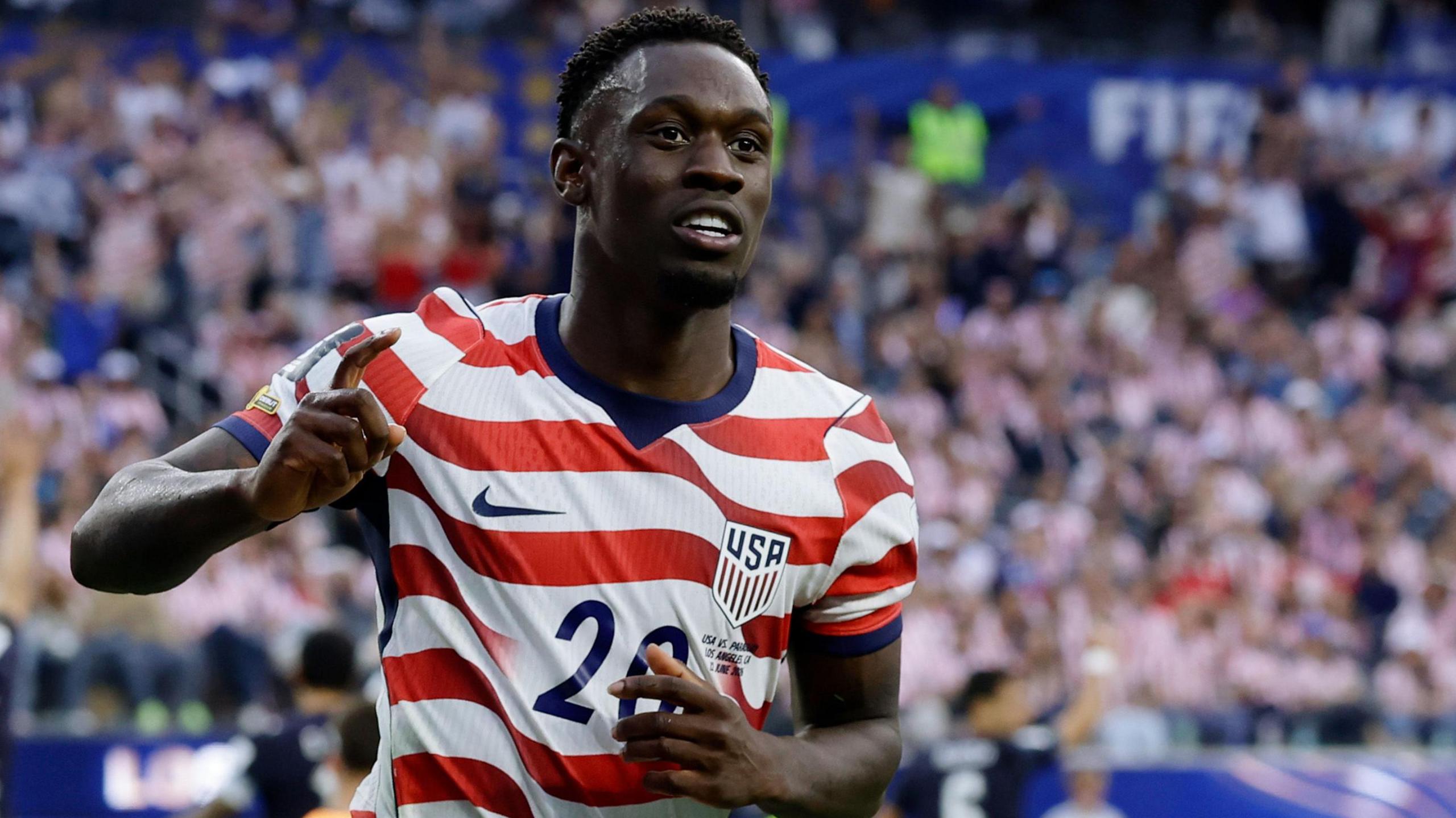
Trump Confirms Request to FIFA Over Balogun’s Red Card Suspension
Samael.lol – President Donald Trump has officially stated that he reached out to FIFA to reconsider the one-match suspension of U.S. forward Folarin Balogun during the World Cup. The 25-year-old player was initially set to miss the United States’ last-16 clash against Belgium due to a straight red card he received in the prior round for a foul on Bosnia-Herzegovina defender Tarik Muharemovic. However, FIFA unexpectedly decided to extend the suspension for 12 months, allowing Balogun to return to action in Seattle. This decision has sparked debate about the integrity of the tournament and the influence of political figures on football decisions.
Trump’s Stance on the Suspension
During a Monday press conference at the White House, Trump emphasized that he questioned the fairness of the suspension. “I believed it wasn’t a foul,” he explained, adding that he had sought a review from FIFA president Gianni Infantino. While Trump acknowledged speaking with Infantino, he clarified that he did not instruct the Swiss official to lift the ban. “All I did was ask for a reconsideration,” he said, “and I didn’t tell them they had to make any specific call.”
“I thought it was two great athletes who collided and got tangled up,” Trump remarked. “The suspension would have left a big stain on the World Cup. I can’t dictate their decisions, but I believe the commission made the right choice.”
Despite his support for FIFA’s decision, Trump highlighted the controversy surrounding the incident. The red card, awarded in the group stage match against Bosnia-Herzegovina, had been a point of contention for fans and analysts. Balogun’s three goals in the tournament so far had elevated his status as a key player, making the suspension more impactful. By halting the automatic one-match ban, FIFA allowed him to participate in a critical game, raising questions about the consistency of disciplinary actions.
Belgian FA’s Reaction
The Royal Belgian Football Association (RBFA) expressed surprise at FIFA’s reversal of the suspension. In a statement released on Monday, the organization called the decision “astonishing,” noting that it could undermine the principles of fair play. “Regardless of the match outcome, we are deeply concerned about the implications of this ruling and will continue to advocate for the integrity of the game,” the RBFA said. The association also emphasized its commitment to defending ethical standards and the overall interests of football.
FIFA, for its part, offered no additional comments on the matter, stating it had “nothing more to add for now.” The governing body’s refusal to elaborate has fueled speculation about the motivations behind the suspension reversal. Some have questioned whether political pressure played a role in the decision, while others argue it was a necessary adjustment to ensure competitive balance.
Criticism from Tuchel and UEFA
England’s head coach Thomas Tuchel, who had faced a similar dilemma when his team was reduced to 10 men against Mexico, called the ruling a “dangerous precedent.” Tuchel argued that the line between a fair foul and a penalty should be clear-cut. “Where to draw the line is the question I’m asking,” he said. “Do we appeal if a yellow card isn’t a yellow card? Who decides what constitutes a red card? This creates uncertainty about the rules.”
“Where does this start and where does it end? It’s my question,” Tuchel added. “I don’t have an answer yet, but I’m worried about how this could affect future matches.”
UEFA, the European football federation, took a stronger stance, calling the suspension reversal a “red line” breach. The organization stressed that such interventions could erode the credibility of the competition. Historically, this is the second time a player has avoided a one-match ban in the World Cup, with the first instance being Brazil’s Garrincha in 1962. At that time, the absence of automatic bans meant that disciplinary decisions were more subjective, and some believed political influence was at play.
Implications for the Tournament
The controversy surrounding Balogun’s suspension has brought attention to the broader issue of sportsmanship and rule enforcement. With 189 red cards already issued during the World Cup, FIFA’s decision to extend Balogun’s ban for a full year raises concerns about the fairness of the process. Critics argue that allowing a player to return after a single red card could set a precedent that rewards questionable behavior, potentially leading to a loss of discipline in the sport.
For the United States, the reversal of the suspension provided a strategic advantage. Balogun’s inclusion in the squad for the Seattle match against Belgium was seen as a crucial moment, especially after his strong performances in the tournament. However, this intervention has also highlighted the tension between political influence and sporting integrity. As the World Cup progresses, teams and officials will be closely watching how such decisions are handled in the future.
Broader Context and Debate
The incident has reignited discussions about the role of external factors in football governance. While FIFA maintains that its decision was based on the evaluation of the referees and the commission’s review, some view it as an example of how political pressure can shape outcomes. Trump’s involvement, though limited to a request for a review, underscores the potential for high-profile figures to influence the game’s rules.
Analysts have pointed out that this case is unique in its timing and stakes. Balogun’s red card in the previous round had been a pivotal moment, and his suspension for the next match would have had a significant impact on the U.S. team’s strategy. The fact that FIFA chose to lift the ban after Trump’s intervention has led to accusations of favoritism, even as the organization insists it acted independently. The debate now centers on whether such decisions should be made by officials or if political input is justified in high-profile scenarios.
Looking Ahead to the World Cup
As the World Cup moves forward, the controversy surrounding Balogun’s suspension serves as a reminder of the challenges in maintaining consistency. With 189 other red cards already in the record, FIFA’s decision to revisit this case highlights the importance of transparency. The question remains: how many more such rulings will be subject to external influence, and what does this mean for the fairness of the competition?
The incident also raises the profile of Balogun, whose performance has been a highlight of the tournament. His ability to return to action after the suspension reversal has not only boosted his team’s chances but also placed him in the spotlight as a player whose fate was influenced by a political figure. While some fans celebrate the decision as a fair outcome, others remain skeptical, questioning whether the integrity of the game was compromised.
With the World Cup nearing its climax, the debate over Balogun’s suspension is likely to continue. Teams and coaches will be evaluating how such decisions affect their strategies, while fans and analysts will scrutinize the role of politics in football. The case of Folarin Balogun may ultimately serve as a landmark moment in the intersection of sports governance and political influence, shaping the future of decision-making in international competitions.