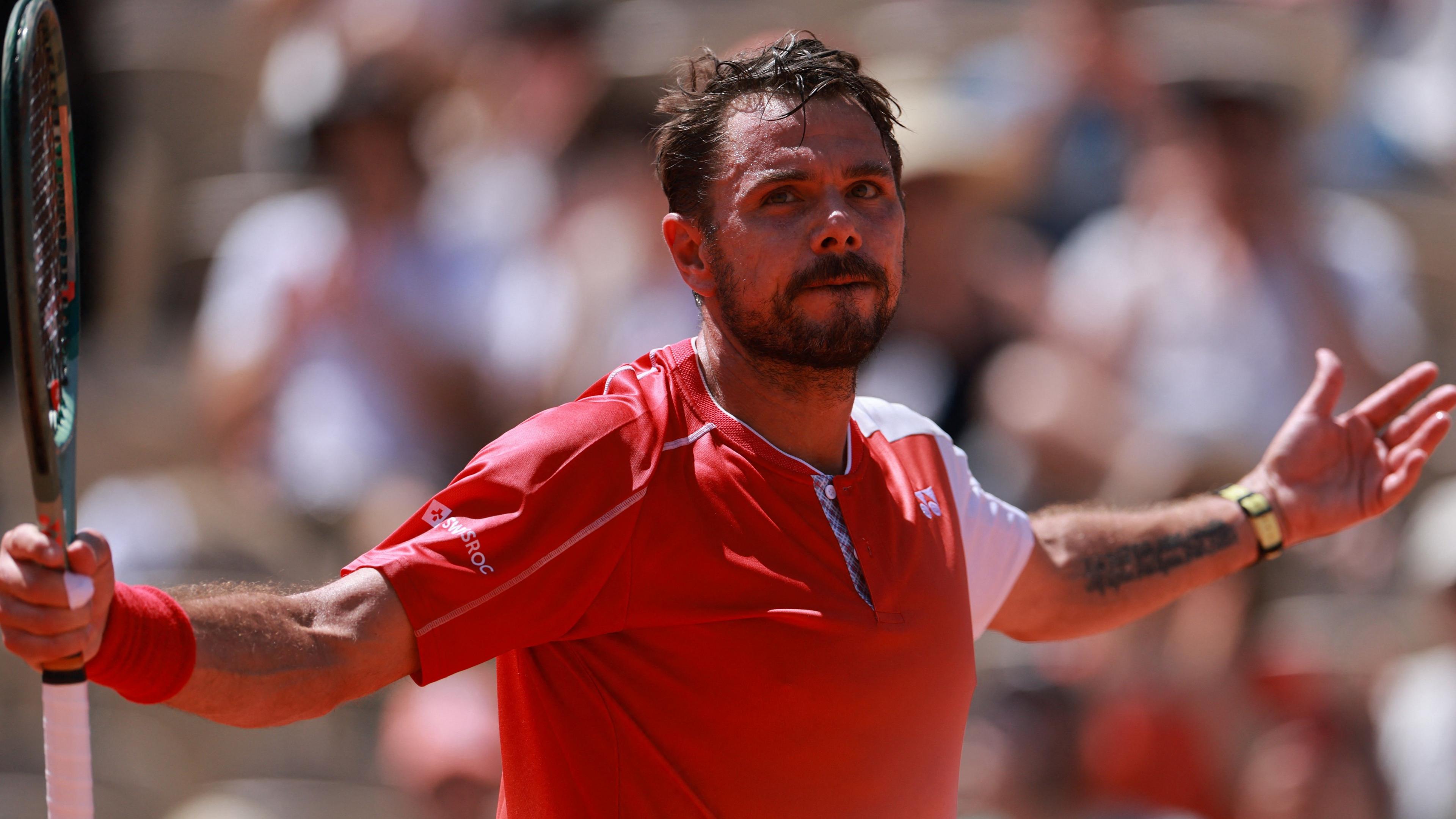
Stan Wawrinka bids fond farewell to French Open
Samael.lol – Stan Wawrinka’s final appearance at Roland Garros marked the end of an era for the Swiss tennis legend. After a storied career spanning over a decade, the 41-year-old veteran faced off against Jesper De Jong in the tournament’s final match, losing 6-3, 3-6, 6-3, 6-4 under the watchful eyes of a lively Parisian crowd. While the result may not have matched the historic significance of his previous triumphs, the occasion itself carried immense weight as Wawrinka prepared for retirement at the Swiss Indoors tournament in Basel later this year. This farewell, however, was not about endings but about reflections on a career defined by resilience, charisma, and three Grand Slam titles.
A Career Shaped by Triumph and Tenacity
Wawrinka’s journey to the French Open final was a testament to his enduring spirit. Having claimed his first major title at the 2014 Australian Open, the Swiss player became a symbol of underdog success. His 2015 victory at Roland Garros, where he defeated the then-world number one Novak Djokovic, remains one of the most iconic moments in tennis history. The match, which saw Wawrinka come from a set down to secure a dramatic 6-3, 3-6, 6-3, 6-4 win, was a masterclass in grit and precision. It not only extended his career Grand Slam tally to three but also solidified his reputation as a player who could deliver under pressure.
Despite his achievements, Wawrinka has often spoken of the challenges he faced to reach those heights. His path to success was littered with physical setbacks, including multiple knee and foot surgeries, yet he continued to compete with unyielding determination. The 2015 French Open final, in particular, stands out as a defining moment where his aggressive style of play—especially his signature single-handed backhand—was showcased to perfection. This was more than a victory; it was a statement that even in his prime, Wawrinka could challenge the likes of Djokovic, Nadal, and Federer, the titans of the sport.
The Iconic Shorts That Symbolized a Moment in Time
As the final match unfolded, Wawrinka’s choice of attire drew attention. He wore a strip of fabric from his famous red, white, and grey plaid shorts, a memento that had become synonymous with his 2015 French Open victory. These shorts, once a symbol of his historic triumph, have since taken on a life of their own. While some pairs were preserved for posterity, others were gifted to team members, including his long-time coach Magnus Norman, who kept a framed version as a keepsake.
The shorts’ enduring legacy highlights how certain moments in sports transcend the game itself. For fans, they are more than a piece of clothing—they represent a defining chapter in Wawrinka’s career. The player’s decision to carry a fragment of them into his final Roland Garros appearance added a personal touch, bridging the past and present in a poignant farewell. The vivid memory of his 2015 performance is now inseparable from the image of those shorts, a visual reminder of his ability to turn the tide in high-stakes matches.
From Melbourne to New York: A Trilogy of Comebacks
The 2015 French Open victory was the climax of a trilogy of Grand Slam wins that spanned three years. Earlier that same year, Wawrinka had ended Djokovic’s 14-match winning streak in the Australian Open quarterfinals, defeating him in a thrilling 9-7 deciding set. His performance in Melbourne, where Djokovic had already claimed the title, was a critical moment in the story of the ‘Big Four’—the quartet of Djokovic, Nadal, Federer, and Murray. Wawrinka’s ability to topple the top seed in the Australian Open, just days before his French Open triumph, demonstrated his capacity to challenge the sport’s elite.
His 2016 US Open victory against Djokovic from a set down was another chapter in this narrative. The final, held in New York, saw Wawrinka overcome nerves and fatigue to claim yet another major title. The match had been a grueling test of endurance, with the Swiss player spending 21 hours and 49 minutes on court during the tournament. His resilience was tested not just by the physical demands of the event but also by the psychological weight of carrying the hopes of fans who had followed his journey for years.
Retirement: A New Chapter with Memories
While Wawrinka is set to retire after the Swiss Indoors tournament, his legacy at Roland Garros is unlikely to fade. The 2015 final, where he faced the then-world number one, is remembered as one of the most electrifying matches in the tournament’s history. His ability to recover from a set deficit and overpower Djokovic in the final set was a masterstroke of tactical brilliance. The match’s outcome also meant Djokovic would have to wait another year to complete his career Grand Slam—a moment that underscored Wawrinka’s role as a key player in the sport’s competitive landscape.
Wawrinka’s career has been marked by his ability to adapt and evolve. After his 2017 title in Geneva, he endured two knee operations and two foot surgeries, yet he returned to the court with the same passion. His approach to the game, often described as a blend of physicality and mental toughness, has inspired countless fans and players alike. Even in his final days, Wawrinka’s presence on the court remains a reminder of the joy and drama that tennis can bring.
Quotes That Capture the Heart of a Legend
“I think we are all different. When you sacrifice so much for your tennis, when you do so much hard work to get there, I think if you like to celebrate, you should celebrate, and that’s what I did after winning Slams.” – Stan Wawrinka
Wawrinka’s reflections on his career reveal a man who has always embraced the highs and lows of professional tennis. He has often joked about his natural inclination to celebrate, contrasting his own approach with Djokovic’s strict discipline during his 18-month period of abstaining from even chocolate. For Wawrinka, the thrill of victory is as important as the struggle to achieve it. His final match at Roland Garros, though not a win, was a chance to honor his journey and acknowledge the role the venue played in his greatest triumphs.
His statement about the ‘Big Four’ and the ‘Big Five’ highlights his belief in the uniqueness of his path. While he may not have matched the frequency of ATP 1,000 tournament wins as his rivals, his three Grand Slam titles—achieved in a span of just three years—set him apart. The video tribute from Nadal, Federer, and Djokovic following his loss to De Jong underscored the respect he has earned from peers. As he prepares to step away from the sport, Wawrinka remains proud of his contributions, even if his legacy is now intertwined with memories rather than titles.
A Legacy Beyond the Court
Wawrinka’s impact extends beyond the scoreboard. His trademark gesture of pointing to his temple, often seen during his pre-match rituals, became a symbol of his mental focus and confidence. This habit, along with his signature backhand and celebratory nature, has left an indelible mark on tennis culture. Fans remember him not just for his victories but for the way he played, the way he lived, and the way he inspired others to embrace the game’s spirit.
As he looks toward retirement, Wawrinka is ready to shift his focus from coaching to a more leisurely pace. Yet, even now, his thoughts are often drawn back to the court, where he once dominated. The 2015 French Open, in particular, holds a special place in his heart. It was there that he faced the greatest challenge of his career, and it was there that he proved his place among the sport’s elite. Whether it’s the shorts, the quotes, or the matches, Wawrinka’s legacy is a tapestry of moments that will continue to be celebrated for years to come.