Former OpenAI board member says Elon Musk offered her sperm donations
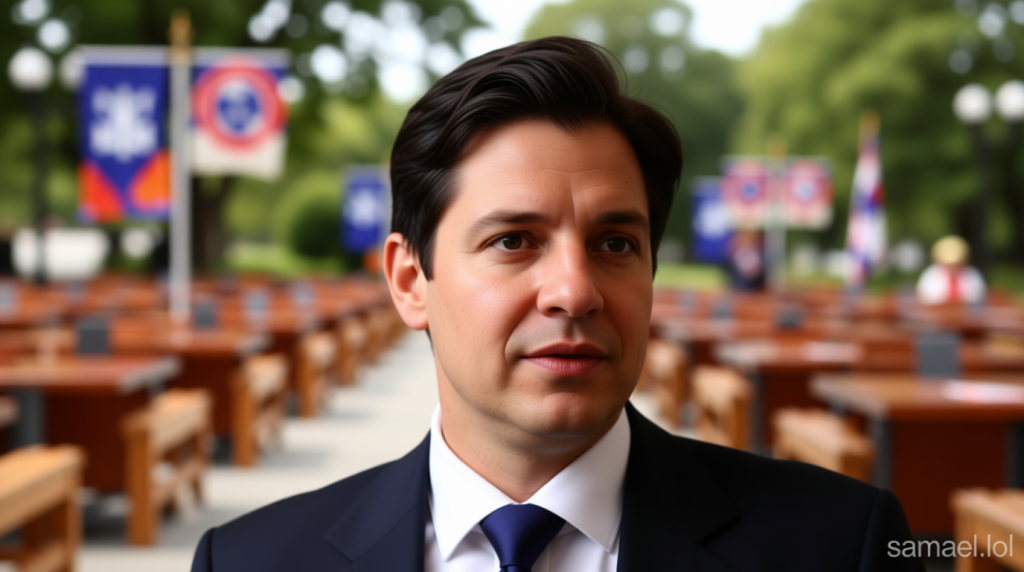
Former OpenAI Board Member Reveals Unconventional Ties to Elon Musk
Former OpenAI board member says Elon – Shivon Zilis, a former director at OpenAI, testified for hours in a federal courtroom in Oakland, California, as part of a legal battle involving Elon Musk’s attempt to reverse the organization’s shift toward a for-profit model. The case, which centers on the evolving dynamics between Musk and OpenAI’s leadership, has brought to light not only professional disagreements but also a deeply personal connection that resulted in the birth of four children. During her testimony, Zilis described how her relationship with Musk, which began as a professional partnership, eventually intertwined with her personal life in a way that led to her becoming the mother of his offspring.
A Professional Relationship That Went Beyond the Boardroom
Zilis’s appearance in the courtroom highlighted her pivotal role in shaping OpenAI’s early strategic direction. As an advisor since 2016 and a director from 2020 until her departure in March 2023, she was central to discussions about the company’s transition from a non-profit to a for-profit entity. This shift, she explained, was driven by a desire to secure substantial funding from investors, a goal that became increasingly critical as the organization expanded its ambitions in artificial intelligence. Her testimony also touched on her personal relationship with Musk, revealing how their professional collaboration evolved into a unique family dynamic.
“I still really wanted to be a mum, and Elon made the offer around that time and I accepted,” Zilis stated during the proceedings.
Zilis recalled that in 2020, Musk had offered to donate his sperm as a gesture of support for her family plans. At the time, she had been grappling with health challenges that had disrupted her initial vision of starting a family through a traditional romantic relationship. The offer, she said, was part of Musk’s broader encouragement to his associates to have children, a sentiment he had expressed publicly. “He was encouraging everyone around him at that time to have kids and he’d noticed I did not. He offered to make a donation,” she added.
From Venture Capital to AI Leadership
Zilis’s career in Silicon Valley, spanning over 15 years as a venture capitalist, had already positioned her as a key figure in Musk’s ecosystem. She had worked with him in various capacities, including at Tesla and Neuralink, before joining OpenAI as an advisor. Her tenure with the company began shortly after its founding, and it was through this role that she first met Musk. Over time, her influence grew, leading to her appointment as a director, a position that placed her at the heart of the organization’s decision-making process.
Despite her close ties to Musk, Zilis emphasized that she was not in a romantic relationship with him during the 2020 offer. She described the arrangement as a “one-off” romance that had occurred a decade earlier, which had since ended. However, the connection remained strong, and Musk’s gesture of sperm donation was seen as a personal and professional bridge. Zilis also revealed that she had been struggling with certain health issues, which led her to reconsider her approach to family planning and accept Musk’s offer.
Confidentiality and the Unveiling of Paternity
As part of her agreement with Musk, Zilis and the AI entrepreneur had decided to keep his paternity of their children strictly confidential. This arrangement, she explained, was why she did not disclose to OpenAI’s CEO, Sam Altman, that she had given birth to twins in 2021. The revelation came later, in 2022, when she learned that a Business Insider report on Musk’s parental role was about to be published. At that point, she informed Altman of the children’s paternity, describing the situation as a “sudden development” that required transparency.
Zilis’s role as an advisor and director made her a critical figure in the lawsuit, which sought to determine whether Musk had undue influence over OpenAI’s operations. OpenAI’s lawyers had argued that she had shared confidential information with Musk after he left the company in 2018, a move that had initially seemed to distance him from OpenAI’s leadership. Yet, his presence in the organization’s early stages and his continued ties to Zilis created a web of connections that could not be easily untangled.
Corporate Strategy and Musk’s Vision
During the trial, evidence was presented showing that Musk had actively participated in discussions about OpenAI’s corporate structure. According to emails reviewed in court, he had suggested changes that would grant him more control, including the possibility of adding more board seats or reclassifying the company as a subsidiary of Tesla. Zilis had even supported the idea, stating in one exchange that such a restructuring would “solve the funding issue immediately.” This sentiment reflected the urgency of securing financial backing for OpenAI’s ambitious projects, which Musk believed could be achieved through closer ties to his other ventures.
However, the transition to a for-profit model was not without controversy. OpenAI’s leadership, including Altman and president Greg Brockman, had been steadfast in their commitment to maintaining the organization’s non-profit status. They had argued that Musk’s growing influence threatened the company’s independence, and their refusal to cede control became a central point of contention. “We trusted her to keep the Elon conflict under control,” Brockman stated earlier this week, acknowledging Zilis’s reliability in managing the relationship.
A Split That Led to New Beginnings
Zilis’s departure from the board in March 2023 marked a significant turning point in the case. This decision coincided with Musk’s launch of xAI, an AI company directly competing with OpenAI’s ChatGPT. The timing of her exit suggested that her presence on the board had become a symbol of Musk’s ongoing involvement, which OpenAI’s leadership sought to limit. Despite the separation, Zilis noted that she and Altman remained friends until at least 2023, indicating that the personal and professional relationship had not been entirely severed.
The lawsuit has also highlighted the broader implications of Musk’s influence. By presenting emails and text messages from Zilis, the prosecution has aimed to demonstrate that the transition to a for-profit structure was not solely driven by financial necessity but also by strategic alignment with Musk’s vision. The case underscores the complex interplay between personal relationships and corporate decisions, revealing how a single individual’s choices could impact the trajectory of an influential tech organization.
Zilis’s testimony has added a human element to the legal battle, illustrating how the intersection of business and personal life can lead to unexpected outcomes. The fact that Musk, a billionaire entrepreneur known for his bold innovations, had offered his sperm as part of a personal arrangement with Zilis has captured public attention, blending the personal and professional in a way that challenges traditional notions of leadership and collaboration. As the trial continues, the details of this relationship will remain a focal point, offering insight into the motivations and conflicts that shape the world of artificial intelligence.
Sign up for our Tech Decoded newsletter to follow the world’s top tech stories and trends. Outside the UK? Sign up here.