Has the royal state visit saved the special relationship?
Has the royal state visit saved the special relationship?
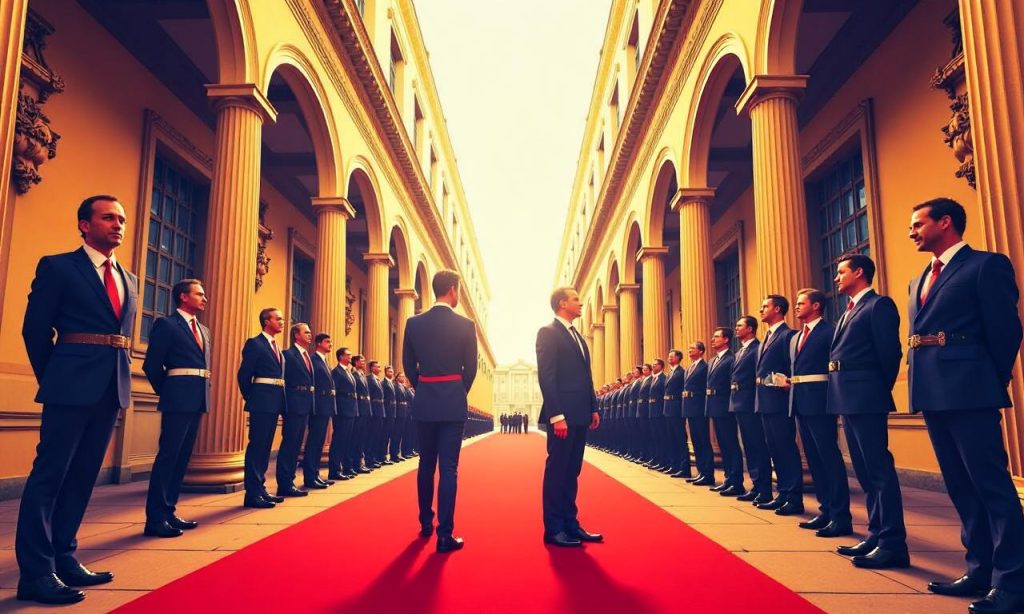
Has the royal state visit saved – The King and Queen’s four-day state visit to the United States has concluded, marking the end of a high-profile diplomatic mission. This trip, intended to mend frayed ties between Prime Minister Keir Starmer and former President Donald Trump, followed heated disputes over the Iran war and the Chagos Islands issue. The visit, the first by a British monarch since 2007, included a speech to Congress, ceremonial banquets, and a symbolic gesture: King Charles gifted President Trump a bell from the WWII submarine HMS Trump. Yet, despite these efforts, the relationship remains fragile, as Trump’s unpredictable nature continues to cast doubt on its stability.
BBC’s North America editor Sarah Smith examines the outcomes of the visit, highlighting its mixed success. The state visit was not without incident, as the White House Correspondents’ Dinner became a scene of chaos when gunfire erupted. Moments after the shots, Vice President Kamala Harris was rushed off the stage, raising questions about the safety of high-profile events. Surveillance footage released by Trump’s team shows the suspect sprinting past metal detectors, with security agents drawing their weapons in response. Police confirmed the man, who had been monitoring the dining room, was armed with multiple weapons, adding urgency to the situation.
The U.S. president was caught mid-conversation when the commotion began, swiftly escorted to safety. While the incident overshadowed the state visit, it underscored the volatility of Trump’s political landscape. King Charles and Queen Camilla will meet with Trump during their four-day stay, but they will avoid engaging with survivors of sex offender Jeffrey Epstein, as confirmed by a Buckingham Palace source. This decision reflects the ongoing scrutiny surrounding the former president’s actions and the desire to maintain a clean image during the visit.
Meanwhile, natural disasters continued to disrupt life across the U.S. A tornado struck Enid, leaving ten people injured and dozens of homes damaged. The storm, fueled by relentless spring rainfall and melting ice, flooded Black Lake and surrounding neighborhoods, prompting officials to declare the situation a crisis. The flooding was linked to the melting of frozen blocks set up as part of a promotional campaign for a singer’s album, with authorities citing “dangerous and unsafe activities” as the cause.
Further north, a black bear in Albany, New York, climbed a residential tree before being tranquilized and captured by wildlife officers and law enforcement. The bear, reportedly unharmed, was subdued using a net as officials worked to ensure public safety. Surveillance video from the event captures the suspect’s initial exchange with the victim, where he greeted them with “How are you doing?” and expressed gratitude before the incident escalated. The footage has become a focal point in the ongoing investigation.
In Los Angeles, BBC correspondent Shaimaa Khalil reported on the trial of singer David Burke, who pleaded not guilty to the murder of 14-year-old Celeste Rivas Hernandez. The case has drawn attention to the intersection of celebrity and crime, with Burke’s defense emphasizing his innocence. A separate event in Temecula saw a couple awaken to find a balloon carrying 13 people hovering behind their home. The dramatic sight, captured on video, highlighted the unexpected ways everyday life can be upended by sudden occurrences.
The Delaware Marathon reached a thrilling climax when the lead runner slowed to celebrate, allowing a trailing participant to surge forward and cross the finish line. The race, which had already drawn crowds, became even more memorable with this last-minute twist. In another incident, a skydiver collided with the massive scoreboard at Virginia Tech University’s stadium, dangling from a parachute before being rescued by first responders without any injuries. The mishap, while minor, added a touch of humor to the day’s events.
Amid these developments, Canada’s Prime Minister Mark Carney expressed concerns about the nation’s economic relationship with the U.S. He noted that Washington’s shifting trade policies have transformed Canada’s once-stable ties into a “weakness,” creating uncertainty for bilateral cooperation. This remark comes as a series of strong winds tore through the Midwest, uprooting homes and blocking roads, further complicating regional logistics.
Additionally, the former U.S. president and New York City mayor met for the first time at a Bronx child care center, showcasing their collaborative efforts in a different context. The BBC also spent time with the Canadian military in the northernmost region of the country, uncovering insights into their strategies for managing extreme weather conditions. These reports highlight the diverse challenges facing leaders across the globe, from political tensions to natural disasters.
“Look at that, wow!”
As the state visit draws to a close, its legacy remains a subject of debate. While King Charles’s presence aimed to bridge gaps between the UK and the U.S., the ongoing events suggest that the “special relationship” is still navigating turbulent waters. The combination of high-stakes diplomacy and unexpected incidents underscores the complexity of international ties, where even the most formal gestures can be overshadowed by chaos.