Russia scales back Moscow Victory Day parade, blaming threat from Ukraine
Russia scales back Moscow Victory Day parade, blaming threat from Ukraine
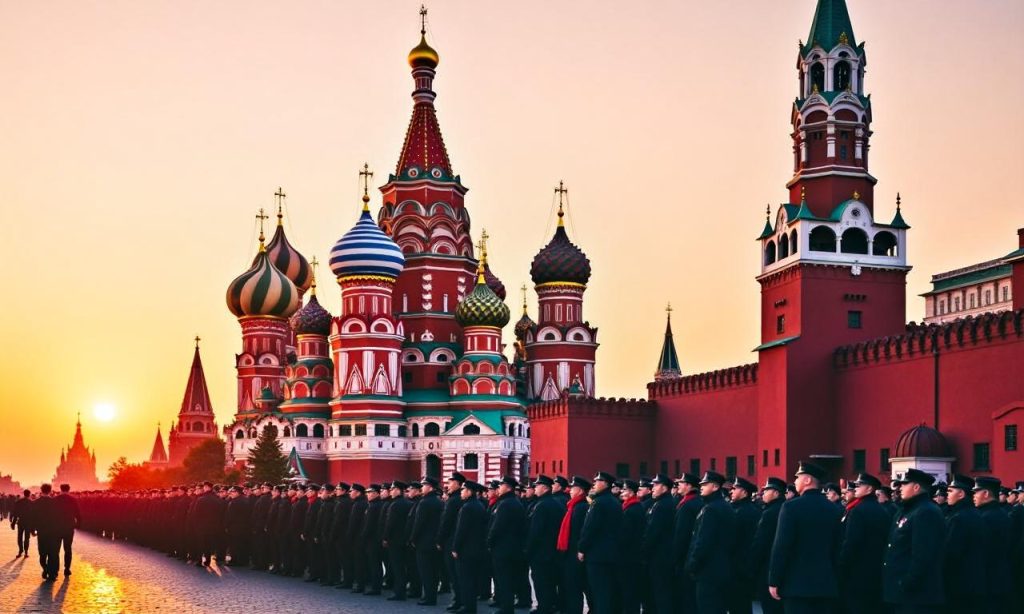
Russia scales back Moscow Victory Day parade – The annual Victory Day parade in Moscow, scheduled for 9 May, will be reduced in scale this year as the Kremlin cites a “terrorist threat” originating from Ukraine. President Vladimir Putin’s spokesperson, Dmitry Peskov, stated that “all measures are being taken to minimize the danger,” emphasizing the strategic adjustments to ensure safety amid heightened risks. This marks the first time since the full-scale invasion of Ukraine that Russia has omitted armored columns from its traditional display of military might on Red Square.
Parade Adjustments and Security Concerns
Russian military authorities announced that the 80th-anniversary commemorations of the Soviet victory over Nazi Germany in World War Two will exclude military vehicles and cadets. The decision follows a series of intensified Ukrainian strikes deep within Russia, which have persisted for over four years. Kyiv maintains that these attacks target Moscow’s military infrastructure, while accusing the Russian regime of bombing civilian areas in Ukraine. Peskov highlighted the shifting dynamics, declaring, “The Kyiv regime, which is losing ground on the battlefield every day, has now launched into full-scale terrorist activity.”
“Therefore, given this terrorist threat, all measures are, of course, being taken to minimize the danger,” Peskov added, stressing that the parade would still occur as planned.
The reduced format includes representatives from all branches of the armed forces and a display of aerial maneuvers, but without the iconic marching units. This change signals a departure from the grandeur of past events, where the parade served as a powerful symbol of Russia’s military strength. Last year, the ceremony attracted over 20 global leaders, showcasing modern weapons like tanks and drones. This year, the absence of such elements underscores the growing security concerns.
Historical Significance and Strategic Shifts
Putin revived the tradition of parading heavy military hardware in Red Square in 2008 to reinforce Russia’s “growing defense capability.” The event has since become a cornerstone of the nation’s historical narrative, often used to rally public support for ongoing conflicts. Analysts note that the Great Patriotic War remains a key ideological pillar for Putin, blending past triumphs with present-day struggles.
The Russian defense ministry’s statement late Tuesday confirmed the modified parade lineup, noting that “cadets from Suvorov military schools, Nakhimov [naval] schools, and cadet corps will not participate in the military parade this year.” Additionally, footage of Russian troops “carrying out tasks in the special military operation zone” will be broadcast, reinforcing the narrative of active conflict. This shift reflects a broader trend of adapting traditional ceremonies to align with current operational realities.
Ukrainian Strikes and Cross-Border Tensions
Recent weeks have seen Ukraine escalate its attacks on Russian territory, with strikes now reaching deep into the country. Kyiv asserts that these actions are directed at legitimate military targets, while Moscow accuses the Ukrainian government of targeting civilians. The latest incident occurred near Perm, a city in the Urals region, approximately 1,500km from the Ukrainian border, where a drone strike hit an oil pumping station. Ukrainian officials confirmed the attack, though the local governor referred to the facility as an industrial site.
“Nobody is attacking civilians and civilian infrastructure,” said Mykhailo Podoliak, an adviser to Ukrainian President Volodymyr Zelensky’s office, countering Peskov’s claims. He argued that the parade in Moscow would include many ordinary civilians, making an attack on the event unlikely.
These strikes are part of Ukraine’s broader strategy to weaken Russia’s war effort. Kyiv has also increased its focus on key energy installations, which it views as critical to sustaining the conflict. Earlier this month, first reports of a scaled-down parade surfaced on social media, with pro-Kremlin bloggers warning of potential Ukrainian long-range aerial attacks. One commentator, Ilya Tumanov, noted, “Imagine, ‘Parade, stand at attention,’ and then a missile threat is announced. It would be a significant blow in terms of media coverage, even if nothing hits.”
Communication Restrictions and Operational Impact
In addition to the parade changes, the Russian military has reportedly intensified its control over mobile communications in Moscow. A telecoms source informed BBC Russian that “more powerful” restrictions would be imposed on May 5, 7, and 9, the days surrounding the event. In March, mobile internet services were disrupted in the city center, an action the authorities attributed to security measures. This step suggests an effort to limit the spread of information that could undermine the parade’s intended message.
The adjusted parade format is part of a larger pattern of changes to traditional military displays. Previously, Russia had modified its ceremonies to reflect evolving strategic priorities, such as emphasizing the role of drones or highlighting regional defense efforts. However, the exclusion of armored columns from Red Square this year marks a notable shift, signaling the extent of the threat perceived from Ukrainian operations.
Strategic Implications and Public Perception
While the Kremlin frames the reductions as necessary precautions, some analysts question whether the changes are also a way to manage public perception. The parade, once a symbol of national pride and military prowess, now carries an undercurrent of vulnerability. The absence of cadets and equipment may be interpreted as a concession to the ongoing conflict, even as officials insist on maintaining the event’s significance.
Despite these adjustments, the parade remains a vital platform for reinforcing the idea of Russia’s enduring strength. Peskov’s comments underscore the government’s desire to link the event to the current war in Ukraine, framing the scaled-back ceremony as a testament to resilience rather than retreat. The focus on “special military operation zone” tasks in the parade’s coverage further aligns the event with the broader narrative of the invasion.
As the conflict enters its fifth year, the interplay between historical symbolism and real-time security challenges becomes increasingly complex. The Victory Day parade, once a showcase of Soviet-era glory, now serves as a reminder of the war’s ongoing impact. Whether the event will continue to galvanize public support or reflect the strains of the war effort remains to be seen. For now, the Kremlin’s decision to downscale the ceremony highlights the delicate balance between tradition and the exigencies of modern warfare.
Recent drone attacks in Moscow and other Russian cities have further raised the stakes. The military regularly reports that most projectiles are intercepted, but the frequency of such incidents suggests a persistent threat. These events have prompted a reevaluation of the parade’s logistics, with several pro-war commentators noting the lack of usual rehearsals involving extensive road closures in central Moscow. The changes, while subtle, signal a more cautious approach to the event, aligning it with the current operational environment.
As the conflict continues to reshape Russia’s strategic landscape, the Victory Day parade stands as a testament to the nation’s ability to adapt. The decision to scale back the event reflects both the immediate security concerns and the broader context of a war that has altered the way Russia commemorates its past victories. The parade’s reduced scale, therefore, is not merely a logistical adjustment but a symbolic response to the evolving nature of the conflict.