Russian paramilitary carried out air strikes in Mali as rebels advanced, footage shows
Russian Paramilitary Carried Out Air Strikes in Mali as Rebels Advanced, Footage Shows
Russian paramilitary carried out air strikes – Recent video evidence reveals that Russian paramilitary units executed air strikes near Bamako, the capital of Mali, as rebel forces advanced in a sudden assault against the country’s military regime. The offensive, which struck with unexpected intensity, led to the deaths of Mali’s Defence Minister, Sadio Camara, during attacks that spread across the nation. The conflict, which has persisted for over a decade, now appears to have reached a new phase, with the military government facing mounting pressure from a coalition of jihadist and Tuareg separatist groups.
Russian Support and the Africa Corps’ Role
The Kremlin-backed Africa Corps, a paramilitary force that assists Malian military operations, has released multiple clips since Saturday depicting aerial attacks and the use of attack helicopters against rebel positions. BBC Verify traced these videos to Kati, a town located approximately 20 kilometers from Bamako, where the strikes occurred. The footage captures the destruction of key infrastructure, including the Ministry of Defence’s residence, which was severely damaged in an explosion attributed to a suicide bomber who drove a vehicle loaded with explosives into the compound.
“The attacks have marked a major escalation in the conflict between the military government and the rebels,” said Jean-Hervé Jezequel, Sahel director at the International Crisis Group. He emphasized that JNIM’s strategy has evolved to include targeting major urban centers, a shift that signals a broader offensive.
The Africa Corps has been deployed in Mali since 2021, replacing the Wagner Group after a deterioration in relations between the West and the Malian junta. The Wagner Group, known for its involvement in the country’s security operations, was withdrawn as part of Moscow’s effort to limit the autonomy of Russian mercenaries. The Africa Corps, under direct Kremlin control, has since taken over, though its effectiveness in curbing the rebels’ momentum remains questionable.
Escalation and Strategic Losses
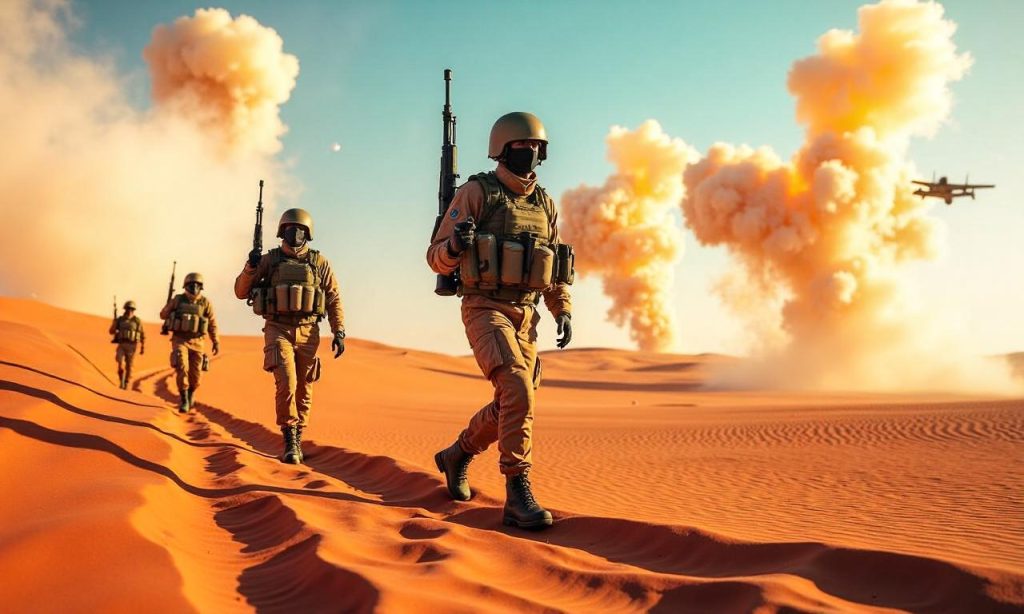
Following the attacks on Saturday, the Africa Corps responded with a series of airstrikes. Drone footage from the outskirts of Kati showed a missile strike targeting a rebel convoy as it moved along a highway. The explosion left a fireball in its wake, highlighting the destructive power of the aerial assault. Another video, filmed from the cockpit of an attack helicopter, demonstrated missiles being launched at ground positions, while smoke rising from the town’s periphery indicated additional strikes.
Despite the military’s show of force, the Africa Corps has withdrawn its troops from Kidal, a critical northern stronghold. The area, previously under the control of Malian forces and the Wagner Group, housed a significant portion of the military’s operational capacity. The evacuation of the base was confirmed through verified footage, which showed rebels occupying the site after the withdrawal. This strategic loss has raised concerns about the government’s ability to maintain control in the region.
Historical Context and Current Challenges
The conflict in Mali has been ongoing for more than a decade, involving a wide range of rebel groups. Military leaders seized power in 2020, citing the civilian administration’s failure to address security threats. Since then, the government has had limited success in combating JNIM, a group linked to al-Qaeda, and the separatist FLA. The military’s efforts were further complicated by a blockade that affected Bamako late last year, underscoring the challenges they face.
Dr. Sorcha MacLeod, a former member of the UN’s working group on mercenaries and lecturer at the University of Copenhagen, explained that the Africa Corps continues the Wagner Group’s agreement with the Malian junta. This arrangement involves the provision of security services in exchange for payments and access to natural resources. However, the force’s size—estimated at around 2,500 troops—has been insufficient to contain the rebels’ growing influence.
Rebel forces have gained ground in recent weeks, with BBC Verify confirming 22 videos showing their movements across seven locations. The strikes on Kati and other areas have intensified, reflecting a coordinated strategy to challenge the military’s hold on key regions. The damage to the Defence Minister’s residence, as seen in satellite images, indicates the scale of the assault, with the property completely destroyed and surrounding structures left in ruins.
Impact of Kidal’s Withdrawal
The withdrawal from Kidal has left the Malian government with fewer resources to defend the region. The base, which had been the focal point of military operations, was seized by the Wagner Group and Malian forces after a prolonged and bloody battle at the end of 2023. However, prior to the official announcement, footage from JNIM militants revealed a chaotic retreat, with soldiers fleeing in panic as drones approached. The Africa Corps claimed to have removed “heavy equipment” from the base before its departure, but rebel videos show that armored vehicles and jeeps were left behind, suggesting a rushed evacuation.
Analysts note that the loss of Kidal represents a significant setback for the military government. The facility had been a crucial hub for operations, and its abandonment may embolden rebel groups to expand their reach. The situation has also exposed the limitations of Russian military support, despite the Africa Corps’ efforts to maintain stability. With the conflict escalating and rebel forces gaining momentum, the future of Mali’s military regime remains uncertain.
Broader Implications for Regional Stability
The intensifying conflict in Mali has broader implications for regional security. The country has long been a battleground for various factions, including jihadist groups, Tuareg separatists, and other armed actors. The recent attacks, which have targeted both military and civilian infrastructure, suggest that the rebels are no longer content with peripheral operations. Instead, they are now focusing on disrupting the core of the government’s military efforts.
Charlie Werb, an analyst with Aldebaran Threat Consultants, highlighted the strategic importance of the Africa Corps’ withdrawal. “This marks a critical turning point in the conflict,” he stated. “The rebels have capitalized on the military’s reduced presence, and the situation is now more volatile than ever.” The continued presence of Russian forces in Mali, however, remains a key factor in the country’s security dynamics, as they provide both firepower and logistical support to the regime.
As the situation unfolds, the Malian government’s ability to reclaim lost territory and stabilize the region will be tested. The combination of rebel advances and the withdrawal of Russian support could lead to further instability, with potential spillover effects into neighboring countries. The conflict, which has already claimed numerous lives and disrupted daily life, may now enter a new phase of intensity, driven by the rebels’ growing confidence and the military’s diminishing capacity to respond.