South Africa president faces call to resign after court ruling
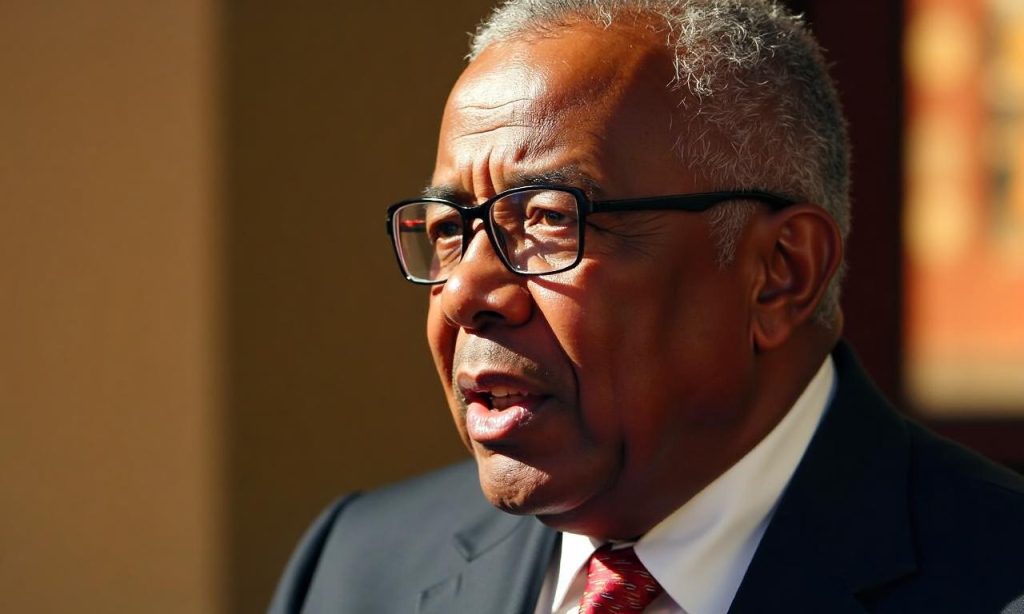
South Africa President Faces Call to Resign After Court Ruling
Constitutional Court Ruling Sparks Resignation Call
South Africa president faces call to resign – South Africa’s President Cyril Ramaphosa has found himself under pressure to step down following a landmark decision by the Constitutional Court. The ruling, delivered earlier this week, declared that parliament had violated the country’s constitution by blocking the impeachment process against the president in 2022. This legal verdict has emboldened Julius Malema, a prominent opposition leader and head of the Economic Freedom Fighters (EFF), to publicly demand Ramaphosa’s resignation. Malema’s call comes as he and other parties challenge the legitimacy of the parliamentary move, which he argues undermined the constitutional framework and the rule of law.
“Ramaphosa should resign and concentrate on this impeachment process because it has got serious implications on him as an individual.”
Background of the Farmgate Scandal
The controversy began in 2020 when cash worth $580,000 was allegedly stolen from Phala Phala, the rural farm owned by Ramaphosa in the northern Limpopo province. The thieves reportedly concealed the money in a sofa, leading to allegations that the president had not properly accounted for the source of the funds. Two years later, an independent panel concluded that there was sufficient evidence to suggest Ramaphosa may have breached his oath of office by failing to disclose the origin of the stolen currency. However, the parliamentary vote in 2022 to block the formation of an impeachment committee has now been invalidated by the court’s ruling.
South Africa’s strict foreign currency regulations, which require cash to be deposited with an authorised dealer within 30 days, were central to the legal argument. At the time of the theft, Ramaphosa claimed the money came from selling a buffalo, a story that has since been scrutinised by critics and investigators. Three individuals are currently on trial for the alleged theft, with their case seen as a pivotal moment in the political drama surrounding the president.
Parliament’s Role in the Impeachment Process
The impeachment proceedings were initially halted in 2022 when the National Assembly voted 214 to 148 to reject the establishment of a formal committee to investigate Ramaphosa. This decision was made despite the independent panel’s findings that the president had not fully explained the source of the stolen funds. The African National Congress (ANC), which has governed the country since the end of apartheid, held a majority in parliament at the time. However, the 2024 general election shifted the balance of power, forcing the ANC into a coalition government with smaller parties.
This new political configuration has added complexity to the impeachment process. The ANC’s alliance with the African Transformation Movement (ATM) and other parties has created a scenario where the president’s fate depends on the cooperation of coalition partners. The court’s ruling has reignited calls for the ANC to take decisive action, with Malema’s party asserting that the evidence against Ramaphosa is now clear and that the impeachment process must proceed without further delay.
Statements from Ramaphosa’s Office
Ramaphosa’s presidential office has reiterated its commitment to the constitutional principles underpinning the country’s democracy. A statement released after the court’s decision affirmed that the president remains dedicated to upholding the independence of the judiciary and the rule of law. “President Ramaphosa maintains that no person is above the law and that any allegations should be subjected to due process without fear, favour or prejudice,” the office said. This response aligns with the ANC’s broader stance, which has also praised the ruling as a demonstration of institutional integrity.
The ANC’s statement echoed Ramaphosa’s sentiment, highlighting the importance of allowing legal institutions to operate without political interference. “The judgement shows the importance of allowing institutions to function independently within South Africa’s constitutional democracy,” the party noted in a release. Despite the call for resignation, the ANC has not yet taken a definitive stance on whether to pursue impeachment, instead urging the National Assembly’s Speaker, Thoko Didiza, to provide clear guidance on the next steps within the next 48 hours.
Malema’s Arguments and Political Challenges
Julius Malema, who has faced his own legal troubles, including an appeal against a sentence for illegal gun possession and public firing, used the court’s ruling to press his case against Ramaphosa. Speaking to reporters outside the Johannesburg court, he argued that the president’s dual role as head of state and subject of an impeachment inquiry creates a conflict of interest. “You cannot serve the two – one is going to suffer,” he said, stressing that the president must prioritise the legal process over his current duties.
“President Ramaphosa maintains that no person is above the law and that any allegations should be subjected to due process without fear, favour or prejudice.”
The EFF, along with the African Transformation Movement, filed the legal challenge in 2024, arguing that the National Assembly’s actions in 2022 were unconstitutional. Malema’s party has also accused the ANC of delaying justice, claiming that the evidence against the president is now “before their eyes.” This dispute has intensified as the court’s decision moves the impeachment process closer to becoming a reality.
Broader Implications for South African Politics
The ruling has significant implications for the stability of South Africa’s political landscape. It underscores the tension between the executive and legislative branches, with the judiciary now stepping in to assert its authority. The case has become a symbol of the challenges facing the country’s democratic institutions, particularly as the ANC navigates its coalition governance and the pressures of public accountability.
Geordin Hill-Lewis, leader of the Democratic Alliance, the second-largest party in the governing coalition, has urged politicians to uphold the rule of law. “Parliament’s impeachment committee must now do its work properly, rationally, fairly and constitutionally,” he said in a statement. This sentiment reflects a growing consensus among opposition and coalition parties that the process should be transparent and free from political manipulation.
Looking Ahead: The Path to Impeachment
With the court’s ruling, the focus has shifted to the National Assembly, which is now expected to act swiftly. Malema’s party has written to Speaker Thoko Didiza, requesting a “clear indication” of the specific measures she plans to implement in response to the decision. The question remains whether the ANC will unify behind the impeachment effort or allow internal divisions to delay the process further.
As the legal battle intensifies, the saga has become a focal point for public discourse on accountability and governance. The outcome of this case could set a precedent for future leaders, reinforcing the principle that even the president must be subject to the constitutional checks and balances designed to prevent abuse of power. The next steps will determine whether South Africa’s democratic institutions can navigate this crisis and maintain their integrity.
For more news from the African continent, visit BBCAfrica.com. Follow us on Twitter @BBCAfrica, on Facebook at BBC Africa, or on Instagram at bbcafrica.