Afghanistan women can return to competition
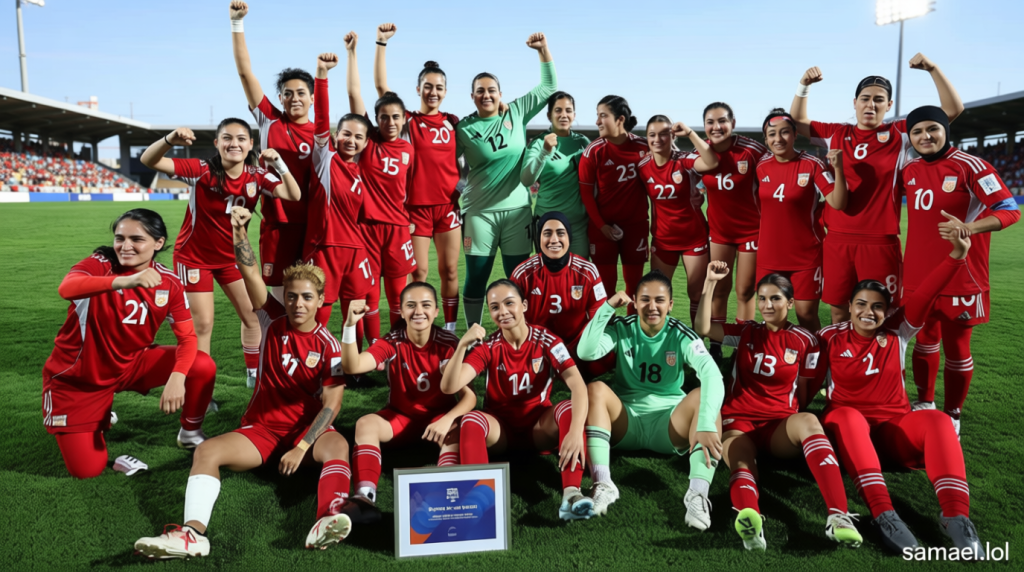
Afghanistan Women Can Return to Competition
Historic Milestone for Afghan Female Footballers
Afghanistan women can return to competition – After years of uncertainty, Afghanistan women’s football has received a pivotal breakthrough as FIFA officially sanctioned their participation in international competition. This decision, announced at a council meeting in Vancouver, marks a significant step for the team, which has been operating as a refugee squad under the banner of Afghan Women United. The approval allows the team to compete in official matches, providing a platform for players who have faced numerous challenges since the Taliban’s takeover in 2021.
Before this milestone, Afghan women’s teams had been sidelined from competitive international play since December 2018. The Taliban’s return to power in 2021 imposed strict restrictions on women’s rights, including a ban on sports activities. This led to the displacement of many female athletes, forcing them to seek refuge abroad. Despite these obstacles, a small group of players has continued to advocate for their sport, lobbying FIFA to recognize their efforts.
FIFA’s governance rules previously required teams to be officially recognized by their national federation to compete in international events. However, a recent amendment has eased these constraints, enabling the organization to approve team registrations under exceptional circumstances. This change ensures that players are not excluded from global competition due to situations beyond their control. With this new policy, Afghan women can now represent their country in official matches, even if their federation’s recognition is temporarily compromised.
“Our team has always been known as an activist group,” said Khalida Popal, a former captain of Afghan Women United. “But this opportunity, with the right support from FIFA, will be the time for us to also showcase our abilities and nurture young talent in the diaspora. It’s a chance to send hope messages to women in Afghanistan and let them know they are not forgotten.”
Popal’s words underscore the emotional and symbolic weight of this decision. While the team’s players face hardships, such as limited access to training facilities and social stigma, they remain determined. The international matches, particularly those held in Morocco during October and November 2025, have already demonstrated their resilience. Their first victory against Libya in November 2025 highlights the progress made despite the challenges.
The formation of Afghan Women United was a direct result of years of lobbying by displaced female players. The team, supported by FIFA, began its pilot phase in May 2025, with regional selection camps held in England and Australia. These camps were crucial in assembling a cohesive squad, which will later train in New Zealand in June. The logistical efforts to coordinate these events reflect the growing support for Afghan women in football, even in the face of political and cultural barriers.
FIFA’s approval also opens doors for future competitions. While Afghanistan will not qualify for the 2027 Women’s World Cup, they are expected to participate in the 2028 Olympic qualifiers. This represents a critical opportunity to reintroduce the team to the global stage, potentially inspiring a new generation of players within the country. The upcoming matches will serve as a test of their endurance and adaptability, showcasing their commitment to the sport.
Gianni Infantino, FIFA’s president, emphasized the importance of this initiative. “We are proud of the remarkable journey started by Afghan Women United,” he stated. “With this decision, we aim to empower them, as well as other member associations that may struggle to register a national team for FIFA events, to take the next step in their development.” His comments highlight FIFA’s broader mission to support teams in difficult circumstances, ensuring that no group is excluded from the global football community due to external pressures.
The success of Afghan Women United has already inspired action. Over 80 Afghan female footballers are currently based in Australia, Europe, the USA, and the Middle East. Many of these players were under contract before the Taliban’s rule, and their continued presence in the diaspora has been vital to maintaining the sport’s continuity. The team’s ability to compete internationally underscores the strength of their network and the international solidarity they have garnered.
Despite the progress, challenges remain. Women in Afghanistan still face restrictions on their participation in sports, which has limited their ability to play at home. However, the international matches provide a way to counteract these barriers, offering visibility and support. The team’s efforts have also sparked conversations about the broader implications for women’s rights, with their return to competition symbolizing resistance against oppression.
The upcoming matches in June 2025 will be a defining moment for Afghan Women United. As part of the FIFA United Women’s Series, the team is set to compete, with their first win against Libya marking a significant achievement. These events not only highlight their skill but also serve as a beacon of hope for women in Afghanistan. The international exposure could lead to increased investment, media attention, and opportunities for the sport to grow within the country.
For many players, the return to competition is more than a sporting event—it is a statement of identity and perseverance. The team’s journey reflects the broader struggles of Afghan women, who have navigated political upheaval, cultural constraints, and personal sacrifices to keep the game alive. Their story is one of unity, as players from different regions come together under a shared goal. This collaboration demonstrates the power of football to transcend borders and foster solidarity.
As the team prepares for future matches, the focus remains on sustainability and growth. FIFA’s support has been instrumental in creating a framework for their continued participation, but the long-term success of the team will depend on local conditions improving. The hope is that their international success will inspire women back home to embrace the sport and reclaim their place in the game. Until then, the diaspora team will continue to represent Afghanistan with pride, proving that their passion for football knows no boundaries.
This development is a testament to the resilience of Afghan women and the global football community’s commitment to inclusivity. By recognizing their efforts, FIFA has not only validated the team’s existence but also highlighted the importance of supporting athletes in challenging environments. The future of Afghan women’s football now hinges on a combination of international backing and the gradual restoration of women’s rights within the country. Regardless of the outcome, their journey remains an inspiring chapter in the history of women’s sports.