Music & methods – why Forest could be Europa League favourites
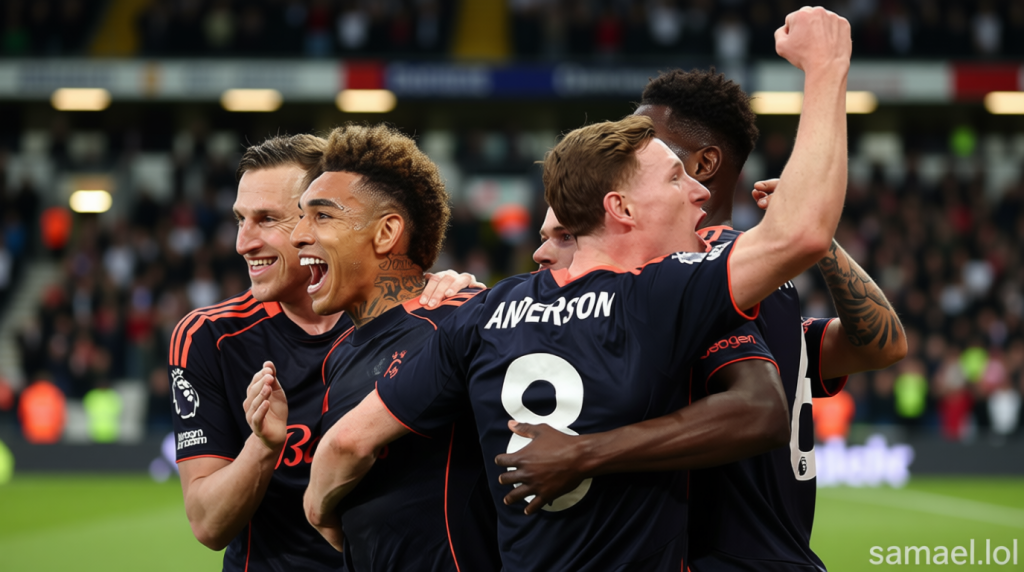
Music & Methods – Why Forest Could Be Europa League Favourites
Music methods – As the Premier League season enters its final stretch, Nottingham Forest find themselves in an unexpected position: the European Cup remains a tantalizing possibility. With the Europa League semi-final looming, the club’s revival under Vitor Pereira has sparked speculation about their potential to break a 33-year trophy drought. The stakes could not be higher, as Forest host Aston Villa in the first leg of the knockout stage, a match that might determine whether their resurgence continues or if a familiar pattern of struggles will repeat. The club, once a European powerhouse in the 1970s and 1980s, now faces the challenge of translating their recent form into a major trophy, with the final in Istanbul on 20 May serving as the ultimate test.
A Season of Resurgence and Tactical Shift
Forest’s journey this season has been marked by resilience and tactical evolution. After a turbulent campaign that saw them change managers four times since September, the Portuguese coach Vitor Pereira has brought a fresh perspective to the squad. His arrival in February coincided with a shift in philosophy, one that emphasized control, possession, and a more structured approach to play. This change has been instrumental in Forest’s eight-match unbeaten run, a streak that has lifted their confidence and positioned them as serious contenders for survival. With nine of their 15 goals in the league coming in the last two games, the team has demonstrated a newfound ability to dominate matches, particularly against mid-table opponents.
Their recent 5-0 victory over Sunderland was a masterclass in execution, showcasing the effectiveness of Pereira’s methods. This success has not only bolstered their survival hopes but also created a platform for European ambitions. While Aston Villa, their semi-final opponents, have been on a different trajectory, having narrowly missed out on Champions League qualification in 1982 and now teetering on the edge of a top-five finish, Forest’s consistency has become a talking point. The contrast between the two clubs highlights how far Forest have come, and whether their current form can be sustained against the challenge of a well-oiled Premier League side.
The Manager’s Approach: Music and Mindset
Vitor Pereira’s coaching style has been a blend of traditional discipline and modern creativity. One of his standout practices is the use of music during the final training session before matches. This element, which he has carried over from his time at Wolves, serves as a tool to reduce pre-game nerves and elevate team morale. By allowing players to choose their playlists, Pereira fosters a sense of ownership and connection to the game, something that resonated deeply with a squad that had previously struggled to gel under previous managers.
“Music is a way to bring the team together, to create a rhythm that matches our play,” Pereira explained in a recent interview. “It helps players focus on what they need to do, without overcomplicating things.”
His methodical approach has extended to the field, where Forest’s attacking strategies have evolved significantly. The data speaks for itself: open-play crosses have dropped by 31% under his tenure, while deep crosses have decreased by 29%. In contrast, through-ball opportunities have increased by 31%, reflecting a shift toward more intricate attacking patterns. These changes have not only improved their efficiency in front of goal but also created 30% more big chances, a statistic that underscores their growing threat in European competition.
Statistical Strength and Player Development
Forest’s European campaign has been a revelation, with their 27.8 xG (expected goals) ranking as the highest in the tournament. This figure, derived from 414 touches in the opposition box across 14 games, highlights their ability to create high-quality chances consistently. Remarkably, 23 of their 88 shots on target have found the back of the net, a testament to their improved finishing and strategic playmaking. Such performances have drawn attention from fans and analysts alike, who now see the potential for Forest to make a historic run in the Europa League.
Morgan Gibbs-White, the club’s standout performer under Pereira, has been a direct beneficiary of these changes. The 26-year-old midfielder has scored nine goals in 14 games since joining the team, a remarkable feat that has boosted his chances of earning a place in England’s World Cup squad. His creativity and link-up play have been pivotal in Forest’s attacking strategy, and his form has coincided with the team’s overall progress. “Pereira has given me the freedom to express myself,” Gibbs-White said after a recent match. “It’s a different system, but one that suits my strengths.”
Underlying this success is a broader transformation in the team’s identity. The previous managers had left their mark, but Pereira’s methods have united the squad around a common goal. His emphasis on confidence and clarity has addressed longstanding issues, particularly the lack of cohesion that plagued the team in the early part of the season. The players, many of whom had finished seventh in the league the previous year, have embraced his vision and adapted their play to fit it. This cultural shift has been critical in turning their fortunes around, especially in a tournament where psychological factors often determine outcomes.
The Challenge Ahead and a Bold Vision
Despite their progress, the road to European glory is far from certain. The semi-final against Aston Villa, a fellow Premier League side, will test Forest’s ability to maintain their high standards under pressure. Villa, having nearly secured a top-five finish, will bring their own blend of experience and ambition to the clash. However, recent setbacks for the hosts have created an opening for Forest to assert their dominance. The Tigers, who have been on the brink of relegation for much of the season, now sit five points above third-bottom Tottenham with four games remaining, giving them a tangible margin of safety in the league.
This breathing space has allowed Pereira to focus on the European stage, where the team’s style has been refined with precision. The compact structure he introduced has made Forest more resilient defensively, with an xG figure that outperforms many of their rivals in the competition. Their ability to control tempo and dictate play has also made them difficult to dismantle, a factor that could prove crucial in the final stages of the tournament. Braga or Freiburg await in the final, but the current momentum suggests that Forest have the tools to challenge for European glory.
As the dust settles on a season that has seen Forest transform from relegation contenders to Europa League hopefuls, the question remains: can they repeat this success on the international stage? The answer lies in their ability to carry this momentum into the final, where the pressure will be at its peak. With a clear tactical framework, a motivated squad, and a manager who has redefined their approach, the possibility of Forest lifting the trophy is no longer a distant dream. It is a tangible goal, and one that could mark a turning point in the club’s history.