Vibrant and victorious – Villa ready to end 30-year trophy drought
Vibrant and victorious – Villa ready to end 30-year trophy drought
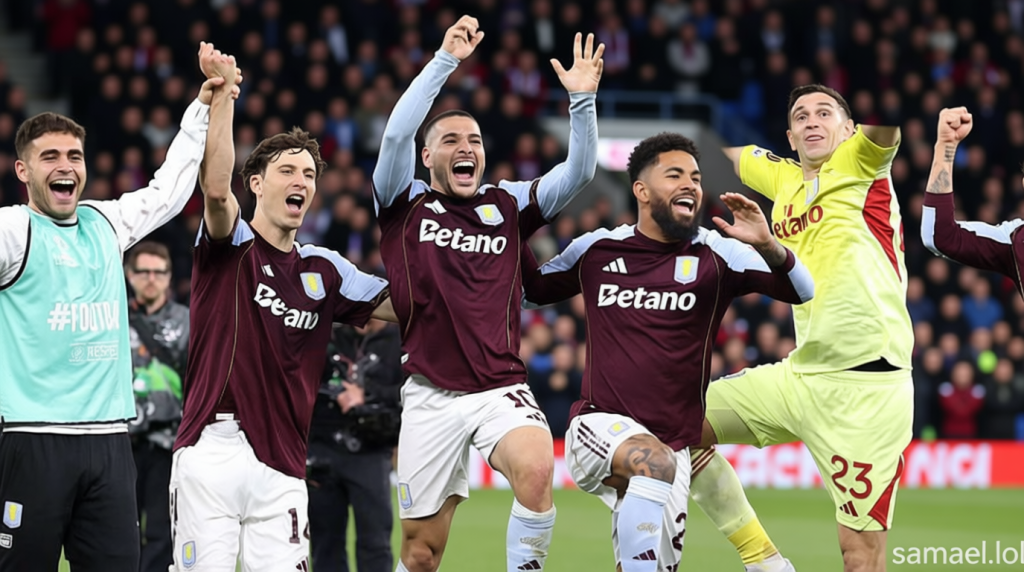
Vibrant and victorious – Aston Villa stand on the brink of securing their first major trophy in over three decades, with a pivotal match against Nottingham Forest setting the stage for a historic breakthrough. Unai Emery, the Spanish manager, has long emphasized his desire to win at Villa Park, a goal he articulated during his first press conference in November 2022. Three years later, the club has moved closer to that ambition, culminating in a commanding victory over Forest that brought them to the Europa League final. The next step is a showdown with Freiburg in Istanbul on 20 May, a match that could cement Emery’s legacy and extend his European trophy collection. Despite the absence of key players like Emi Buendia, who was not anticipated to remain at the club this long, Villa’s resilience and tactical precision have proven unstoppable.
A Step Toward Glory
With the roar of a triumphant crowd echoing through Villa Park, the team’s recent win over Nottingham Forest marked a defining moment in their campaign. The match, a masterclass in dominance, saw Villa control the tempo from start to finish, leaving Forest struggling to respond. John McGinn’s late brace sealed the result, adding a layer of drama to an already impressive display. Even though Emery opted to rest Morgan Gibbs-White, Ibrahim Sangare, and Murillo on the bench, their absence did not hinder Villa’s progress. Only Murillo, a defender, made an appearance, briefly stepping onto the pitch as the game’s outcome was already decided. Yet, the team’s performance remained unshaken, a testament to their collective strength.
Emery’s strategic vision has been central to Villa’s revival, as evidenced by his focus on European competition from day one. “We planned before emotionally and how we were playing the match,” he explained, highlighting the team’s preparation for this high-stakes encounter. The manager’s words were backed by the electric atmosphere generated by the supporters, who filled the stadium to capacity and created a formidable backdrop for the players. “The possibility to get to a final was the only moment we’ve had here,” Emery said, underscoring the significance of this milestone. “We were confident about how the supporters were here and creating this atmosphere.” The pressure of the occasion was evident, yet Villa’s execution remained flawless, leaving little room for doubt about their chances.
“They [the players] were so focused, they were aware about the momentum,” said Emery. “It was the only match we played with this circumstances.”
The club’s journey to this final has been nothing short of remarkable, especially considering their last European triumph in 1982. Peter Withe’s iconic goal against Bayern Munich in Rotterdam, a moment that still resonates in the Doug Ellis Stand, serves as a reminder of Villa’s storied past. If they triumph in Turkey, the team will not only end their 44-year wait for a European trophy but also secure a return to the Champions League, regardless of their Premier League finish. This achievement would align them with the European champions of the 1980s, a feat that has eluded the club for decades.
Resilience in the Face of Challenges
Despite the challenges of squad rotations, Villa’s consistency has been a key factor in their success. Emi Buendia’s penalty, which opened the scoring, was a critical moment that showcased the team’s ability to adapt. The goal came after Nikola Milenkovic’s challenge on Pau Torres, a decision that sparked the penalty and set the tone for the evening. Buendia’s contribution, alongside Ollie Watkins’ opening goal, proved vital in breaking the deadlock and propelling the team forward. The performance was a blend of individual brilliance and team cohesion, a rarity in modern football.
Watkins, who joined Villa from the Championship, acknowledged the need for changes this summer. “This current run represents the last chance to achieve something together,” he admitted. The squad, while showing promise, is aware that reinforcements will be necessary to maintain their momentum. Emery, however, has already extracted maximum potential from his players, many of whom have risen from lower divisions. “In Europe, it’s difficult to be consistent like we are,” Emery reflected. “It’s through our hard work and the players must set the standards we want to achieve.” His track record in European finals, including four wins out of six appearances, further solidifies his reputation as a manager who thrives under pressure.
“Today the players [gave] their best, collectively and individually,” said Emery.
The emotional weight of this final cannot be overstated, particularly for players like John McGinn, who now have the chance to be remembered alongside past legends. The skipper, a key figure in Villa’s recent success, emphasized the importance of this moment. “We’ve had low moments, definitely,” he said. “It’s a demanding club to play for, but when it’s like this, Villa Park is electric.” His words echoed those of Ollie Watkins, who highlighted the club’s enduring legacy. “It’s such a proud football club, it deserves success,” Watkins noted. “Hopefully we can be the group to do it.” The parallels to the 1982 European Cup-winning side, led by Dennis Mortimer, and the 1994 and 1996 League Cup champions are clear, as Villa seeks to reclaim their place in the annals of English football history.
The Road to Istanbul
With the final fast approaching, the focus has shifted to the Turkish showdown, where Villa will aim to replicate the success of their 1982 European Cup-winning team. The stakes are high, not just for the players but for the fans who have endured long years of underachievement. The club’s recent resurgence, driven by a combination of strategic management and player development, has restored hope to a fanbase that once felt disconnected from the glories of the past. “We need to go and win it now,” said Watkins, reflecting the urgency of the moment.
Emery’s European pedigree, marked by a record five trophies, adds to the anticipation surrounding Villa’s final. His tenure at the club has been defined by a relentless pursuit of silverware, a goal that has kept the team motivated even during tough stretches. The manager’s ability to navigate European competition, from his time at Arsenal to his current role at Villa, demonstrates his deep understanding of the challenges involved. “Europe is very important,” he said. “In my first press conference here I was speaking about Europe, I was speaking about trophies as well, but it’s very difficult.” Yet, the difficulty has been met with determination, and Villa’s performance in the final has been the result of that resolve.
“There’s no better manager than this to get us prepared for this game and take us into the final. His track record speaks for itself,” said Watkins.
The path to Istanbul has been arduous, but Villa’s commitment to excellence has kept them on track. Players like Matty Cash and Morgan Rogers, who joined from the Championship, have played pivotal roles in the team’s evolution. Their contributions, combined with the leadership of veterans such as McGinn, have created a balanced squad capable of competing at the highest level. The final will be a test of their ability to maintain this form under intense scrutiny. If they succeed, it will be more than just a trophy—it will be a statement of intent, a sign that Aston Villa is ready to reclaim its place among England’s elite.
As the date of the final approaches, the anticipation builds. Fans, once resigned to years of mediocrity, now dream of a breakthrough that could redefine the club’s legacy. The journey to this moment has been marked by resilience, adaptability, and a collective belief in their potential. With the right combination of skill, strategy, and spirit, Villa may yet end their 30-year trophy drought and write a new chapter in their storied history. The question now is whether they will seize this opportunity and carry the weight of the past into a glorious future.