Welsh fire, England captain – how Meg Jones became a dual-nation icon
Welsh Fire, England Captain – How Meg Jones Became a Dual-Nation Icon
Meg Jones, a key figure in English rugby, has earned 35 international caps for her nation. She has also competed in three Olympic Games—Rio 2016, Tokyo 2021, and Paris 2024—as a member of the Great Britain Sevens team. When asked to name her most cherished rugby moment, Jones avoids the obvious choice. While the 2016 Rugby World Cup victory for England is a highlight, she recalls an earlier milestone—a trial for the Cardiff Schoolboys Under-12 squad.
A Defining Moment in Youth Rugby
“It was a pivotal moment in my journey,” Jones tells BBC Sport. “I was the sole girl in the mix. I had tried out the previous year and didn’t make it. That was the first time I faced rejection in the sport, or felt like things weren’t working out.” Despite the challenge, she never doubted her ability. Instead, she pointed to economic factors influencing selection. “It was often the wealthiest boys who secured spots,” she explains. “My father was a Cardiff-based pipefitter welder, so our family was working-class. The team I played for, Glamorgan Wanderers, came from a socioeconomically disadvantaged area of the city.”
“I was meant to be selected for that, but you were so good they had to pick you,” one of the boys from the trial recalled years later.
That day solidified Jones’ belief in rugby’s merit-based nature. “If you’re good enough, you’re good enough,” she says. “No matter your background, size, or gender—those things don’t define your respect in the game.”
A Bridge Between Nations
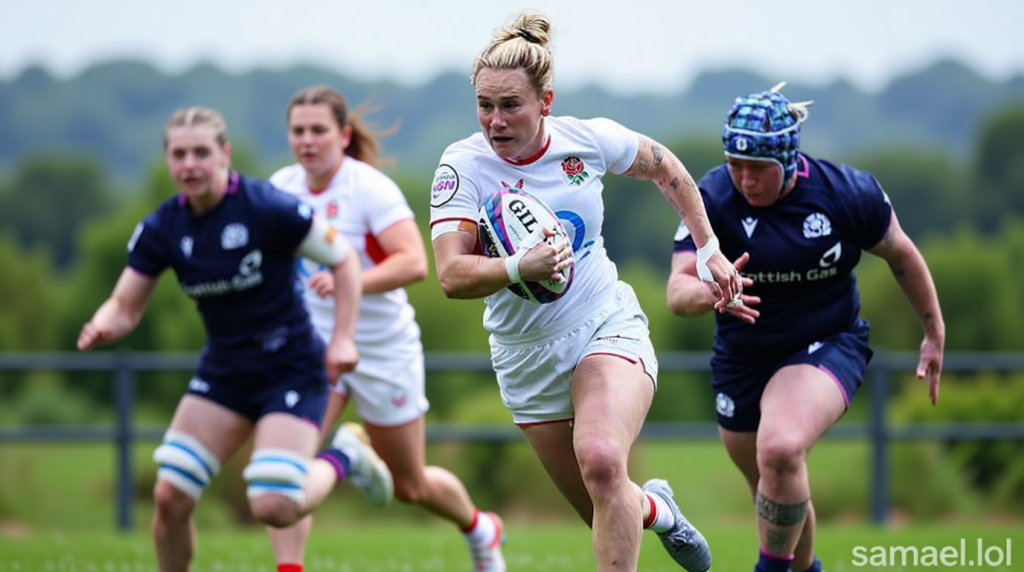
On Saturday, Jones, who speaks fluent Welsh and grew up in Cardiff, will lead England against her native country in the Women’s Six Nations. The rivalry between the two teams is deep-rooted, yet her dual heritage adds a unique dimension. Her mother is English, and she moved to Hartpury College, a renowned rugby academy, at 16. Her early education at Ysgol Gyfun Gymraeg Glantaf in north-west Cardiff, where she played for the school’s hockey team that claimed a national title, shaped her identity.
“She carried the team a little bit,” recalls Gwennan Harries, a former teacher at the school. “The boys actually loved her. They were a talented group, but they were devastated when she had to leave the squad.”
Though her rugby career was initially restricted to evenings and weekends due to rules banning mixed teams, Jones flourished in school sports. “Her rugby skills were exceptional,” Harries adds. “She could transfer those talents across multiple disciplines, like hockey, where she played a key role in the Welsh schools championship.”
A Journey from Cardiff to the World Stage
Jones transitioned from under-15s rugby to international play in just three years. At 18, she made her debut for England, starting as a fly-half in a 26-7 loss to New Zealand in July 2015. Her path has since led her to becoming a World Cup winner and a World Player of the Year nominee. This year, after Zoe Stratford stepped away to start a family, Jones took over as England’s captain.
“I still represent them, do you know what I mean?” she says. “Even though I wear the red rose, I carry those parts of myself with pride. I was born and raised in Cardiff, and that connection remains.”
Back in her hometown, the bond with Wales is enduring. “Her Welsh roots are deeply embedded,” Harries notes. “Despite her England captaincy, she’s always been tied to the culture and spirit of her upbringing.” This duality has defined Jones’ career, bridging two nations through her passion and skill.