Attacks on US academics: A microcosm of democratic erosion
Attacks on US academics: A microcosm of democratic erosion
At the Human Rights Film Festival Berlin, the documentary “Democracy Under Attack: Can Dündar and Trump’s America” premiered on April 14. It explores the erosion of democratic values in the United States through the lens of academic persecution, drawing comparisons to the situation in Turkey. Turkish journalist Can Dündar, a symbol of press freedom, co-directed the film alongside Demid Sheronkin. In an interview, Dündar highlighted the challenge of capturing Trump’s rapid news cycle: “We focused on academics, viewing them as a reflection of broader democratic threats,” he stated.
The far-right’s targeting of scholars
Mark Bray, a Rutgers University history professor, became a prominent case of academic harassment. His work on antifa, detailed in “Antifa: The Anti-Fascist Handbook,” led to his inclusion on the “Professor Watchlist,” a far-right initiative launched in 2016 by Turning Point USA. After Charlie Kirk, the organization’s founder, was assassinated in September 2025, Trump classified antifa as a “domestic terrorist organisation.” This designation escalated threats against Bray, with students from his university’s Turning Point USA chapter condemning him as a violent agitator.
“We are at war,” declared Steve Bannon, a former Trump adviser, during a speech at AmericaFest 2025. “We are in a political and ideological war.”
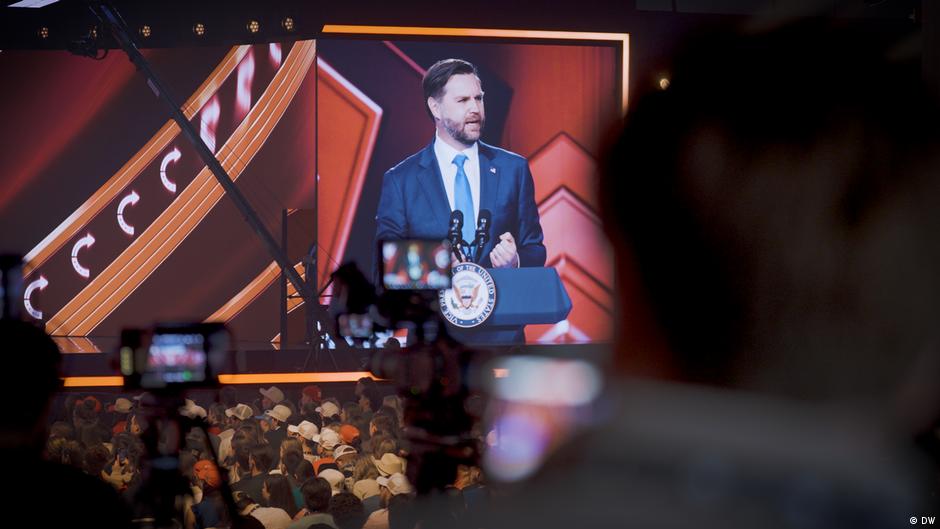
Bray’s family faced unsettling challenges before relocating to Spain. They described how their travel plans were mysteriously canceled without explanation, underscoring the growing pressure on scholars. The documentary’s most intense scenes were captured at AmericaFest 2025, the first convention of Turning Point USA following Kirk’s death. Attendees celebrated him as a martyr, blending political fervor with a festival-like atmosphere.
Student activism and personal consequences
Ava Kwan, a Rutgers student, spearheaded a campaign against Bray. Though she defended her actions as a safety measure, she admitted her private details were exposed online. “I felt sorry for Bray’s threats, but I wasn’t responsible for them,” she said. The film also features Amy Wax, a University of Pennsylvania Law School professor, who openly shares her white supremacist views. Despite controversy, Wax retained her tenure after being suspended at half pay for the 2025-26 academic year.
A personal journey of exile
Dündar, who has faced imprisonment and an assassination attempt in Turkey, uses the documentary to draw parallels between his country’s struggles and those in the US. While he avoided the US due to legal advice, he traveled to Canada for another interview. “I didn’t want to be a gift from Trump to Erdogan,” he remarked, emphasizing the political entanglements of his experience.
The film reveals how ideological polarization permeates American society. Despite research showing academics tend to lean liberal, the documentary shows that far-right perspectives also exist within academia. It serves as a reminder of the fragility of free speech and the growing risk of dissenting voices being marginalized in the name of political warfare.