India celebrates Ambedkar’s 135th birth anniversary
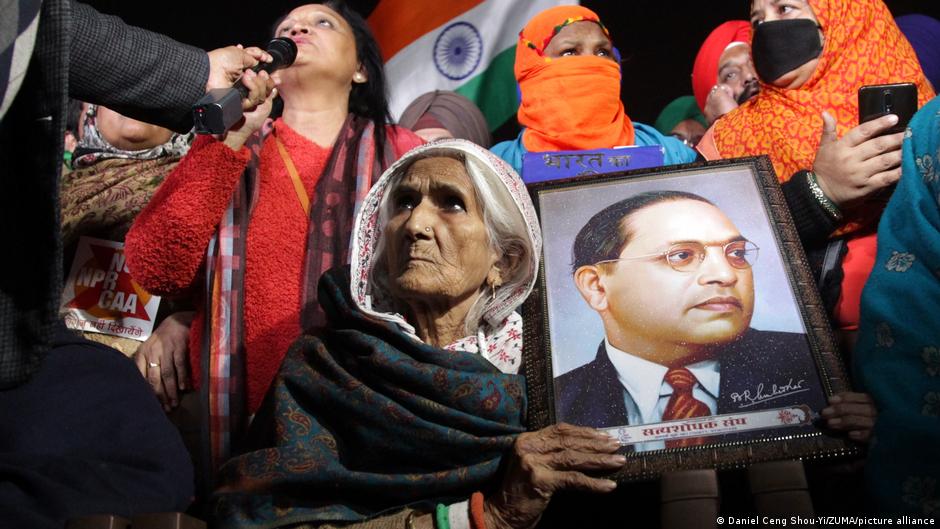
India Celebrates Ambedkar’s 135th Birth Anniversary
India commemorates the 135th anniversary of BR Ambedkar’s birth, with DW’s in-depth analysis highlighting the disparity between the ideals of Dalit empowerment and the current state of affairs. This special coverage offers a snapshot of recent developments across the nation on April 14, focusing on the legacy of Ambedkar’s fight against caste-based discrimination.
A Conversation on Caste and Law
In a dialogue with Dr. Sumit Baudh, a professor and director of the Center on Public Law and Jurisprudence at O.P. Jindal Global University in Sonipat, Haryana, DW delves into the intricacies of India’s caste system. Dr. Baudh, a Dalit scholar, reflects on how legal frameworks have evolved—or stagnated—since Ambedkar’s time.
“What would Ambedkar find most concerning in today’s India, particularly regarding caste laws?” DW asked. Dr. Baudh replied, “His resignation as Law Minister in 1951 reveals his frustration with the government’s lack of progress on backward classes.” He noted that this act underscored two key issues: the delayed action on caste reform and the failure to pass transformative legislation like the Hindu Code Bill.
The Legacy of Disappointment
Ambedkar’s 1951 exit from the ministry symbolizes a pivotal moment in India’s struggle for social equity. His critique centered on the neglect of policies aimed at uplifting marginalized groups and the slow progress toward legal equality. Decades later, similar patterns persist, as institutional inertia continues to shape the reality of Dalit communities.
Dr. Baudh emphasized that the term “efficiency” in legal discourse often masks historical inequities. While appearing impartial, it is frequently used to challenge affirmative action measures, such as reservations. This language, he argued, perpetuates caste hierarchies even within systems designed to dismantle them.
A Framework in Fragments
Present-day India relies on a fragmented approach to anti-discrimination laws. Criminal statutes, constitutional provisions, and sector-specific policies address issues like sexual harassment and caste atrocities, yet they fall short in capturing the subtleties of systemic bias. Dr. Baudh pointed out that caste discrimination often thrives in spaces where it is neither criminalized nor easily litigated.
Without cohesive civil mechanisms, many forms of caste-based inequality remain unnamed and unaddressed. This gap, he explained, is especially evident in education and employment sectors, where institutional practices silently reinforce old hierarchies.
Ambedkar’s Vision and the Present
As April marks Dalit History Month, DW examines Ambedkar’s enduring influence alongside Jyotirao Phule’s early efforts to uplift Dalits. The feature also highlights contemporary news from India, underscoring the ongoing relevance of Ambedkar’s principles in today’s socio-political landscape.
This segment is part of DW’s broader exploration of Ambedkar’s constitutional legacy and the challenges facing Dalit communities. Shakeel from DW’s New Delhi Studio presents the coverage, emphasizing Ambedkar’s role as a visionary who championed the rights of India’s most oppressed group.