Indians forced to return home as Iran war rocks Gulf economy
Indians Compelled to Return to Their Homeland as Iran War Disrupts Gulf Economy
The Iran war has upended the Gulf’s economic stability, prompting thousands of Indian laborers to abandon their jobs and head back home. This exodus has created uncertainty for many, with India now experiencing ripple effects from the crisis. Meera Kurian, 46, had spent years in Dubai, yet she was recently laid off after a sharp decline in hotel occupancy. Her decision to return reflects a broader sentiment among workers, as the region’s economic tremors spread.
“Everyone is in the same situation,” Kurian said from Kochi, a southern coastal city in India. “It’s not just about losing a job—it’s about losing the life we built here.”
Across the Gulf, the conflict has triggered airspace closures, shipping delays, and stalled projects, undermining the region’s economic momentum. Dubai, once a hub for steady tourism, now faces empty hotels and reduced air travel. Even supermarkets show signs of strain, with shelves appearing less stocked. For Kurian, the disruption means more than financial loss—it’s a quiet erosion of confidence in the region’s reliability.
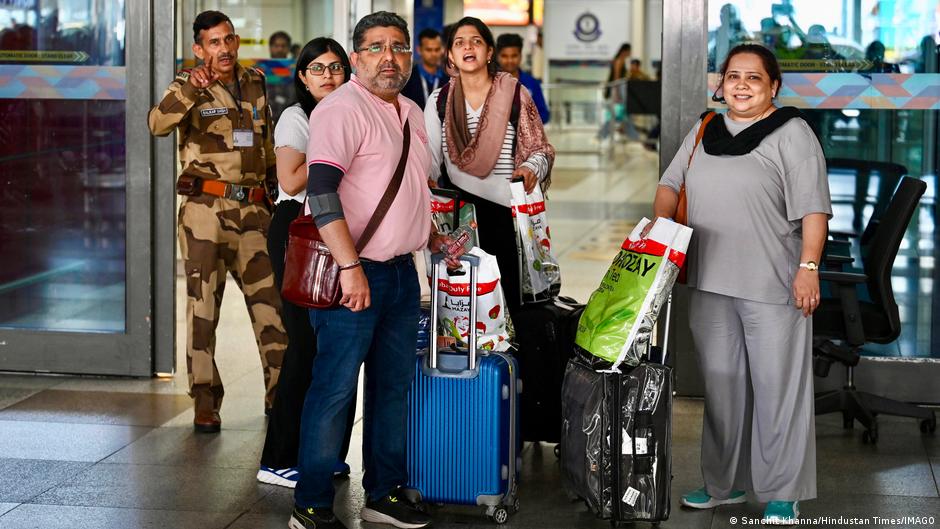
India’s Ministry of External Affairs reported that over 984,000 nationals returned to the country between late February and mid-April. While this figure includes students and others, the majority are migrant workers who form the largest expatriate community in the Gulf. These workers, employed in construction, hospitality, and logistics, contribute $50 billion annually in remittances to India.
“Our priority is ensuring safety, with real-time updates on flight statuses and local guidelines,” said Aseem Mahajan, a senior official. “But the impact on livelihoods is undeniable.”
Despite the challenges, most workers have chosen to stay, balancing job security against the risk of prolonged unemployment. For them, the cost of leaving is steep—losing years of work and the stability they’ve grown accustomed to. Those who return face higher travel expenses and the looming threat of further job losses. Kurian noted that shipping goods from Dubai to Kochi now costs 30% more than before, a stark reminder of the war’s financial toll.
Economic Fallout Spreads to India’s Coastal States
The crisis has reached Kerala, India’s top remittance recipient. With 2.2 million Keralites working abroad, nearly 90% in the Gulf, the decline in earnings is affecting local consumption and businesses. “Sales have dropped, especially in areas where Gulf families are concentrated,” explained Venu Rajamony, a former diplomat. “The trust in the Gulf as a safe haven is fading.”
“In Oman, I was a specialist—now, here, nobody knows what to do with me,” said Reddy, a former instrumentation technician. “The war has made my skills irrelevant.”
Reddy, who spent eleven years in Muscat, was placed on unpaid leave with little notice. Back in Visakhapatnam, Andhra Pradesh, his expertise in hazardous materials and safety protocols holds less value. With refineries not hiring and private security firms offering limited opportunities, he’s navigating a new, uncertain chapter. For many, the war has not only disrupted their work but also their sense of belonging, leaving them stranded between two worlds.