Is Vietnam becoming more like China?
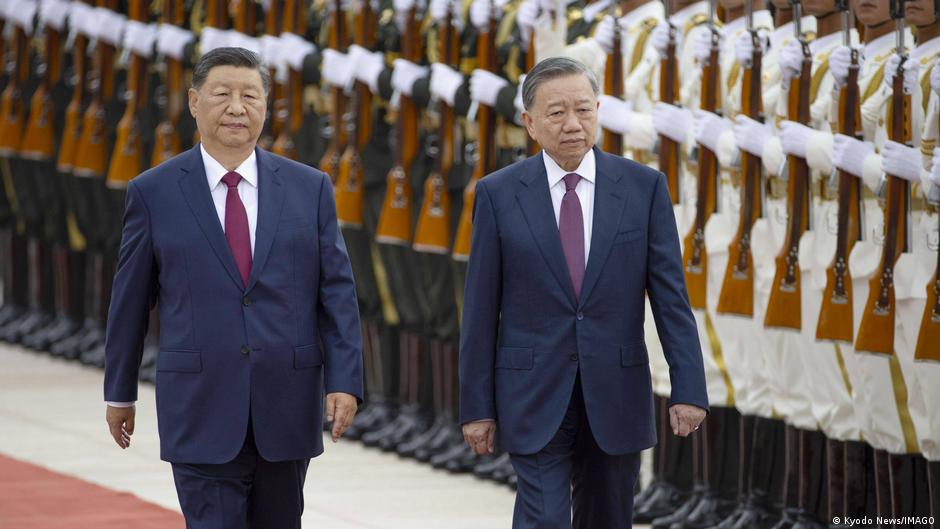
Is Vietnam becoming more like China?
Vietnam’s lawmakers recently unanimously appointed Communist Party chief To Lam as the country’s president, sparking debate about whether Hanoi is adopting a political model similar to China’s under Xi Jinping. The move deviates from longstanding traditions in Vietnamese elite politics, where power-sharing was a key principle. For years, the Vietnamese Communist Party (VCP) avoided concentrating authority in a single leader, favoring a system of shared governance. This structure, often called the “four pillars” model, distributed responsibilities among the party chief, state president, prime minister, and National Assembly. While not a full separation of powers, it provided internal checks and helped prevent individual dominance of the political system.
Analysts now suggest this balance may be waning. “To Lam’s appointment brings Vietnam closer to China’s centralized model, where Xi Jinping holds unparalleled influence,” said Alfred Gerstl, an Indo-Pacific international relations expert at the University of Vienna. “This shift could accelerate reforms, but it also risks undermining the existing checks and balances within the party, reducing space for dissenting voices.” Gerstl noted that Vietnam’s political system has always relied on informal norms, but recent changes indicate a willingness to bend those rules. Retirement-age conventions, once a key mechanism for elite turnover, have been relaxed, allowing leaders like Nguyen Phu Trong to extend their tenure beyond traditional limits.
To Lam, a former public security minister, rose to prominence as a key figure in Trong’s anti-corruption drive, which removed hundreds of officials and reshaped the political hierarchy. Trong himself held both party leadership and presidency until his death in 2024 at age 80. Under To Lam, Vietnam is increasingly aligning with China’s approach to security and surveillance. The government has proposed state-run data-trading exchanges, controlled by the public security ministry, a direct reflection of China’s centralized data model. This mirrors the expansion of Vietnam’s national electronic ID system, which uses AI-driven camera networks to monitor citizens nationwide.
Rights groups highlight that Vietnam has already been among the region’s most restrictive states for press freedom, ranking 173rd out of 180 countries in Reporters Without Borders’ World Press Freedom Index. Recent legislation has enhanced internet providers’ ability to collect personal data, while the concept of a “national firewall” is gaining traction. These measures, combined with the erosion of traditional power-sharing, signal a tightening grip on civil society. To Lam’s first official diplomatic visit to China this week underscored the growing alignment between the two socialist nations, as Xi Jinping emphasized ideological unity and strategic cooperation.
“It brings the Vietnamese political system closer to the Chinese one, which is dominated by [China’s President] Xi Jinping,” Alfred Gerstl told DW. “Given his concentration of power, To Lam may be able to implement his ambitious reforms more quickly, but there is a risk that the established checks and balances will cease to function and that dissenting opinions within the party will be heard less and less.”
Vietnam’s new leadership appears to prioritize efficiency and control over historical safeguards. The nation’s increasing adoption of China’s surveillance techniques and policy frameworks suggests a deliberate effort to mirror Beijing’s model. As the country moves forward, questions remain about the balance between reform and the preservation of political autonomy.