Nueva Germania: The failed ‘Aryan Project’ in Paraguay
Nueva Germania: The failed ‘Aryan Project’ in Paraguay
German settlers imagined a fresh start for the so-called Aryan race in a distant land. In 1886, they established Nueva Germania in Paraguay, a colony built on the premise of cultural purity and racial superiority. Though the project collapsed over time, the settlement still stands as a relic of that ambitious vision.
By the late 1800s, Berlin schoolteacher Bernhard Föster had grown disillusioned with his home country. He blamed Jews for the erosion of German culture and values, a stance that led to repeated legal battles in the German Empire. His ideas on racial ideology earned him disciplinary action at his school and even a place on a wanted list. Seeking escape, Föster dreamed of creating a new, ‘Jew-free’ Germania—a thriving utopia where the Aryan race could ‘rejuvenate’ and ‘reclaim its strength.’
His wife, Elisabeth Förster, a cousin of philosopher Friedrich Nietzsche, shared his vision. The couple had already scouted the land, traveling on horseback across Paraguay from 1883 to 1885. They settled on the banks of the Aguaray-mí and Aguaray-Guazú rivers, which they believed would be ideal for their new society. ‘I will transplant German culture into new and promising soil,’ Föster had declared, framing Paraguay as a blank canvas for his ideals.
The Paraguayan government, still recovering from the War of the Triple Alliance (1864–1870), welcomed settlers eager to rebuild the nation. After losing 50% of its territory and 70% of its population, the country needed investment. Föster and his wife secured 20,000 hectares of land, about 150 km north of Asunción, for their colony. The agreement stipulated that only Germans could reside there, creating a space of cultural isolation.
Before departure, the couple launched campaigns in German newspapers and public forums to attract artisans and farmers. Their goal was to establish at least 140 families within two years. However, interest in the ‘paradise-like refuge’ was low. Only 14 families ultimately joined Föster, lured by promises of fertile soil and a favorable climate. ‘They were mostly people with little to no money,’ explains archaeologist Natascha Mehler. ‘Discontented by industrialization, they saw hope in Förster’s vision.’
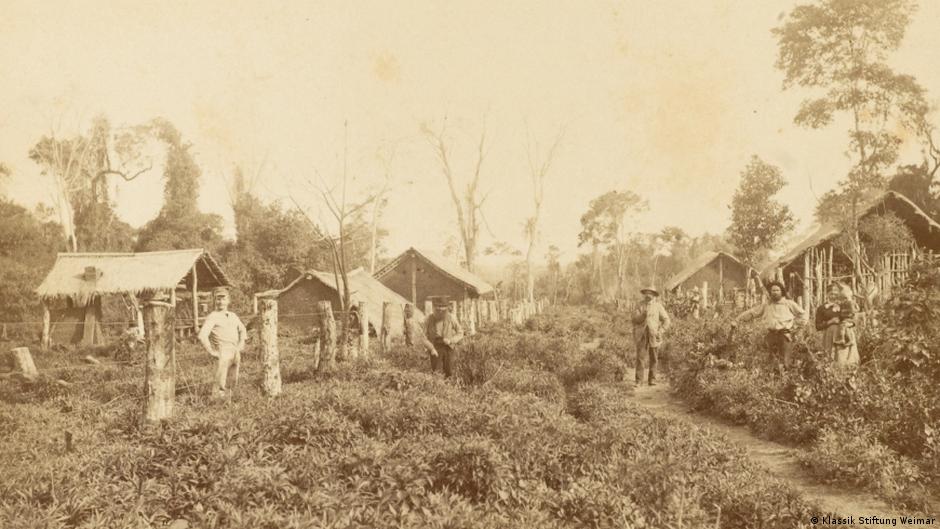
Arriving in Paraguay, the settlers quickly faced reality. Mehler, who studied the early colony, notes that the land was ‘unbearably hot and humid during the rainy season’ and prone to ‘swampy conditions.’ The soil, which became ‘sandy and dry’ in the dry season, made farming arduous. ‘Extracting crops was laborious work,’ she says. Harvests were meager, and tropical diseases compounded the settlers’ struggles. Wealthier families could leave, but the majority remained, fighting to survive in a harsh environment.
“Beloved homeland of my loved ones, oh how I long for you. If I had stayed in Germany, I would have spared myself so much suffering … Courage and health are fading, mind and body are growing weary, and we colonists will likely meet our graves prematurely,”
one desperate settler wrote to relatives, capturing the disillusionment that followed Föster’s utopian dreams. While the project failed, its legacy endures in the small community that remains, a testament to the blend of idealism and hardship that shaped its history.