Unpacking the Venice Biennale controversies and highlights
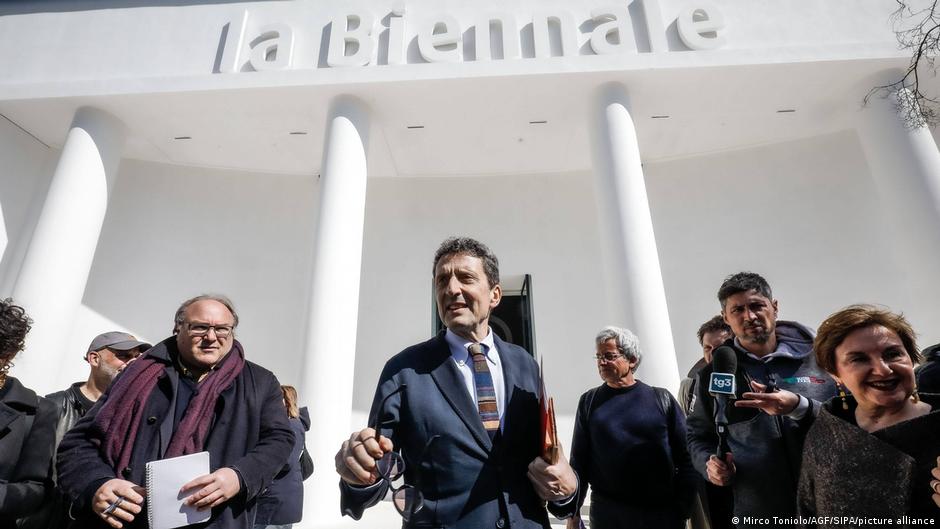
Controversies and Key Moments at the 2026 Venice Biennale
The 2026 Venice Art Biennale, running from May 9 to November 22, drew attention for its political tensions. Russia’s reentry into the global contemporary art event, alongside Israel and the U.S., ignited debates about the role of art in reflecting geopolitical stances. Historically, the Biennale has emphasized art’s ability to transcend politics, but its reputation as the “Olympics of the art world” has made it a stage for international conflicts. National pavilions, often backed by state funding, now serve as platforms where political narratives intertwine with artistic expression.
Curator’s Vision and Legacy
This year’s main exhibition, “In Minor Keys,” was curated by Koyo Kouoh, the late Cameroonian-born artistic director who succumbed to cancer in May 2025 at age 57. As the first African woman to lead the prestigious showcase, Kouoh’s work focused on amplifying marginalized voices. Her concept framed resistance as a quiet, restorative act, urging audiences to listen deeply in a world of noise. “The minor keys refuse orchestral bombast and goose-step military marches,” she wrote, “and come alive in the hums, the consolations of poetry.” The exhibition features 111 invited artists, showcasing works that challenge dominant narratives.
Political Friction Over Russia’s Participation
Russia’s return to the Biennale in 2026 after withdrawing in 2022—following its invasion of Ukraine—has caused friction. Italian institutions and EU members are divided, with the European Commission issuing a formal warning to the Biennale’s leadership. The €2 million funding threat aims to pressure Italy into reconsidering Russia’s inclusion. While Prime Minister Giorgia Meloni opposes Moscow’s presence, Deputy Prime Minister Matteo Salvini criticized the EU’s move as “vulgar blackmail.” Venice’s mayor, Luigi Brugnaro, emphasized the need for the Biennale to remain a space for dialogue, suggesting Russia’s pavilion could be closed if it promotes propaganda.
Protest and Artistic Resistance
Pussy Riot’s Nadezhda Tolokonnikova condemned Russia’s participation, arguing that its apolitical program seeks to obscure the suffering caused by its actions in Ukraine. She urged the Italian government to replace Russian representatives with artists highlighting political prisoners affected by the war. Meanwhile, South African artist Gabrielle Goliath was initially chosen to represent her country. Her planned tribute to Palestinian poet Hiba Abu Nada, killed in an Israeli airstrike in October 2023, faced edits by South Africa’s culture minister. Goliath refused to alter her work, leading to her exclusion and an empty pavilion for the event.
“The minor keys refuse orchestral bombast and goose-step military marches and come alive in the quiet tones, the lower frequencies, the hums, the consolations of poetry,” Kouoh wrote in her exhibition introduction.
“Participating in the Biennale with an apolitical program is an attempt to polish Russia’s image and make the world forget the victims of Russian terror,” Tolokonnikova told DW.