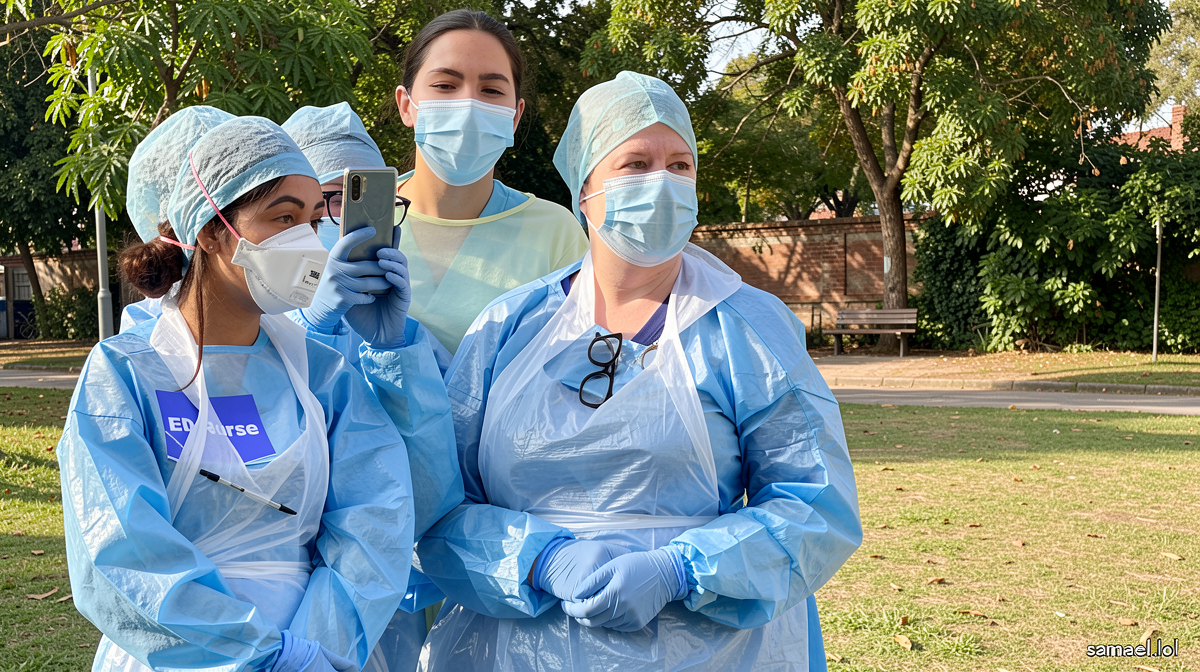
Why are resident doctors striking and how much are they paid?
Pay Dispute Sparks Strike Action
Samael.lol – A six-day strike by resident doctors in England has kicked off, marking their 15th protest in a prolonged conflict over wages. The British Medical Association (BMA), which advocates for medical professionals, claims that pay concerns and staffing shortages remain unresolved. Meanwhile, the government argues that doctors’ demands are excessive and not aligned with economic realities.
About Resident Doctors
Resident doctors are fully qualified physicians who have graduated from medical school. They constitute almost half of the total doctor workforce in England, working in diverse NHS settings such as accident and emergency (A&E) departments and general practitioner (GP) clinics. Following their medical degree and two years of foundation training, they often pursue specialization in fields like surgery or internal medicine. The term “junior doctors” was replaced in September 2024 to better reflect their advanced expertise.
Salary and Working Conditions
During their first foundation year, resident doctors earn a base salary exceeding £40,000. The top tier of this group receives £76,500 annually. Beyond base pay, they are compensated for night shifts, weekends, and extended hours. Despite a cumulative 22% raise between 2023 and 2024, and an additional 5.4% in 2025, the BMA claims real-term pay still lags behind 2008 levels by 20%.
Government’s Response and Offer
The government uses the Consumer Prices Index (CPI) to calculate public sector pay adjustments. However, the BMA highlights that student loan interest is based on the higher Retail Price Index (RPI), which skews the financial burden on doctors. Health Secretary Wes Streeting emphasized that resident doctors have secured the largest pay increases among public sector workers in recent years, calling the BMA’s rejection of a March offer “unreasonable.”
Strikes and Patient Care
The BMA’s strike action, which began on 7 April, is set to last until 13 April. The NHS has urged patients to continue seeking care, directing those with emergencies to use 999 and 111 as usual. For urgent, non-life-threatening cases, the NHS 111 website or helpline is recommended. Senior medics are being deployed to minimize disruptions.
“Dr. Jack Fletcher, chair of the BMA’s resident doctor committee, expressed regret over the impact on patient care but pointed out that delays also occur without strike action due to a shortage of specialists and GPs.”
Key Negotiation Points
During talks, the government proposed expanding specialist training posts by 4,000 by 2028, with 1,000 available in 2026. It also pledged to cover exam fees and streamline pay progression through five salary bands. However, the BMA walked away, criticizing the agreement as diluted, particularly the pay progression clause. As a result, the offer to add posts was rescinded.
Public Opinion
A recent YouGov survey indicates that 53% of the public opposes the strikes, while 38% supports them. This divide underscores the broader debate over balancing healthcare worker conditions with patient access during critical periods.