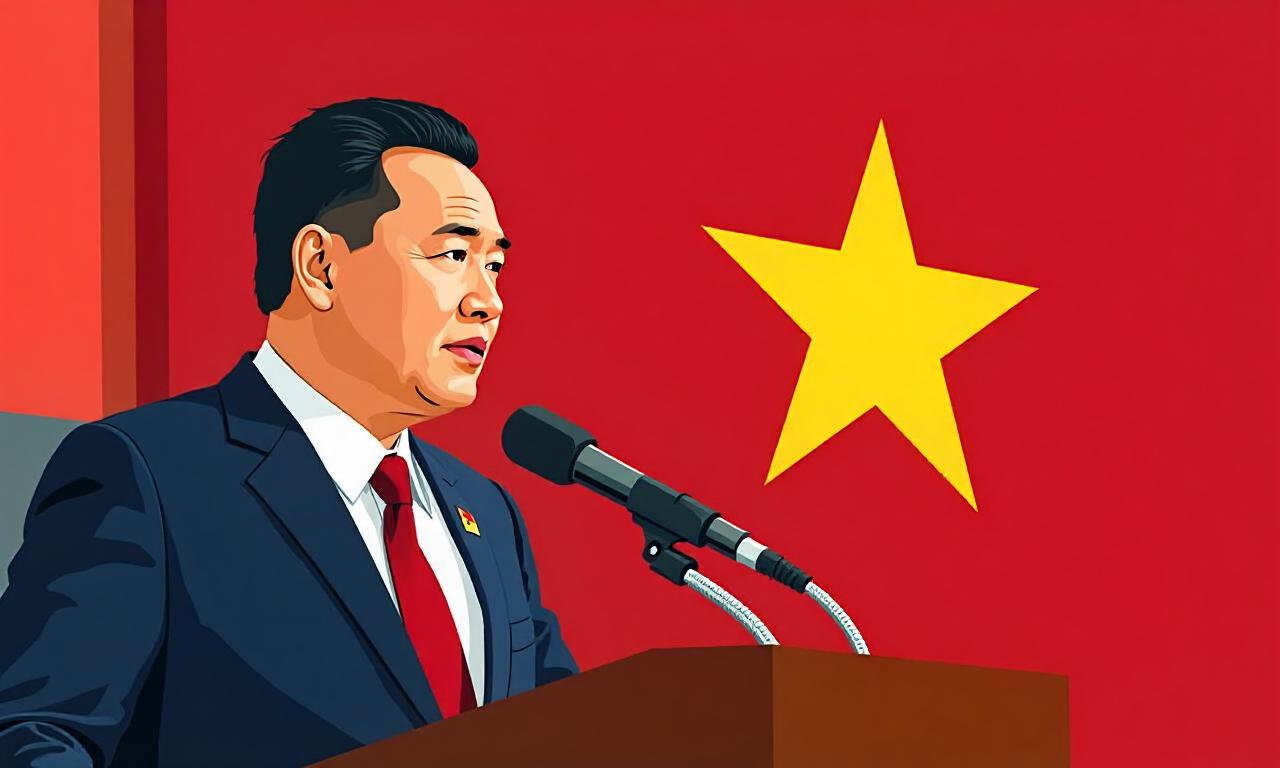
President To Lam Consolidates Authority in Unanimous Election
Samael.lol – Vietnam’s communist-led general assembly has approved To Lam, the party leader, as the nation’s president and head of state. This marks a notable consolidation of authority under one individual, a shift that has drawn attention due to its centralization of power. The 500-member assembly, which convened on Monday, completed the vote following the Communist Party Congress in January, an event responsible for shaping major national policies.
Rise to Prominence
To Lam’s ascent to the presidency was fueled by his tenure as Minister for Public Security, where he spearheaded a nationwide anti-corruption initiative. This campaign led to the downfall of several potential rivals, strengthening his position within the party. In 2024, he assumed both the role of general secretary of the communist party and acting president after the resignation of Vo Van Thuong and the passing of Nguyen Phu Trong.
Structural Shifts and Power Dynamics
Traditionally, Vietnam’s communist party has relied on collective leadership across four key national roles, now expanded to five, referred to as the “five pillars.” To Lam, however, has garnered enough support to hold the two highest offices for the next five years. This has sparked discussions about his influence, likening it to China’s President Xi Jinping, who has also centralized power within his own leadership.
“To Lam is the first among equals, but he’s also answerable to the Politburo,” said Carl Thayer, Emeritus Professor at the University of New South Wales. “There’s still a balance. But To Lam has shown that he can work collectively and build coalitions,” he added, highlighting the role of other senior figures in the 19-member committee.
Global Economic Challenges
The true measure of To Lam’s leadership will be his ability to achieve the ambitious growth targets he has set for his government. With the global economy facing uncertainty, his administration must meet an annual growth rate exceeding 10% while curbing corruption. These goals build on the “blazing furnace” anti-corruption drive initiated by his predecessor, which disciplined thousands of officials.
Strategic Relations with China
While historical tensions with China persist, relations between the two communist parties remain close. Xi Jinping recently extended congratulations to To Lam after he retained his position as general secretary. Xi noted that collaboration would strengthen the “traditional friendship” between the nations, despite differing power structures.
Additional reporting by Thuong Le in Bangkok