Europe mulls the prospect of a NATO without the US
Samael.lol – With the US president intensifying warnings against Iran, some question if NATO will suffer unintended consequences. Ivo Daalder, a former American envoy, argues the alliance remains “not dead” but “deeply wounded” by growing divisions across the Atlantic. He bluntly states, “NATO is broken,” highlighting a critical moment in the organization’s history. As it marks its 77th anniversary this month, Daalder claims the alliance faces its most severe crisis since its founding.
Alarm over NATO’s fragility has been building for months. Last year, Daalder outlined a scenario where European members might rebuild the alliance independently of US leadership. Now, he identifies multiple causes for its decline. While Trump’s criticism of NATO and its European partners has become routine, his recent assertion that the alliance is a “paper tiger” capable of supporting the US in its Iran campaign has intensified concerns. Additionally, the threat of Trump pulling out of NATO, combined with Europe’s refusal to fully commit to the war effort, has exposed underlying fractures.
“The European response mirrors the alliance’s weakened state,” Daalder explains, “and it underscores a broader loss of trust in the US as a reliable partner. This shift reflects Europe’s growing reluctance to participate in operations it views as Washington’s priorities.”
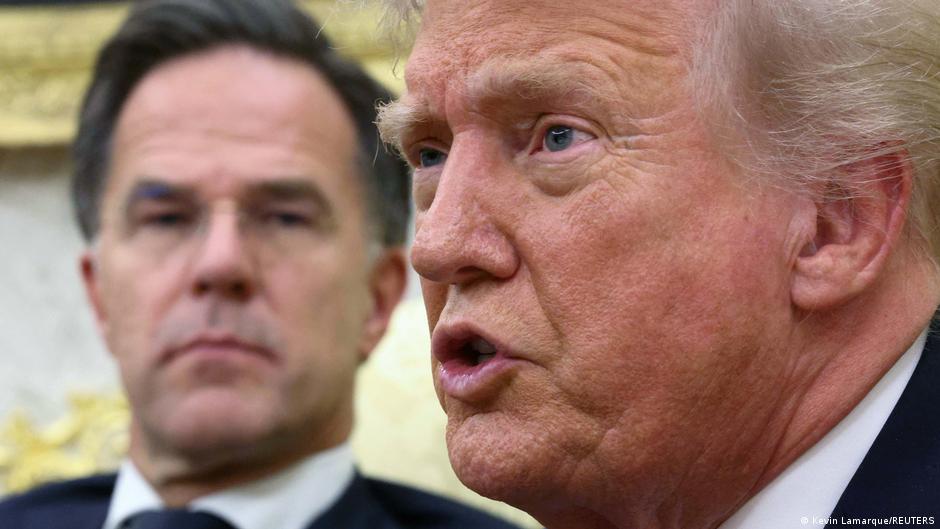
NATO Secretary General Mark Rutte has defended the US-Israeli actions, downplaying the rift. “Differences in the alliance are inevitable,” he remarked on March 26. “Yet, on the issue of Iran’s nuclear and missile capabilities, we are united. The US is actively undermining that threat, and I commend their efforts.”
Trump, however, frequently speculates about exiting NATO, calling the possibility “beyond reconsideration.” Despite uncertainty about his eventual move, the path to withdrawal isn’t straightforward. His former Secretary of State, Marco Rubio, introduced legislation in 2023 requiring two-thirds Senate approval to leave. Three years later, Trump claims he could still withdraw unilaterally, a claim Daalder supports, noting the president’s constitutional authority would likely prevail.
Article 13 of the 1949 Washington Treaty details the procedure for exiting, but it has never been invoked. It stipulates that any member can withdraw after 20 years of the treaty’s existence, with one year’s notice to the US. While Trump could dissolve NATO without formal departure by reducing troop presence, cutting personnel support, or even abandoning the Supreme Allied Commander Europe role—a position traditionally held by an American—the alliance might still retain functional capabilities.
Experts caution that NATO’s collapse isn’t guaranteed. Though the US holds significant military advantages, the alliance could adapt to operate independently. Whether this transition materializes depends on Europe’s willingness to shoulder greater responsibility, a challenge that has now come to define the current era of transatlantic relations.