US citizens beat rising energy bills with homegrown power
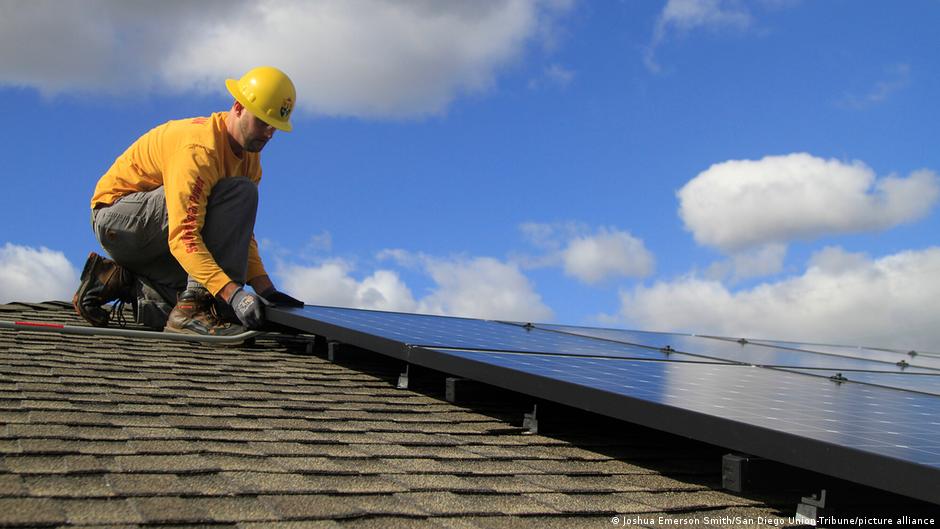
Samael.lol – Amid soaring electricity prices and frequent power outages, generating energy at home has gained popularity. Brian McGowan, an engineering technician in Coatesville, Pennsylvania, spent just $150 (€130) on power last year. Since adding solar panels in the fall, he anticipates even lower costs this year. Without these upgrades, his annual energy expenses would have exceeded $2000 for electricity, $1000 for gas, and over $2000 for heating oil.
“I have an EV, so I’m not buying gas, which is rapidly increasing at this point. I have a mini split heat pump, so that heats the house the majority of the time, so I’m not burning heating oil,” McGowan explained to DW.
What began as a modest setup with a couple of solar panels, enough to power a kettle, coffee machine, and emergency lights during outages, has evolved into a comprehensive system. This includes battery storage and a heat pump, among other features. McGowan isn’t alone in adopting such systems. John Spezia, a retired college professor in Steamboat Springs, Colorado, installed solar panels 13 years ago and recently added a heat pump to eliminate his gas reliance. “Natural gas is going to go up in price as we saw recently, so we add that to our savings,” Spezia said. “That’s maybe $400, $500 and no monthly base rate.”
During certain periods, Spezia and his wife produce more energy than they consume. The surplus is sent to the grid, offering them credits for future use. “But we’re allowed to bank hours, so we get credit through the colder times of the year,” he noted. McGowan’s home features two systems: an off-grid setup for extended outages and a grid-tied system with 30 rooftop panels and batteries. “When I had this system put on, we had our first power outage and my wife noticed a flicker. She said, ‘What was that?’ I looked out the window, and the entire neighborhood was dark. That’s what a blackout looks like for us now,” he recalled.
McGowan’s area experiences three to four outages annually, some lasting days. He warns of growing challenges as data centers strain the grid. The US Energy Information Administration reported that in 2024, customers faced an average of 11 hours of service interruptions—nearly double the previous decade’s average. A Stanford University study explored how solar and battery storage could help homeowners during outages. Tao Sun, from the Civil and Environmental Engineering department, found 60% of households could see financial benefits. However, this figure includes the now-expired federal tax credit under the Inflation Reduction Act.
Ben Delman of Solar United Neighbors highlights that savings depend on state-specific policies. “It’s different state by state, so that also makes a difference,” Sun remarked. Net metering allows utilities to credit households at the same rate they pay, using the retail price. Net billing credits, in contrast, apply the wholesale rate, offering less value. “In California, it’s roughly 25% of the retail price,” Sun added. “If I were a homeowner with solar and lived in a net billing state, it would make more sense to invest in battery storage to use my own energy.”
About 5 million US households now have metered rooftop solar, according to a report by the Environment America Research and Policy Center. “It really has become a 50-s” the text concludes, hinting at a broader shift in energy independence.