How to Insulate Your Household from Soaring Energy Bills
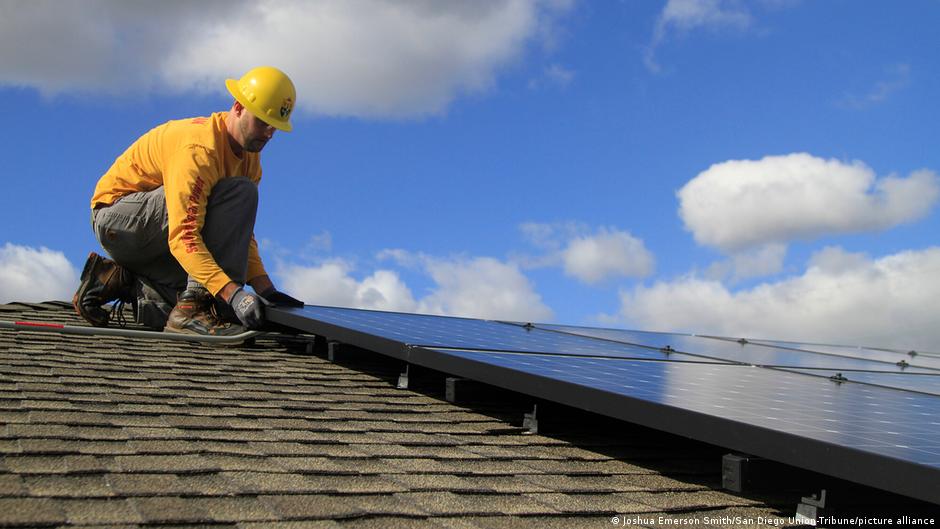
Samael.lol – As energy costs climb sharply and extreme heat becomes more frequent, home-generated power is gaining popularity. For Brian McGowan, a Pennsylvania resident, the shift from traditional utilities to renewable sources has significantly cut his expenses. Last year, he spent around $150 (€130) on electricity, a stark contrast to the over $2000 he would have paid annually for power alone, plus $1000 on gas and $2000 on heating oil. With solar panels installed in the fall, he anticipates even lower bills this year.
From Small Steps to Full Systems
McGowan’s journey began modestly—just a couple of solar panels enough to power a kettle, coffee machine, and emergency lights during outages. That has evolved into a comprehensive setup featuring battery storage and a mini-split heat pump, which now handles most of the home’s heating. “I have an EV, so I’m not buying gas, which is rising rapidly,” he explained to DW. “The heat pump means I no longer rely on heating oil.”
“Natural gas is going to go up in price as we saw recently, so we add that to our savings,” said John Spezia, a retired college professor in Steamboat Springs, Colorado, who installed solar panels 13 years ago and later added a heat pump to replace his gas heating. “That’s maybe $400, $500 and no monthly base rate.”
Spezia’s system allows him to generate more electricity than needed, which is then sent back to the grid. “We’re allowed to bank hours, so we get credit through the colder times of the year,” he noted. Similarly, McGowan operates two systems: one off-grid for emergencies and a grid-tied setup with 30 rooftop panels and batteries. “When I had this system put on, we had our first power outage and my wife noticed a flicker,” he recalled. “She said, ‘What was that?’ I looked out the window and the entire neighborhood was dark. That’s what a blackout looks like for us now.”
Power Outages and Rising Demand
McGowan’s area experiences about three to four outages annually, some lasting days. He warns that this trend could worsen as data centers boost energy consumption. The US Energy Information Administration reported that in 2024, customers faced an average of 11 hours of disruptions, double the previous decade’s average.
A Stanford University study explored how homeowners could leverage solar and storage to endure outages. Tao Sun, from the Civil and Environmental Engineering department, found that 60% of households would also see financial benefits. However, this included the now-scrapped federal tax credit under the Inflation Reduction Act.
Net Metering and Savings Potential
Factors like state-specific policies and electricity rates influence savings. Under net metering, utilities credit electricity sent back to the grid at the same retail rate households pay. Net billing credits, in contrast, use the wholesale rate. “In California, it’s roughly 25% of the retail price,” Sun said. “If I were a homeowner with solar in a net billing state, having a battery would make more sense to store energy for personal use.”
Ben Delman of Solar United Neighbors highlights that payback periods vary widely. In states with strong solar incentives, returns may take 2 to 5 years, while in others, they could stretch to 7 to 11 years. “Your payoff depends heavily on how much you’re already paying for electricity,” he added.
About 5 million US households now have metered rooftop solar, nearly one in 30 residential homes, according to the Environment America Research and Policy Center. As the trend grows, more people are seeking ways to reduce reliance on fluctuating energy markets and stabilize their costs.