Hungarian Election: How Football Has Helped Orban Keep Power
Political Leverage in the Stadia
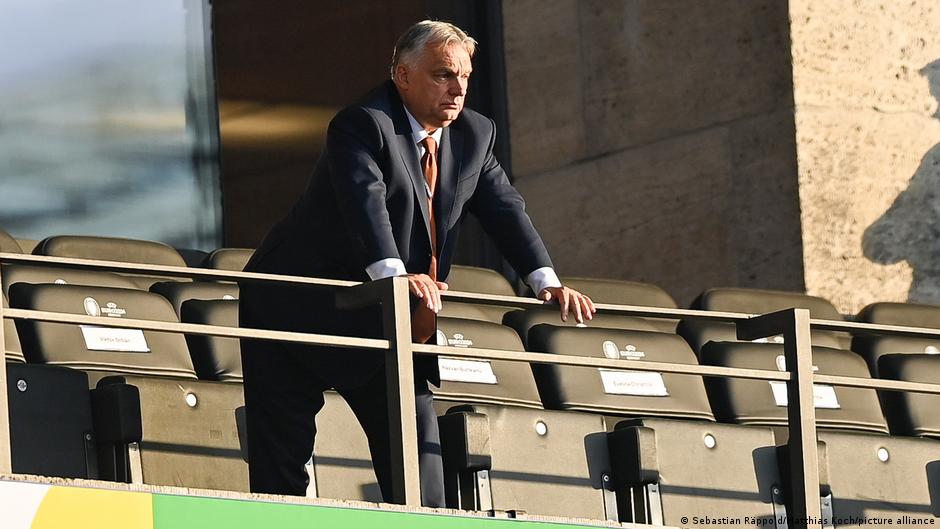
Samael.lol – Viktor Orban, a lifelong football enthusiast, has strategically woven the sport into his political machinery. Amidst election uncertainty, his government faces a potential challenge: losing the opportunity to host the Champions League final. This has drawn attention to the Groupama Arena, a symbol of his influence. During JD Vance’s promotional tour in Budapest, the venue’s significance was underscored as he rallied support for Orban. The 24,000-seat stadium, equipped with 24 executive boxes, opened in 2014—three years after Gabor Kubatov, a Fidesz MP, assumed leadership of Ferencvaros, Hungary’s top-tier football club.
“
It’s unlikely this choice was coincidental,” said Gyozo Molnar, a sociology professor from Worcester University and native of Hungary. “The stadium serves as Orban’s preferred platform, quite literally. Beyond that, the football infrastructure across Hungary forms a tangible network of support for Fidesz, linking local communities and elites to the ruling party. This has notable impact, especially in rural areas.
”
Tax Breaks and Club Funding
Every major football club in Hungary, whether directly controlled or indirectly influenced by Fidesz, benefits from the TAO program. Launched in 2011, this corporate tax initiative allows businesses to deduct donations to sports organizations—sometimes up to 100%—from their taxable income. The result? Billions funneled to state-backed teams and construction contracts awarded to allies of Orban’s administration.
Expanding Influence Beyond Borders
Fidesz’s reach extends beyond Hungary’s borders, with vested interests in clubs in Romania, Slovakia, Serbia, Slovenia, Croatia, and Ukraine. Molnar notes this reflects Orban’s dual passion for football and politics. By fostering connections with ethnic Hungarian communities in neighboring nations, the party secures votes. Simplified naturalization laws and expanded voting rights in 2010 made this possible. Investing in stadiums, academies, and youth programs in these regions reinforces the message that Orban’s government prioritizes its diaspora.
A Pet Project with National Pride
Puskas Akademia, the second-place finishers in last season’s league, were founded in 2007 by Orban himself. Named after Ferenc Puskas, Hungary’s legendary player and member of the 1954 World Cup-winning team, the club serves as a personal endeavor. Orban also built the Pancho Arena, a 3,800-capacity stadium that holds twice the population of Felcsut, the town where he owns property. David Goldblatt, a former sports journalist now based in Los Angeles, visited the stadium in 2017. After presenting a book on football to Orban via an intermediary, he became the first foreign reporter in over a decade to conduct an interview with the prime minister.
Though some club ownerships remain unclear, the TAO program and direct control by Orban’s allies have solidified his grip on the sports landscape. This network not only fuels his political agenda but also mirrors Hungary’s broader economic and social dynamics, where the country ranks as the EU’s most corrupt and poorest member states.